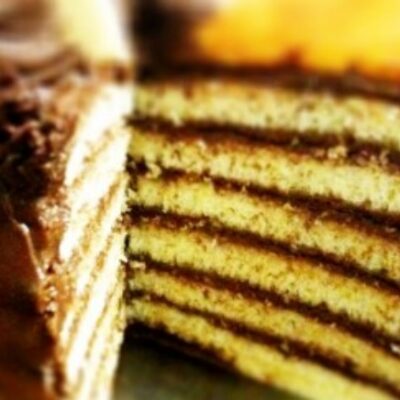
Traditional Jewish Seven Layer Cake
Servings
12 Servings
Ingredients
- 10 ounce semi-sweet chocolate
- 3 ounce unsweetened chocolate
- 3 tablespoon instant coffee granules
- 3/4 cup water
- 1 1/2 cup sugar
- 6 egg yolks
- 1 pound 4 sticks unsalted margarine, room temperature
- 1/2 cup vegetable shortening
- 1 teaspoon vanilla extract
- 1/2 teaspoon rum extract
- 1/4 teaspoon salt
- 12 egg whites room temperature
- 2 1/4 cup granulated sugar
- 12 egg yolks
- 1/4 cup non-dairy milk soy or coconut mixed with 1 teaspoon lemon juice
- 2 teaspoon vanilla extract
- 1/2 teaspoon salt
- 3/4 cup all-purpose flour
- 1 1/2 cup granulated sugar
- 1/4 cup water
- 1/2 tablespoon unsalted margarine
Instructions
Chocolate-Mocha Buttercream
- Prepare a double boiler fitted with a medium glass bowl and melt the semisweet and unsweetened chocolate. When chocolate is melted, stir in the coffee granules and remove from stove top to allow to cool slightly. In a small, heavy-bottomed saucepan, combine water and sugar and place on the stove over low heat. Stir mixture for about five minutes or until the sugar has dissolved, and increase the heat to medium and, without stirring, bring the syrup to a boil. Allow boiling syrup to reach 250 degrees on a candy thermometer (also called the “soft-ball stage”), before removing from heat.
- While syrup is boiling, beat egg yolks in a large bowl until pale and thick, about 4 minutes. Once sugar syrup has reached 250 degrees, very slowly drizzle the syrup into the eggs by allowing it to flow in a steady stream down the side of the bowl gradually into the eggs while continuing to beat the mixture. Once all the hot syrup has been added, continue to beat on high until the mixture has thickened and cooled to room temperature (about 10 minutes).
- Once the thick mixture has cooled, continue to beat while adding in, a couple tablespoons at a time, the margarine and shortening. After both have been fully incorporated, gradually beat in the melted, cooled chocolate-coffee mixture, followed by the salt, vanilla, and rum extracts, beating well with the addition of each ingredient. Once all ingredients have been incorporated, push entire mixture through a strainer and discard any undissolved coffee granules or solid egg parts. Cover and store the buttercream frosting in the refrigerator until an hour before ready to frost the cake. Spoon ¼ of the buttercream into a zip-lock or pastry bag and leave the rest in the bowl to be spread onto the cakes with an angled spatula.
- Tips: I highly suggest making the buttercream the day before, as baking and assembling the actual cake is a pretty big project that can easily take up an entire day. Store the buttercream in a covered container in the refrigerator, and let it sit at room temperature for at least an hour before attempting to assemble the cake.
Sponge Cake Layers
- Preheat oven to 350 degrees. Line bottom of 9-inch round cake pans with parchment paper and margarine. Flour paper and sides of pans. It’s very important that this is done extremely thoroughly or the baked cakes will be very difficult to remove from the pans, as there is no fat in the batter itself. Unless you have 7 cake pans, you’ll have to bake the cake layers in batches (which isn’t a big deal since the cakes bake pretty quickly) and re-prepare the pans this way each time.
- In a medium bowl, beat room temperature egg whites until they have formed soft peaks, and set aside. In a separate, large bowl, beat egg yolks and sugar on a high speed for 5-9 minutes, or until the mixture is thick and pale yellow. Reduce mixing speed to low and add in the non-dairy milk mixture, a tablespoon at a time, along with the vanilla extract and the salt, and replace mixing speed to high. Once the mixture has been beaten and has re-thickened, remove electric mixture and gradually and gently fold egg whites into the yolk mixture. Once all the whites have been incorporated, slowly and in small batches, sift in the flour, folding after each addition of flour.
- Measure out 1 cup of the batter for each cake pan and gently spread the batter into a thin, even layer in each pan. Measuring the batter will ensure that each layer be exactly the same thickness, creating a pretty finished product and also allowing each layer to have the same baking time. Tap the bottom of the cake pans against the countertop to help some of the larger air-bubbles to release so that the cakes bake evenly. Bake the layers either one or two at a time (any more than two cake pans in the oven will bring the temperature down) for 6-8 minutes, rotating pans halfway through baking time. When cakes are finished baking, the edges will turn light golden and will pull away slightly from the sides of the pan. Allow cakes to cool in the pans for 1-2 minutes before transferring to cooling racks.
Caramel
- Covering the seventh layer of the cake with this caramel is optional, but encouraged! (It is best made with butter for a dairy meal, but will work with margarine) The caramel shouldn’t be made until ready to cover cake. Without the caramel, the last cake layer can be stacked between buttercream with the other layers.
- In a small skillet, stir together sugar and water on high heat. Once the sugar has dissolved into a syrup (about 5 minutes), add margarine and allow mixture to come to a boil. Continue to stir the syrup so the caramel browns evenly. Once the caramel has reached desired color, remove from heat and immediately pour onto prepared cake layer (see specific directions below).
Assembly:
- First, I like to slice off the outer edges of each of the cake layers using a perforated knife (or even a pizza cuter) and a round tupperware top or cardboard cutout as a guide. It’s important to wait to trim the cakes this way until just before ready to frost them, as the exposed edges will dry out if left uncovered for too long.
- Smear a dollop of the room temperature buttercream onto the center of cake plate or server to secure the cake and center one cake layer atop the buttercream dollop. Using a pastry or zip-lock bag, follow the edges of the cake and pipe a ring of buttercream on top of the layer. Measure out 1/3 cup of the buttercream (from the bowl) and spoon onto the center of the layer. Using a small, angled spatula, push the buttercream out towards the ring of piped buttercream until it has been spread into an even layer covering the top of the cake. Add the second layer of cake on top of the layer of buttercream, pipe another ring of buttercream, and measure and spread 1/3 cup of the frosting into another even layer. Continue this process until the sixth layer of cake has been stacked and covered in buttercream. Slip a few small strips of parchment paper under the bottom layer of the cake to catch any drips of buttercream. Spread the remaining buttercream from the bowl onto the sides of the cake into an even layer. Once the entire cake has been evenly covered in buttercream, transfer cake to the refrigerator to cool and slightly harden the buttercream while you prepare the caramel and seventh cake layer.
- Using the back edge of a large knife, score the seventh layer of the cake into 8 or 12 portions, making grooves into the cake but not cutting all the way through. Lay the scored cake onto a layer of parchment paper and prepare the caramel as directed above. Pour the hot caramel evenly onto the cake layer and spread using a buttered spatula until the layer has been fully covered by the caramel. Before the warm caramel cools and hardens, use a large, buttered knife to slice the caramel-covered cake into slices along the score marks. Re-buttering the knife as needed, trim off any excess caramel that has spread outside the cake. Allow caramel-covered cake slivers to cool completely before topping the frosted, assembled cake.
- Once the frosted cake has cooled and hardened slightly, remove it from the fridge. Using an angled spatula dipped in very hot water, smooth out any imperfections in the buttercream, making a even surface for decorating. Remove parchment strips from the bottom of the cake.
- Transfer any extra buttercream to a pastry or zip-lock bag with a decorative tip and pipe a border on the bottom and/or top edges of the cake, or decorate however you wish. Depending upon how many slices the caramel-cake layer has been sliced into, I would suggest piping the same number of buttercream dollops or rosettes onto the top of the frosted cake to serve as little pillows for the caramel-cake slivers. Arrange the slivers on top of the cake, resting them on the rosettes. Pipe one final rosette in the center of the cake, if desired, and serve.
- For step by step pictures, come to my blog: http://pumpercake.com/2011/04/22/seven-layer-cake/