


Eating Vegetarian
“No meat, no chicken, no fish,”I said, at a recent Indian cooking class. “But what do they eat?” a student replied quizzically. “Mostly grains, legumes and vegetables.” To most of us, the idea of a totally vegetarian diet seems quite foreign; but for approximately half a billion Indians – roughly 42% of the large country – a strict vegetarian diet is the standard. In fact, it’s not unlike keeping kosher in Israel. Many restaurants even have separate dishes for meat and vegetarian. Perhaps more than any nation, India’s ancient, vegetarian traditions, honed techniques and impressive array of herbs and spices have allowed it to develop a rich and diverse cuisine. With aromatic ingredients like mustard seeds, cumin seeds, cardamom, turmeric, fresh curry leaves, ginger and green chilies, there are never complaints of boredom.
Staff of Life
Bread plays a huge role in Indian meals, not to be relegated as mere accompaniment, but as both vessel and implement for eating the saucy curries, stews, and chutneys that comprise so many meals. Naan, Roti, Paratha, and Dosa, just to name a few, are the backbone of Indian meals; they are freshly prepared on a daily basis in most homes. Some breads are elaborately filled with vegetables or herbs, others as basic as just water and flour. Each region has its own culinary practices that determine which bread is prepared and served with each type of dish.
Roti (also called Chapati), is one of the most basic breads, flat and unleavened (but not hard and dry like matzo), made from finely ground whole wheat flour and water. Small portions of the dough are rolled out into discs (much like a tortilla), using a small rolling pin. The rolled-out dough is thrown on a preheated dry tava (griddle or skillet) and cooked on both sides. In some regions, it is only partially cooked on the skillet, and then put directly on a high flame, which makes it blow up like a balloon (and is really cool to watch!), as per the recipe directions below.
The Mighty Legume
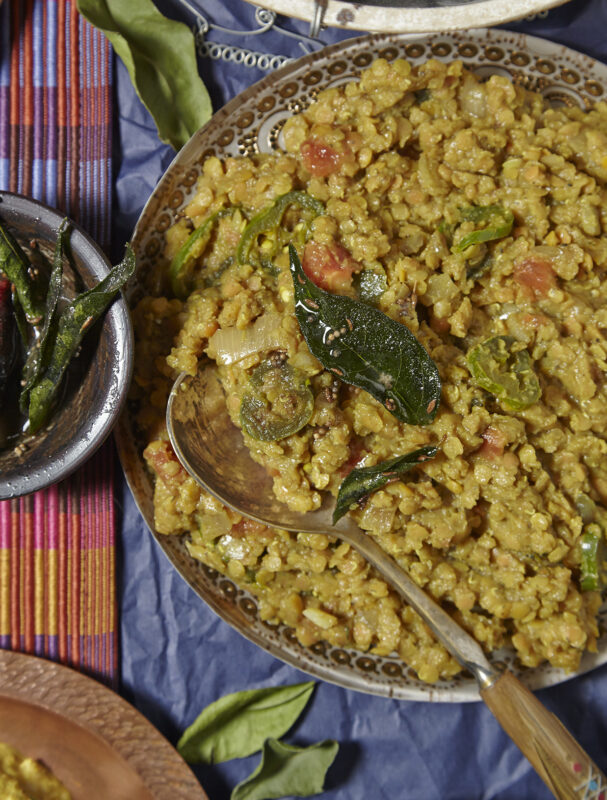
Without animal protein to depend upon, a main staple in the Indian diet are protein-rich legumes: a huge variety of lentils, chickpeas, and beans. Dal is a general term refer-ring to any dried legume that grows in a pod and is hulled and split. A veritable rainbow of dals is out there for the cooking: orange masoor dal (red lentils), yellow chana dal (split chickpeas), green (or yellow) moong dal, urad dal, and the list goes on, especially if you can get yourself to a good Indian grocery! A dal also refers to the many stews, soups or purees made with these legumes—and this is Indian comfort food at its best. A fine layering of spices and aromatics kicks up the flavor of what might start out as a very bland dish. Most Indians use a pressure cooker for their dals as it cuts down on the cook time, but you can get great results with a regular pot, especially if you pre-soak the legumes. The following recipe uses red lentils. These are the fastest-cooking type of lentil, as they dissolve quickly into a creamy consistency (the reason they are often chosen for soups or stews). Serve over rice or with Indian bread.
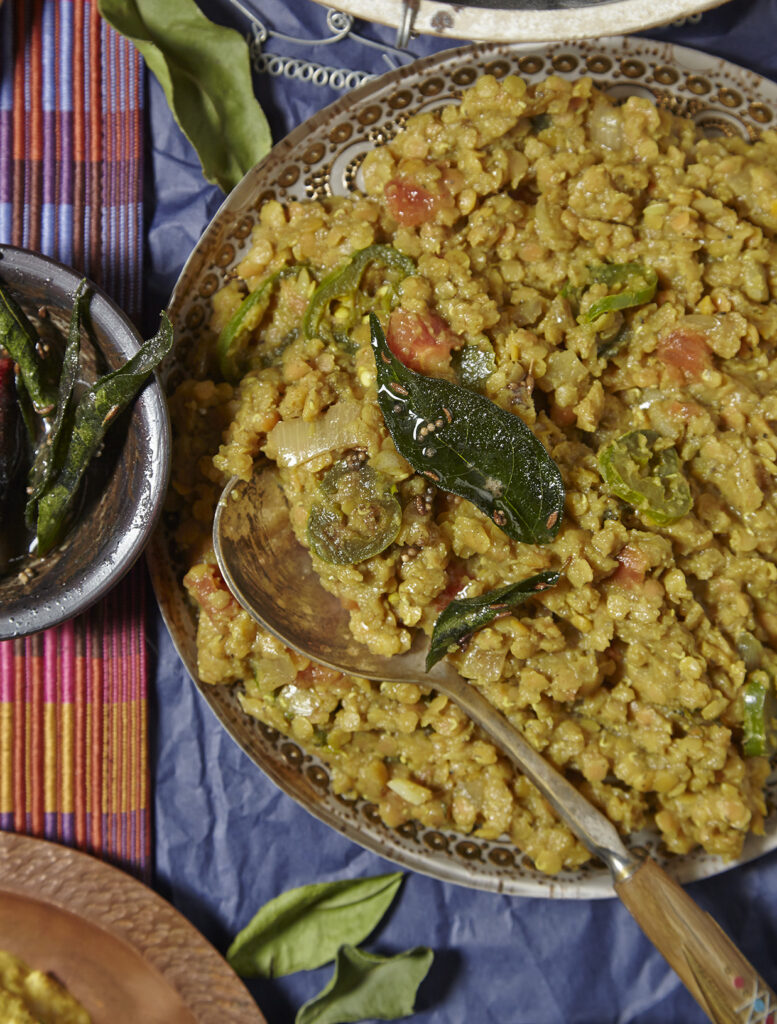
Tadka (or “tarka”) is the Hindi word for tempering. In this technique the spices are fried in ghee (clarified butter) or oil, thereby releasing the spices’ essential oils & enhancing the flavor, aroma and taste remarkably when added to the finished dish. Tadka should be added right before serving time.
MORE: Dairy Indian Recipes to Spice Up Your Shavuot
Scroll to continue
More Love
Healthy Creamy Pesto Pasta
Pesto in cream sauce has always been my favorite comfort food—it’s creamy, …
A Secret Shabbat Menu
This week’s parsha is a story of faith, vision, and secrets. Hashem asks Avraham to embark …
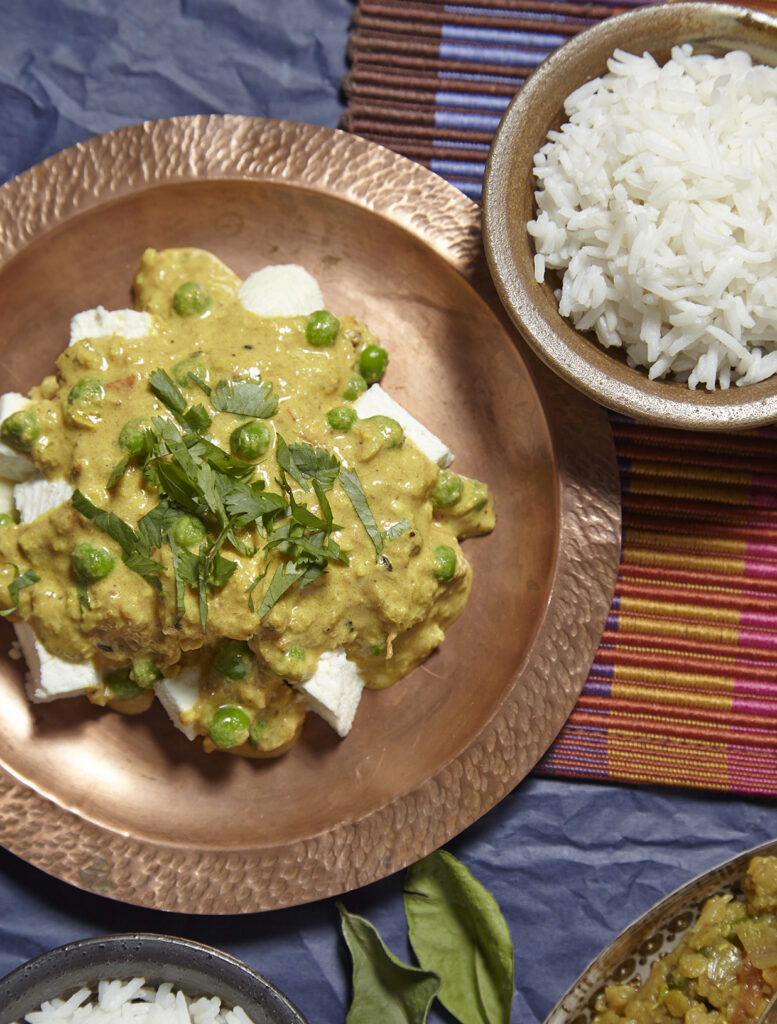
A national favorite, paneer (Indian cheese) is joined with green peas in an aromatic curry with a touch of spice. Serve with roti, paratha, naan, or over rice. The following recipe for Mutter Paneer is a beloved family favorite in India, adding a touch of sweetness from green peas. It’s also a favorite in my family and my kids love to scoop it up with their hot roti (see below).
MORE: Indian Flavored Shabbat Menu
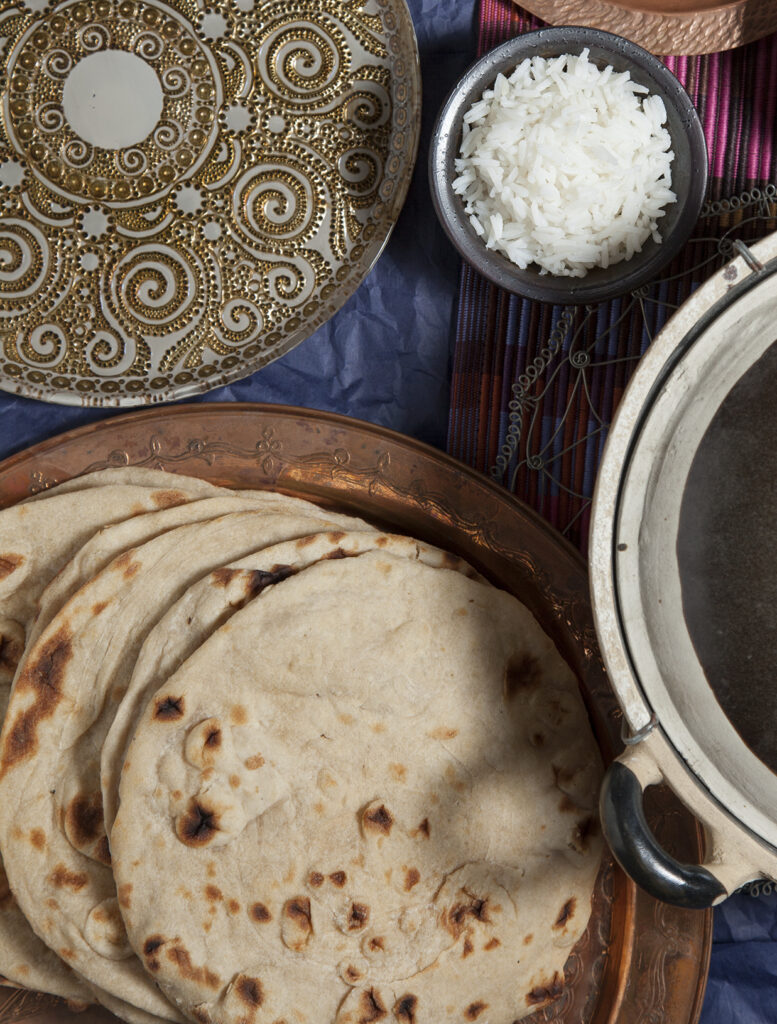
This Indian unleavened bread made from whole-grain stone-ground flour is the perfect accompaniment to curries and chutneys. Keep warm, buttered,and stacked rotis covered with a foil or a cloth until serving time to keep them from drying out. Traditionally made on a tawa, roti can also be made on a griddle.
MORE: 4 Dairy Shavuot Menus
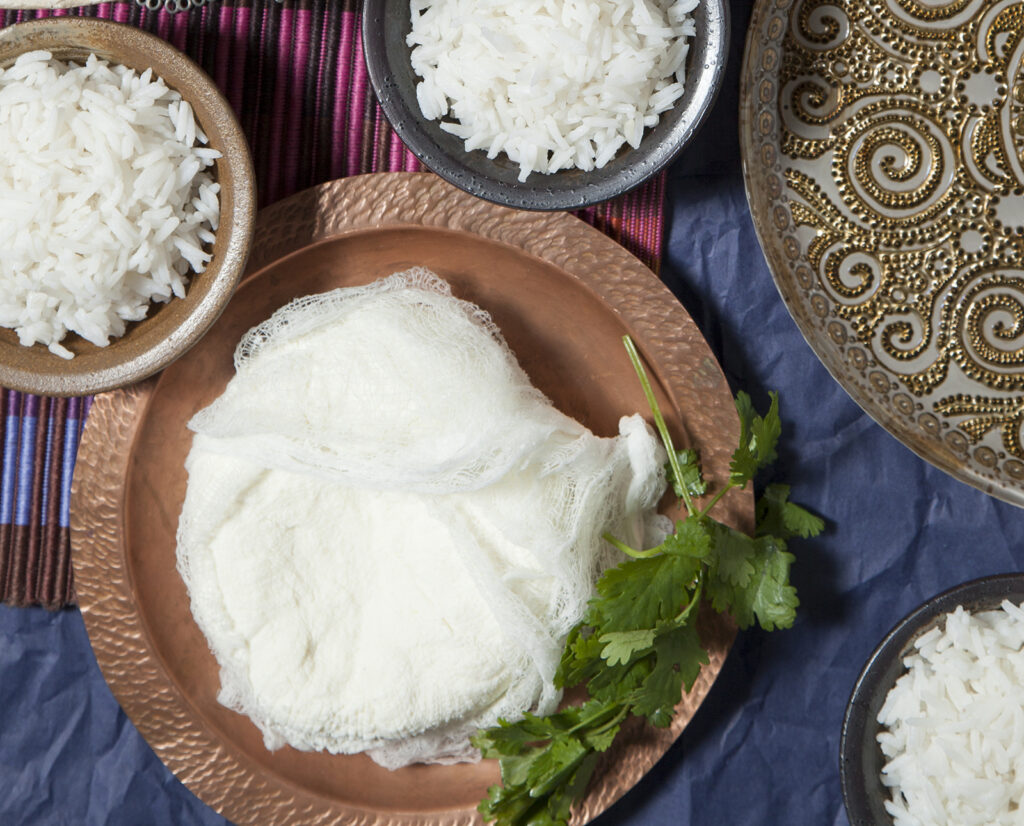
When I show my students how to make their own paneer, the most ubiquitous Indian cottage cheese, they are always amazed at how easy the process really is. Very few Americans make their own cheese nowadays, but this simple cheese is still prepared fresh in many Indian homes. Like tofu, paneer can be used as a firm cheese that is cubed (and sometimes browned) and added to curries, where it absorbs the dish’s flavorings like an empty canvas. But the acidulated cheese curds can also be used as a soft cottage cheese. North Indian cooking is replete with versatile paneer recipes, balancing spice with creaminess and texture.



Plain dried beans do not need hashgacha.
Hi! Do the dried beans need a hechsher? I want to buy urad dal but not sure if they need a hechsher…if so which brand did you buy?