


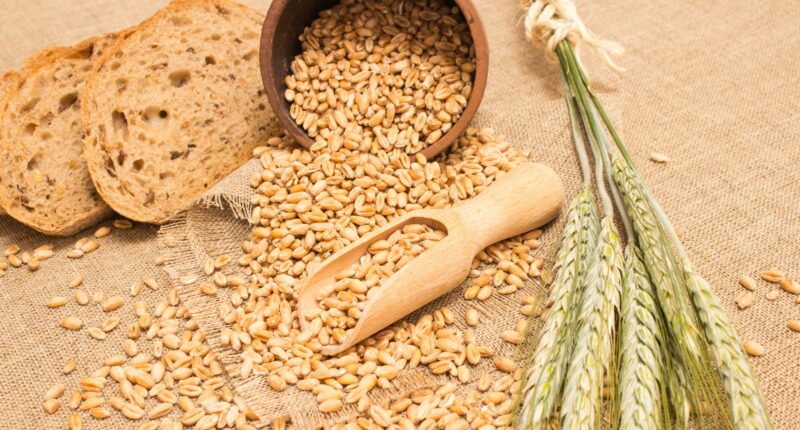
Every Friday night, Jews around the world bless the wine and bread.
Pop quiz: What did these two foods have in common?
They are both from the 7 species of Israel, and in the ancient world they both underwent fermentation to achieve their exalted state on the Shabbat table.
Thousands of years ago, our ancestors used the arts of fermentation to make their food delicious and nutritious and to prolong its freshness on the shelf.
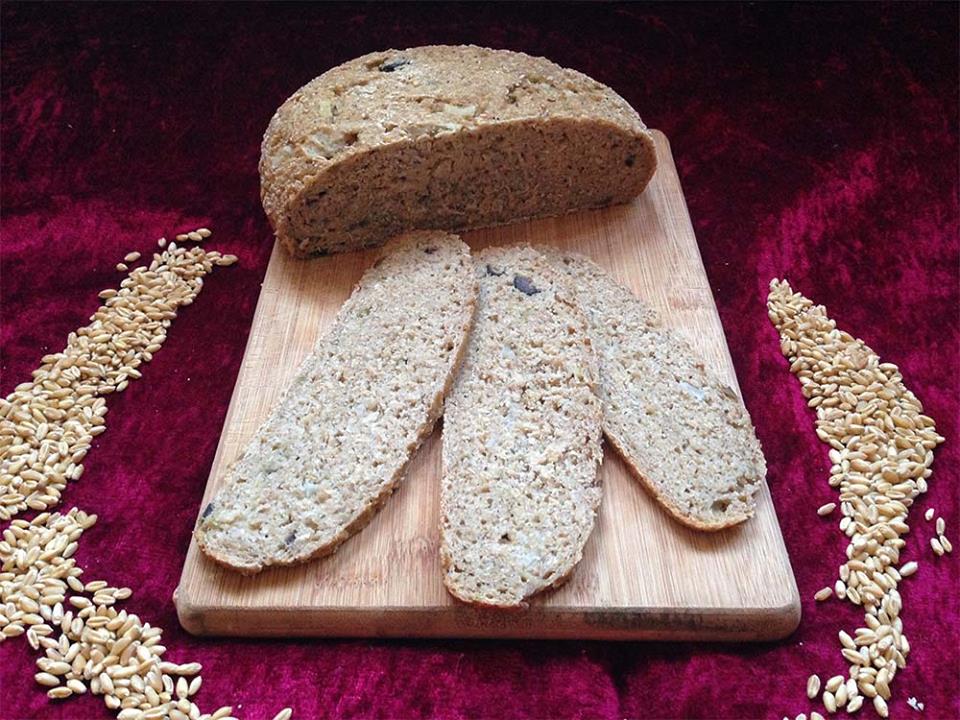
They may not have known that these vital steps made their bread probiotic friendly, or unlocked essential nutrients and B vitamins, or protected their bodies from potential allergens. But they certainly knew that these steps made their bread deeply satisfying and enhanced the wellness of their bodies.
Today, the bread we bless would be unrecognizable to our ancestors. Today we bless a yeasted, quick-rise version that, despite its delicious taste and cake-like texture — and not to discount the work involved to make it — is often more about convenience and entertainment than nutrition.
Soaking, sprouting and fermenting are the three steps that make our food digestible and nutritious. Sprouted bread, involving all three steps, was the staff of life to our spiritual forebears. The oldest recipe we have of sprouted bread is from Israel, found in a 2nd Century manuscript recording the practices of the Essenes. Dedicated to simple monastic living, they sun-dried sprouted wheat crackers under the hot sun near the Dead Sea.
Sourdough bread made with flour requires only the last step, fermentation. The benefits of fermentation– even without soaking and sprouting–confer superior nutritional value over bread made without it.
Scroll to continue
More Love
Here are the three steps for optimal nutrition in bread baking:
1. Soaking
Soaking the whole grains overnight is usually adequate to remove phytic acid — a pesky anti-nutrient that blocks mineral absorption by the body. Most phytic acid is found on the outside of all nuts, beans, seeds and grains, so get into the habit of soaking overnight with a bit of sea salt to aid in extraction.
Soaking Tips:
- 1 cup of grain to ½ tsp salt should do the trick
- Always use lukewarm or room temperature water. (Cold water won’t dissolve anti-nutrients.)
- Don’t soak in the fridge!
- You do not have to cover the jar while soaking, but you may place a thin cheese-clothe over the top.
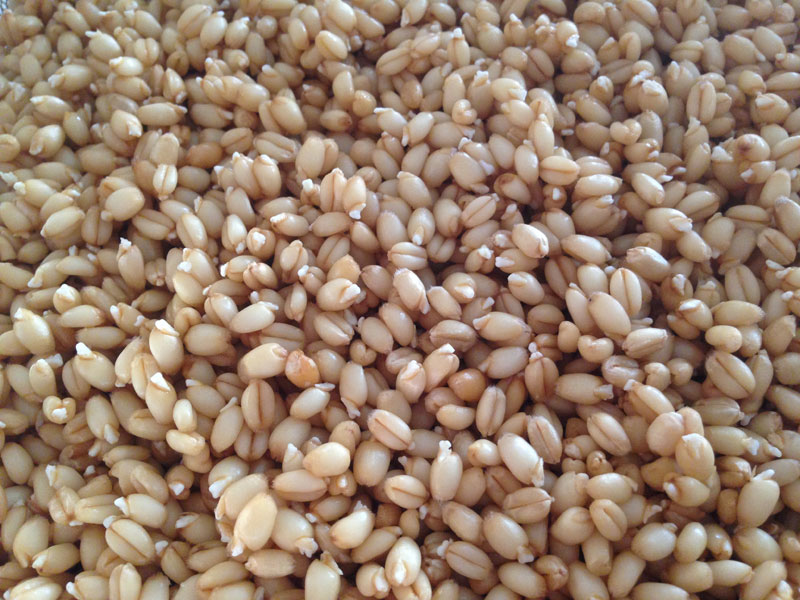
2. Sprouting
A magic-like process, sprouting occurs as the wheat sits in the colander and starts to germinate. A “tail” shoots out, and as that happens, vitamins and minerals begin to skyrocket. In the body’s “eye,” sprouting wheat or spelt transforms the hard, inaccessible grain into a vegetable. Sprouted, the grain not only gives up its nutrients; it becomes tolerable to many people who are sensitive to gluten.
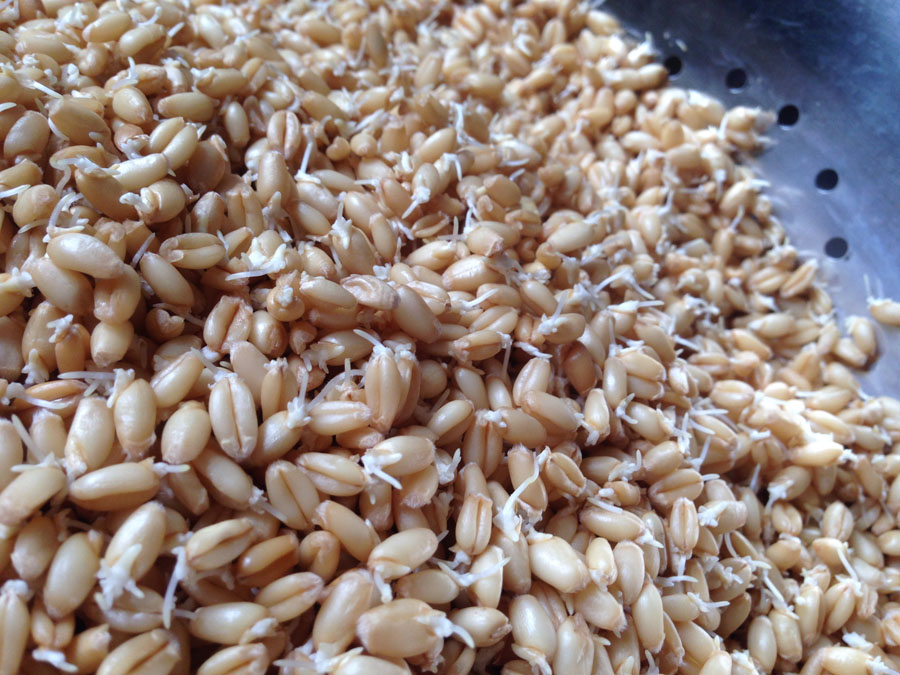
Make the Dough: You can make sprouted dough by grinding the sprouts in a food processor and then adding flour and sourdough starter, if available, to reach desired consistency. For every kilo of sprouts, add a tablespoon of salt and approximately 1/10 kilo sourdough starter. You can use yeast if you want, but I do not recommend it.
3. Fermenting
This is the process of letting the dough sit and rise. Fermenting with a starter will not only give your bread wonderful taste and texture, but will neutralize any phytic acid left over from the soaking and sprouting phases.
To bake a loaf: Let the dough sit covered in a bowl overnight to rise. Then shape the dough and place in loaf pan. Let it rise again for at least 5 hours, or until it rises again. Then bake covered, to retain moisture, for 40 minutes. For the first 30 minutes at 400°F and for the last 10 minutes, 350°F. You may uncover the loaf for the last 5- 10 minutes to get a crispy crust.
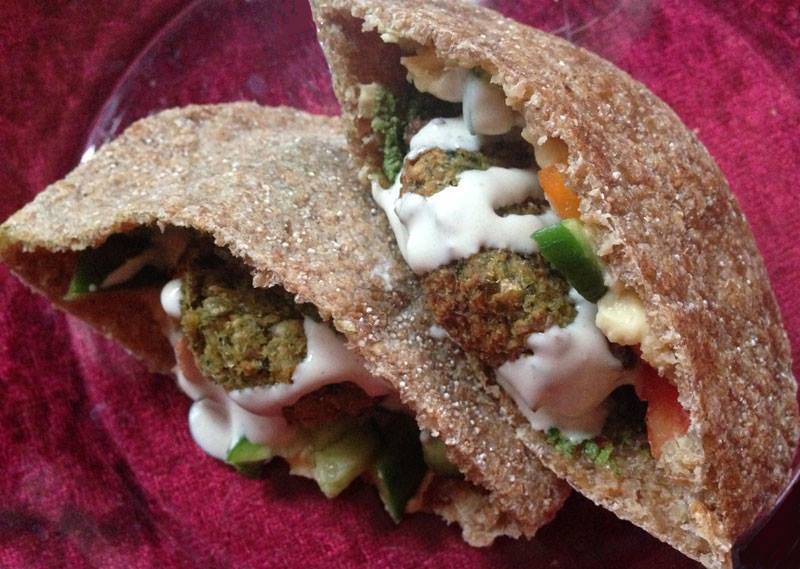
To bake pitas: Roll into flat circles, about 3-4 mm thick. Bake for 12-15 minutes at 400°F (flipped in between).
Learn how to make your own sourdough starter here.







HI Nicole, I would ask around to see if any women in your area have starter, and if they can give you a bit. That way all you have to do is feed it. Sometimes getting it to start from scratch is tricky, so it can be a great help. Do you make your bread with the dried, ground up sprouts? You can also make the dough with the wet sprouts, no drying necessary. Just grind up the sprouts with salt, and starter, in a food processor, and it will definitely not be dry that way.
I have just started to soak and sprout my wheat grains. I also dry them in the dehydrator at the lowest temp. When i make my bread it is dry and very crumbly. I also use yeast since I do not know how to do a sour dough starter. I do not feel confident enough to do it.
Any suggestions?
Thanks,
Nicole