


Every year we reach this time, the month of Elul. A time when we start to think about our lives, what they mean, how we relate to each other and how we relate to G-d. It’s also a time when we realize . . . “Holy Cow! Rosh HaShana is right around the corner.” All the cooking and all the inviting and all the cooking and all the guests and all the cleaning and did I mention all the cooking?
And interestingly, all this cooking has a direct relationship to the whole meaning of Rosh HaShana. Rosh HaShana is a lot more than a “New Year”, it’s a time of repentance and atonement. Even though we refer to Yom Kippur as the “Day of Atonement” we have to make our efforts at atonement beforehand. And food actually can help us do that.
Our sages tell us that our table is equivalent to the misba’ach, the altar in the Holy Temple. It was on this altar that people came to offer sacrifices to achieve atonement for their sins. According to Rabbi Chayim Palachi (Turkey) in his work Kaf HaChayim, when we eat at our tables and have the proper concentration and intent, the blessings we say over our food and the food we eat can actually work like a sacrifice for ourselves to achieve atonement for our sins. Pretty cool, especially at this time of year.
We all know that there is a custom to have various simanim (signs) on our table the night of Rosh HaShana. Arguably the most famous is apples dipped in honey, for a sweet new year. What many people don’t necessarily know is that there is actually a Sephardic (Jews of Spanish decent) custom to have a full seder of sorts on both nights of Rosh HaShana. In addition to apples dipped in honey, there are pomegranates, leeks, some sort of a gourd, usually a pumpkin, dates, beets, and the head of a lamb or of a fish.
Before eating any of these simanim or denim as they’re also referred to, there is a special play on words that is said. They all start with the Hebrew phrase “Y’he Ratzon.” “May it be your desire . . .” Different Sephardic groups, Moroccans, Yemenites, Turks all have a slightly different order and some different customs as to the exact foods and how they’re prepared. But we all have the custom to eat these before our main meal.
The reason it’s important to have the food and eat it as opposed to just saying the phrase is because we must take action in order to effect change. If we want the coming year to be different, to be better, than it’s not just enough to say it and ask for it, we also have to put our own efforts forth. By preparing and eating these simanim with proper concentration and focus, we put into direct action the beginnings of change.
So, I thought I’d share two of my favorite recipes for the simanim. Being as my family traces its roots back to Turkey, these are from the “old country.”
Scroll to continue
More Love
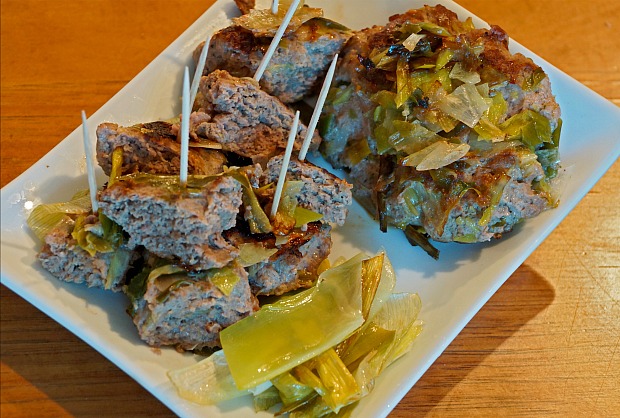
First, try these Leek Prasa, leek and ground meat patties with tons of flavor.
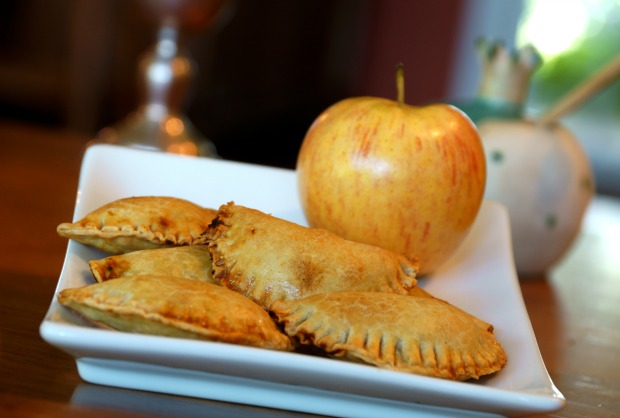
Don’t miss my Empanada del Cabasa pictured above, filled with sweet pumpkin.
Oh, one last recipe and siman. This is courtesy of my friend Rabbi Kalman Packous. Take a celery stalk and place a raisin in it. This is the sign for a raise in salary. (“Rais-in celery.)
And in case you were wondering, we use the fish head at my house as opposed to the lamb head. Easier to get and easier on the guests . . . well really all of us.
Have a beautiful, meaningful and successful Rosh HaShana. May your be inscribed for life, happiness and health.
L’Chaim . . . Avi



Leave a Reply