


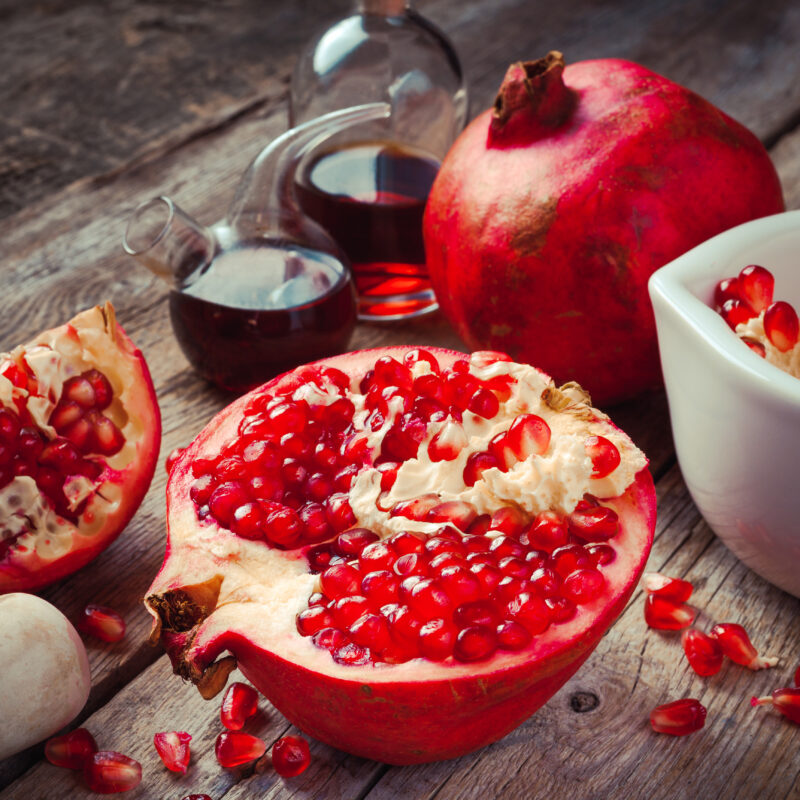
Pomegranate are delicious fresh, but I can’t pass on the possibility of preserving their sweet tanginess to season my cooking all year long, and this is where infusing them in vinegar comes to play. I experimented with a few different methods and proportions, and the following one was the winner.
You need equal weight of pomegranate seeds and vinegar, so if you own a kitchen scale (which I very much recommend), you can play around with the amounts. Once you seed the pomegranate, you weigh the seeds and use the same weight for vinegar. I chose raw apple cider vinegar because it’s widely available, flavorful and healthful, plus… I loved having the Rosh Hashanah theme (apples and pomegranates) going on, but feel free to use white wine vinegar (a good quality one) or even balsamic for a sweeter tasting vinegar.
How To Make Pomegranate Vinegar
Servings
Ingredients
- 1 pomegranate seeded (mine weighted about 61/2 ounces and the seeds measured about 1 cup)
- 6 1/2 ounces raw apple cider vinegar; about 2/3 cup
Instructions
- Pick over the pomegranate seeds, removing any white pith and/or any bad seeds and place them in a saucepan.
- Crush the fruit lightly to release its juices. A flat-bottomed metal dry measuring cup, works really well.
- Pour in the vinegar and bring everything to a simmer (small bubbles only, you don’t want to bring it to a boil) for just one minute to help infuse the vinegar, and turn off the heat immediately.
- Pour everything — vinegar and fruit — into a hot sterilized jar (it’s easier to work with jars with a wide opening). Cover the jar loosely with a kitchen or paper towel and let it cool completely.
- Cap the jar and put it in a dark cupboard, or in the fridge. The flavor keeps developing as the days go by and the seeds steep, but you can use it as soon as you need it.
- If you want, strain the fruit before using. You could add a bit of sweetener like honey or even a drizzle,of pomegranate molasses to enhance the flavor even more.
- NOTE on how to sterilize a mason jar:
- Wash the jars, lids and bands with soapy water. Rinse well. Put the jars (not the bands or lids) right side up on a rack in a large pot or saucepan of hot water (not boiling yet). There should be enough water to reach 1 inch above the tops of the jars. Boil 10 minutes and then lower the heat to a simmer until ready to use. Remove jars with tongs just before using, shaking off excess water and transferring onto a clean kitchen towel.





Great point, Ruth! Although most of the beneficial micro organisms in raw apple cider vinegar might get killed and the enzymes denaturized through the heating process, raw apple cider vinegar is organic, and since apples are one if the most sprayed crops, you will be using a pesticide free product. Plus, unprocessed apple cider vinegar is made mainly of acetic acid, which is alkalizing (helps regulate our body’s pH), a natural antibiotic and helps regulate blood sugar levels, it’s definitely a good ingredient to use.
if you are simmering it, is there any benefits to using raw ACV?
Hi Annette, Raw apple cider vinegar is a less processed version, which still has the “mother” (culture) and more health benefits, it’s made by different brands such as Bragg’s, Eden Organic, and others. It’s available in health food stores and some supermarkets, but if you can’t find it, you can use Heinz for this recipe.
i never heard of “raw apple cider vinager.” is that the regular apple cider vinager that i get at the store, like Heinz?