


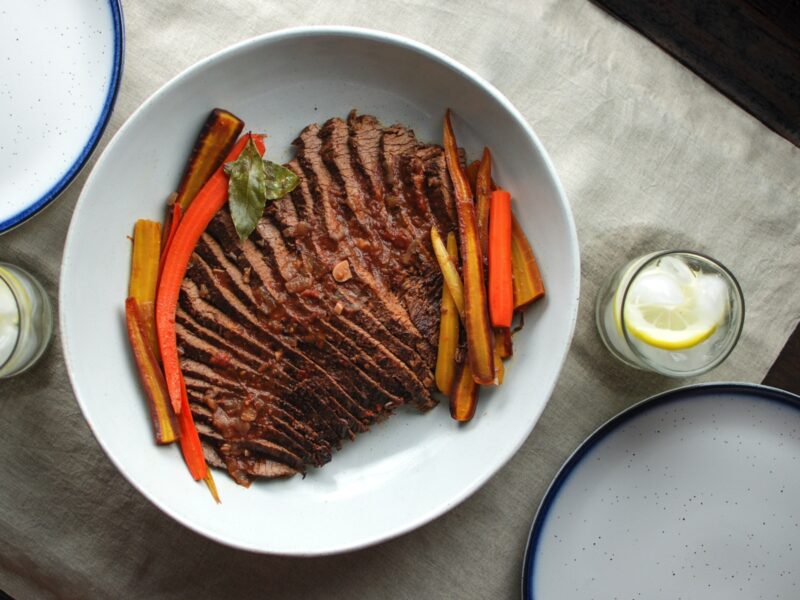
Everyone knows “brisket” — but do you really know brisket?
If you get flustered when trying to decide between first or second cut, don’t fear: we checked in with our Meat Expert, Naf Hanau at Grow & Behold to break things down for us just in time for the holidays.
Scroll Down For Recipes
Here’s what he says we need to know:
Quality Quality Quality
Beef brisket comes from pectoral muscles of the steer, which get a serious workout during the animal’s life. It’s important to consider the quality of the meat you buy, because brisket is a relatively tough muscle. But choosing high-quality, premium meats can help with your cook time and quality right off the bat.
TIP: If your aim is to produce the very best brisket for your family that tastes amazing and is thoughtfully produced, a brisket from Grow & Behold a great place to start.
Know your Cuts
Scroll to continue
More Love
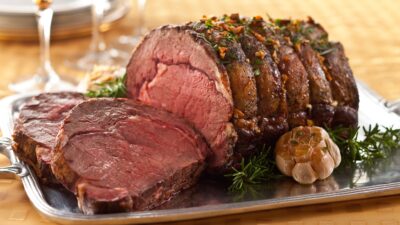
How Do I Cook a Roast?
The holiday roast can provoke anxiety in even the most experienced cook, but this roast …
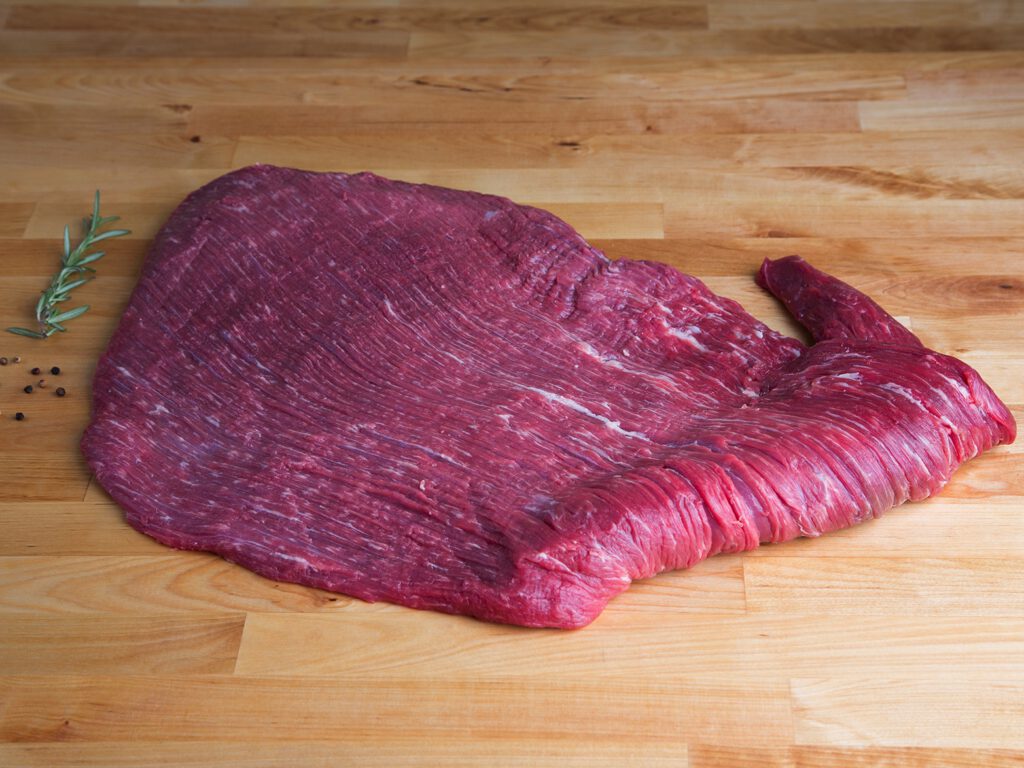
This is the larger of the two muscles that make up the whole brisket, and it’s much leaner than the second cut, and therefore can be tougher, depending on how it is cooked. Located below the second cut on the steer, the first cut can be anywhere from 3.5 to 10 lbs.
TIP: Some people like to use sweeter, and/or more complex flavors when working with first cut brisket.
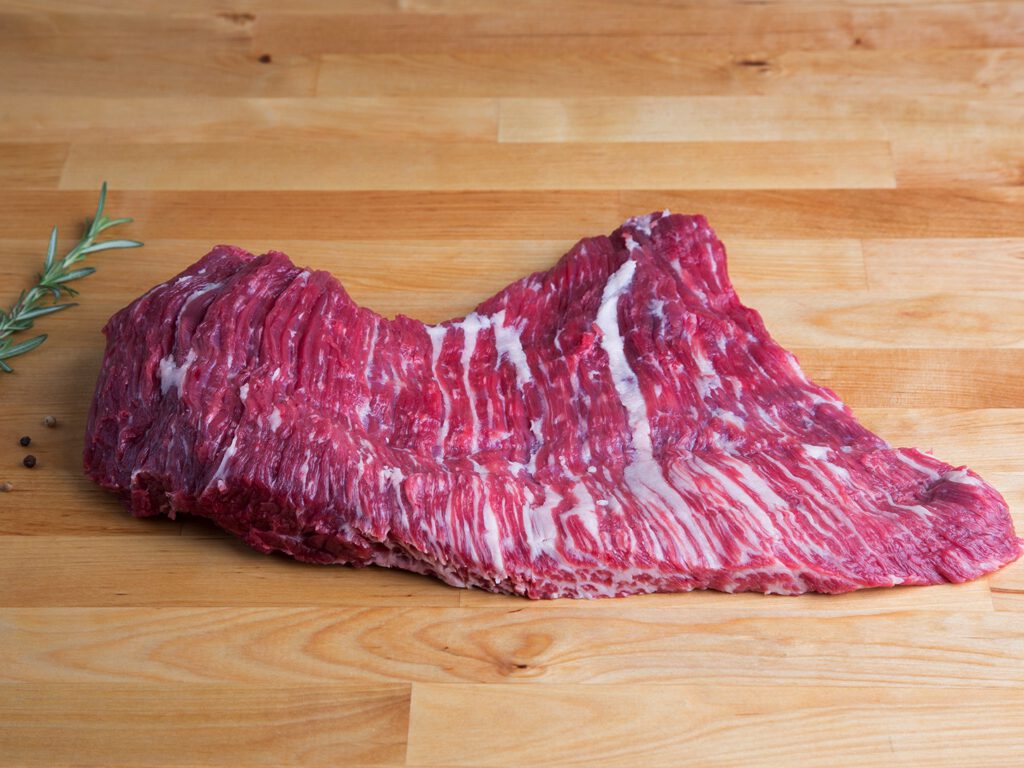
This is the part of the brisket that sits on top of the first cut, separated from it by a generous pocket of fat. The second cut has much more intramuscular fat, or marbling, that makes it extremely tender and flavorful when cooked. These cuts are smaller — about 1.5 to 3 pounds.
The second cut is also extremely forgiving while cooking, due to its higher fat content. If it’s of premium quality, it can be seasoned with nothing but salt and pepper (although you can certainly use a more complex spice rub and glaze). Second cut is great for smoking, low roasting, or slow cooking into the best pulled beef you have ever tasted.
TIP: Because of its marbling and looser grain, second cut is harder to slice, especially if it’s cooked for a long time.

Weighing in anywhere from 6-12lbs, this is your go-to when you are cooking for a crowd. The whole brisket includes the First and Second Cut.
The fat that separates the two muscles will also baste the first cut and help keep it more moist that it might be cooking on its own.
TIP: When braising a whole brisket, keep the first cut underneath, since it’s more important that the first cut be submerged in the cooking liquid.
Want more?
Try the recipes from this video.
Israeli Inspired Oven Braised Brisket
Stovetop Brisket (use potato starch in place of flour)
Use leftovers to make Matzo Balls Dippers
Learn more about the differences between Smoking and Braising a Brisket, and what goes into making amazing Kosher meat in the Grow & Behold Brisket Guide.
Get your copy of Brisket 101 full of Jamie’s favorite Brisket recipes in time for the holidays!





It’s not easy to find the different cuts of brisket in Israel you usually can just get a whole brisket and it is number 3
Hi,
How would you buy any of these options in Israel? Do you know which number meat is the equivalent or similar to each cut of brisket?
Thanks
I like to cook a whole usda prime brisket. If in the offset, fat side up, point towards fire. If in the drum, fat side down. I will smoke at 225, then during the stall – increase heat to 275. Monitor internal temps of both the flat and the point independently. If one runs too high too quick, cool it temporarily with sheets of cold fat trim. When internal temp hits 190, wrap tight in talllow soaked butcher paper, place in large tray with half cup water, seal tight with foil, hold in oven at 150 F for 10+ hours.
As the owner of a high end meat market and the owner of 2 BROTHERS BBQ in Krum Tx, we have found that there was not a noticeable difference in cooking fat up or down, but in the grade or quality of the brisket. We only sell choice or better. What goes on the smoker is flat or uniformed brisket, this gives us even cooking across the entire cut. Because not every case of brisket is perfect we also cook to internal temperature, 185, pull, wrap in foil and let rest in coolers for 4 to 6 hours. It is our tried and true method and after 1000’s pounds brisket, a sure thing for us.