


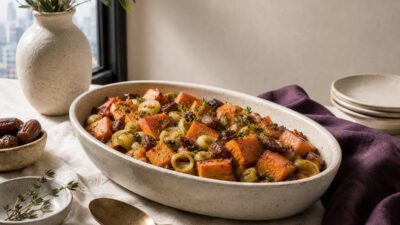
Celebrate the new year with a pot full of symbolic flavors! This Pot of Blessings is a stew of fruits and vegetables traditionally associated with Rosh Hashanah Simanim. Make it ahead, let the flavors mingle, and enjoy a beautiful, vibrant dish on your holiday table.
Get a printable simanim guide here.
I discovered this recipe at a friend’s house last Rosh Hashanah and since the recipe was in Hebrew I decided to adapt it and share it with you here in English. It is super easy and goes with anything. Feel free to adapt the ingredients to the fruits and vegetables you can find. The original version uses fresh dates, but dried ones work too, they just add a bit more sweetness.
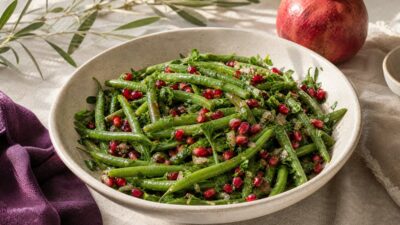
Sprinkle with some fresh pomegranate seeds for some extra blessings and a splash of color.
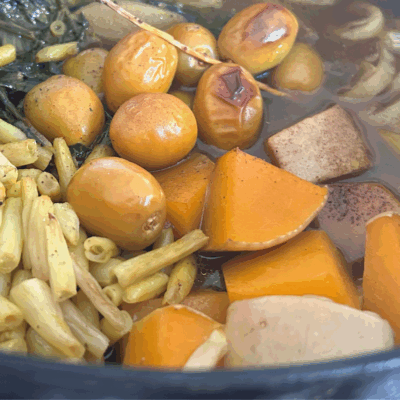
A Pot of Blessings
Servings
Ingredients
- 2 tablespoons olive oil
- 1 large onion sliced
- 2 tablespoons silan date syrup
- 1/2 teaspoon turmeric
- 1/4 teaspoon salt
- 1/4 teaspoon black pepper
- 1/4 pumpkin or squash cut into cubes with skin
- 1 peeled quince or tart apples cut into wedges
- 1 bunch Swiss chard leaves with stems roughly chopped
- 1 leek roughly chopped
- 1 cup green or yellow beans fresh or frozen
- Bunch of fresh yellow dates or 3-4 dried pitted and cut in half
- 3/4 cup chicken or vegetable broth
- 1/2 teaspoon cinnamon
Instructions
- Preheat oven to 390°F.
- Heat 2 tablespoons oil in a large pot (preferably a wide Dutch oven) over medium heat. Add the sliced onion and fry until golden.
- Stir in 2 tablespoons silan (date syrup), 1/2 teaspoon turmeric, 1/4 teaspoon salt, 1/4 teaspoon black pepper. Mix gently.
- Arrange the pumpkin, quince, chard, leek, green beans, and dates in the pot each in its own section, side by side.
- Pour broth over vegetables. Cover and cook on low heat for 40 minutes.
- Remove the lid and sprinkle 1/2 teaspoon cinnamon over the top.
- Transfer the pot to a preheated oven at 200°C (390°F) for 15 minutes, until the vegetables develop a light amber color.
- Serve warm and enjoy the symbolic flavors of the season.


I linked to a printable simanimin guide in the intro in addition to the article on simanim
Thank you! Was that there before? If so, I feel awfully silly.
There was a link for more but I found some things that needed to be updated so I am glad you told me.
What is the intended symbolism of each ingredient? That's half the fun of simanim!