


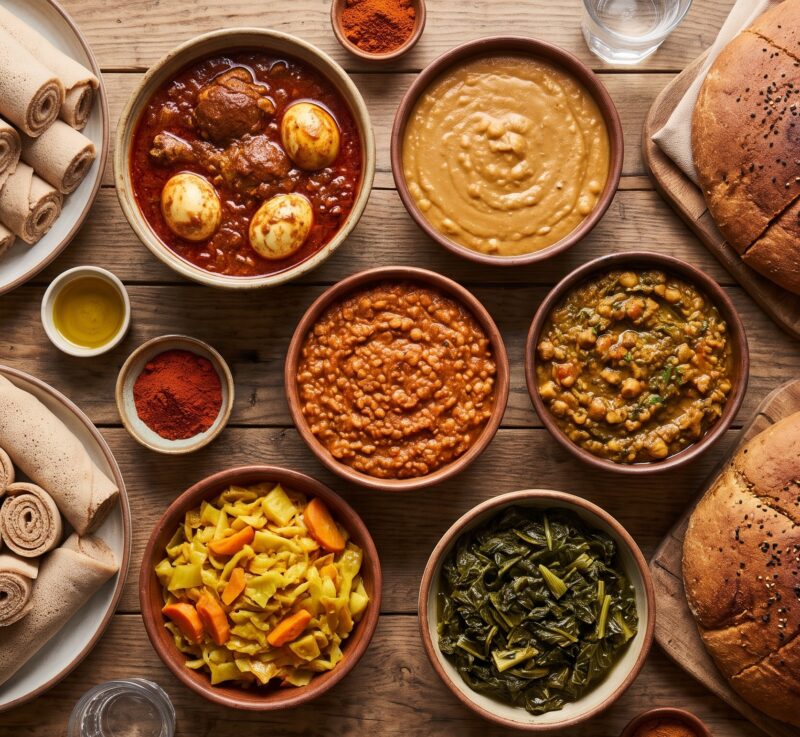
Every once in a while, your Friday night table needs an infusion of vibrant color, bold spices, and something just a little bit unexpected.
Enter: Ethiopian cuisine.
Rich, fragrant, and deeply communal, an Ethiopian Shabbat platter is the ultimate game-changer. The best part? These stews and vegetable dishes are actually made for a Jewish kitchen. Because Ethiopian cuisine revolves around slow-simmered wots (stews), they hold up beautifully on a plata (hot plate) or warming tray, don’t dry out, and taste even better as the spices meld overnight
Grab your largest platter, gather the family, and get ready to eat with your hands.
The Heart & Soul: Spices and Breads
Homemade Berbere Spice Blend
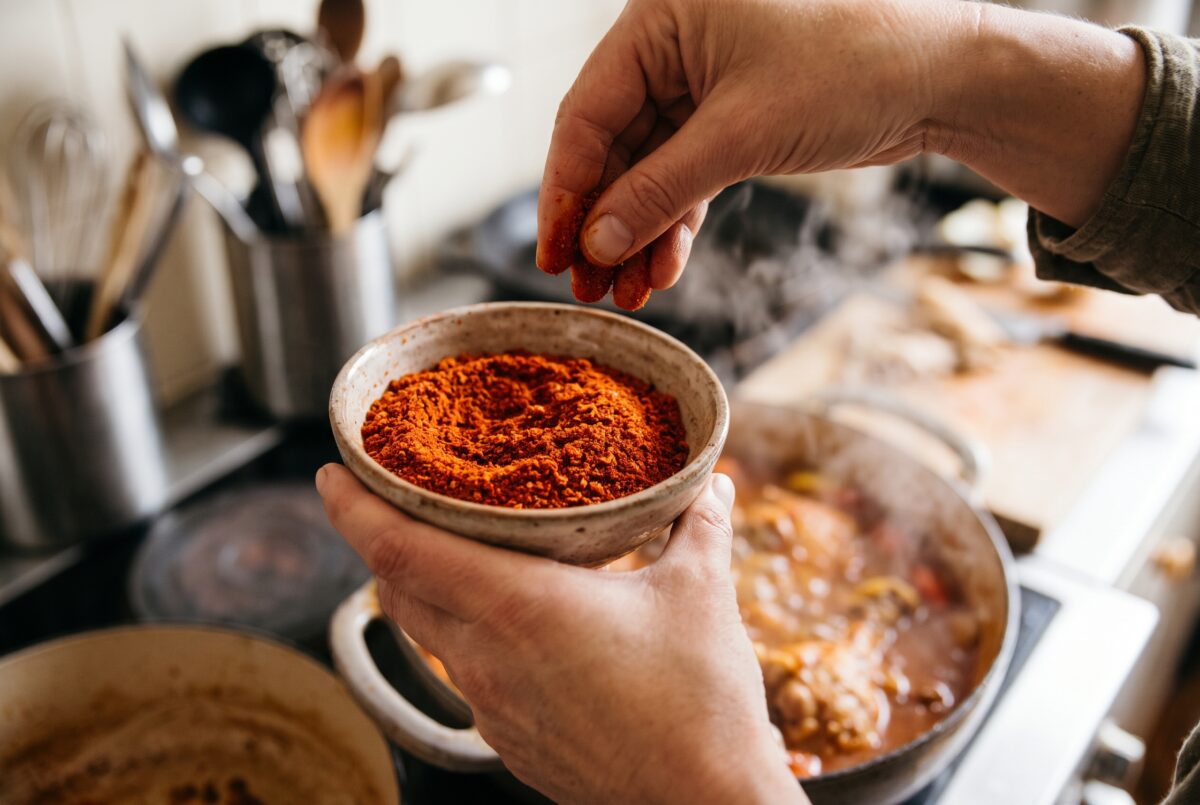
Every great Ethiopian feast starts here. Berbere is an aromatic, fiery, crimson spice mix packed with chili peppers, garlic, ginger, coriander, cardamom, and fenugreek. It provides that unmistakable, smoky depth to nearly every stew.
Don’t have time to blend your own? You can easily find pre-made Berbere at Middle Eastern and specialty kosher grocers. Keep in mind that Berbere packs a kick—start with a modest amount and add more as you taste!
Injera (Traditional Teff Flatbread)
Scroll to continue
More Love
How To Cook Turkey London Broil
How to cook turkey london broil? 1. Marinate 2. Roast in a 375˚ F. oven for approximately …
73 Israeli Food Recipes You Need To Try
Yom Haatzamut is just around the corner (in 2021 it will be celebrated from the night of …
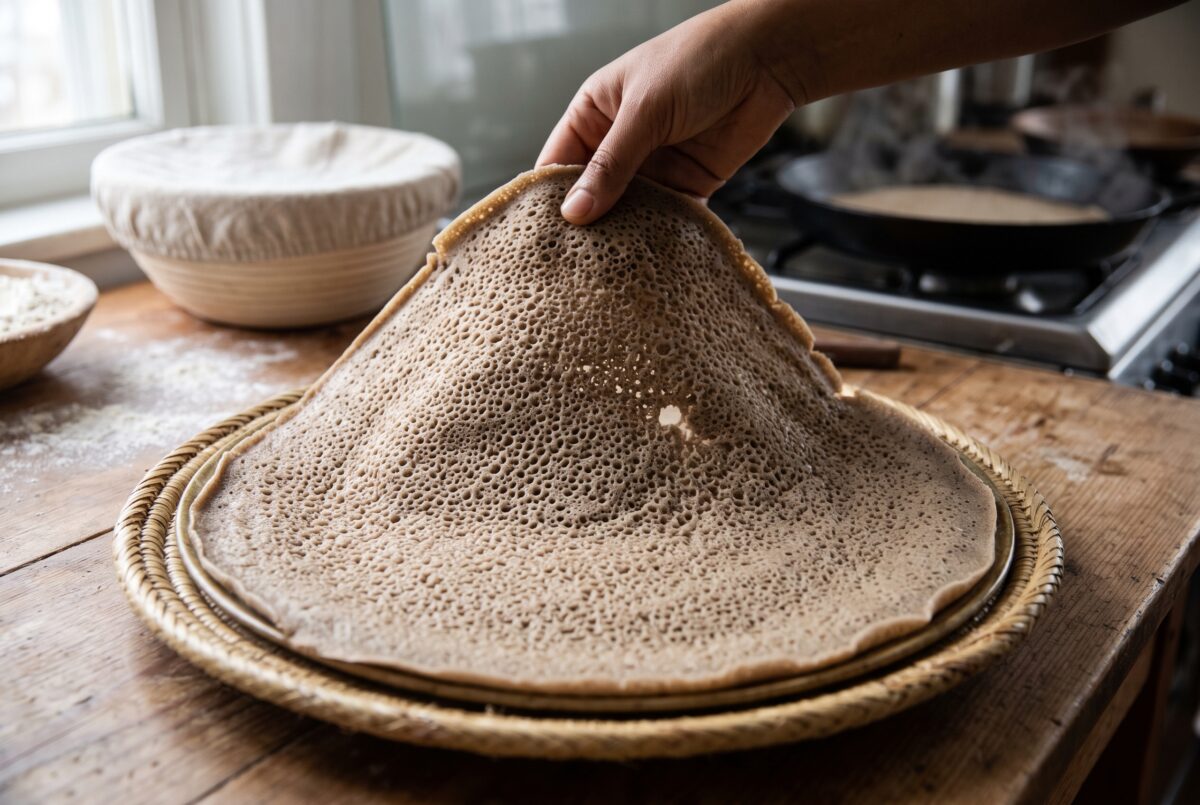
Injera is not just bread—it’s your plate, your fork, and your napkin all in one! Made from nutrient-dense teff flour, this spongy flatbread is naturally gluten-free and packed with protein, iron, and fiber. The fermentation process gives it a distinct, sour sourdough flavor that perfectly cuts through rich, spicy stews.
- Prep Hack: Authentic, fermented injera has a bit of a learning curve to make at home. Don’t stress! Check if your local Ethiopian restaurant sells fresh rolled injera by the bag, or swap in warm naan, laffa, or pita for an easy shortcut.
Dabo (Ethiopian Shabbat Bread)
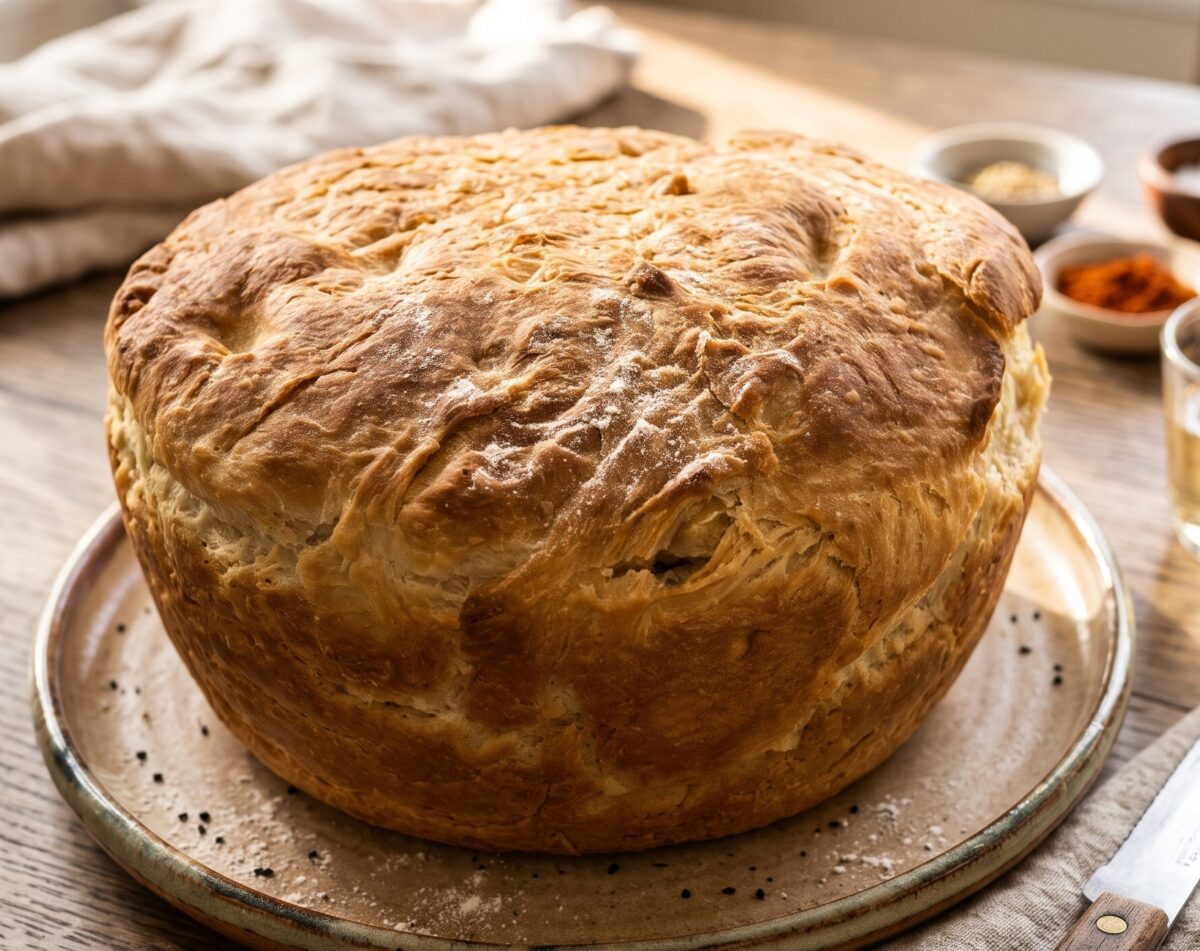
Looking for an alternative to your regular challah? Dabo is a slightly sweet, spiced Ethiopian wheat bread infused with ginger, coriander, and nigella seeds. It’s thick, fluffy, and ideal for tearing and dipping into savory sauces.
The Stews & Mains
Doro Wot (Spicy Ethiopian Chicken Stew)

Considered the national dish of Ethiopia, Doro Wot is a showstopper for Friday night. Chicken legs are slow-cooked in a rich sauce of caramelized onions, berbere, garlic, and spiced clarified oil, finished with hard-boiled eggs that soak up all that velvety sauce. It sits on a Shabbat hot plate like an absolute dream.
Beejhy’s Shiro (Ethiopian Chickpea Stew)
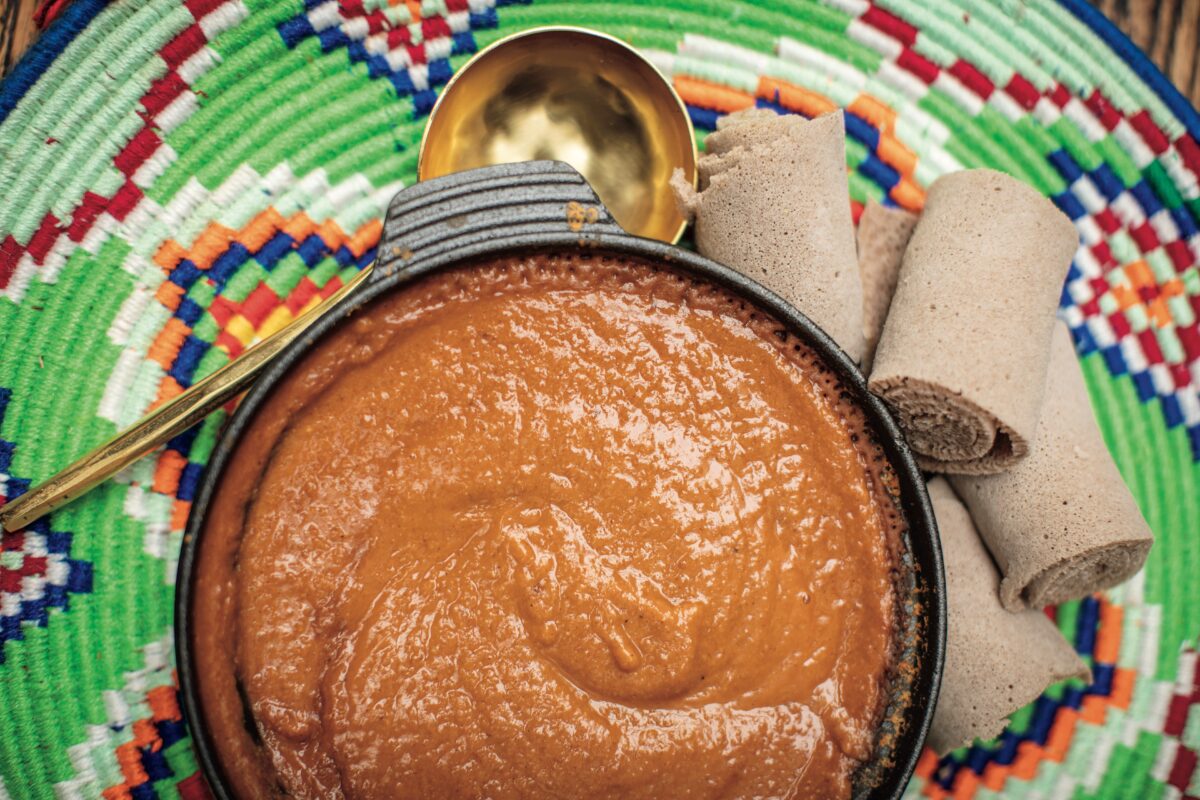
Shiro is pure comfort food. Made from ground chickpeas (or broad beans), garlic, and aromatic spices, it cooks down into a thick, buttery, velvety puree that is completely vegan and high in plant protein. Kids love the mild, creamy texture, and it holds its moisture on the warming tray for hours.
Messer Wot (Red Lentil Stew)
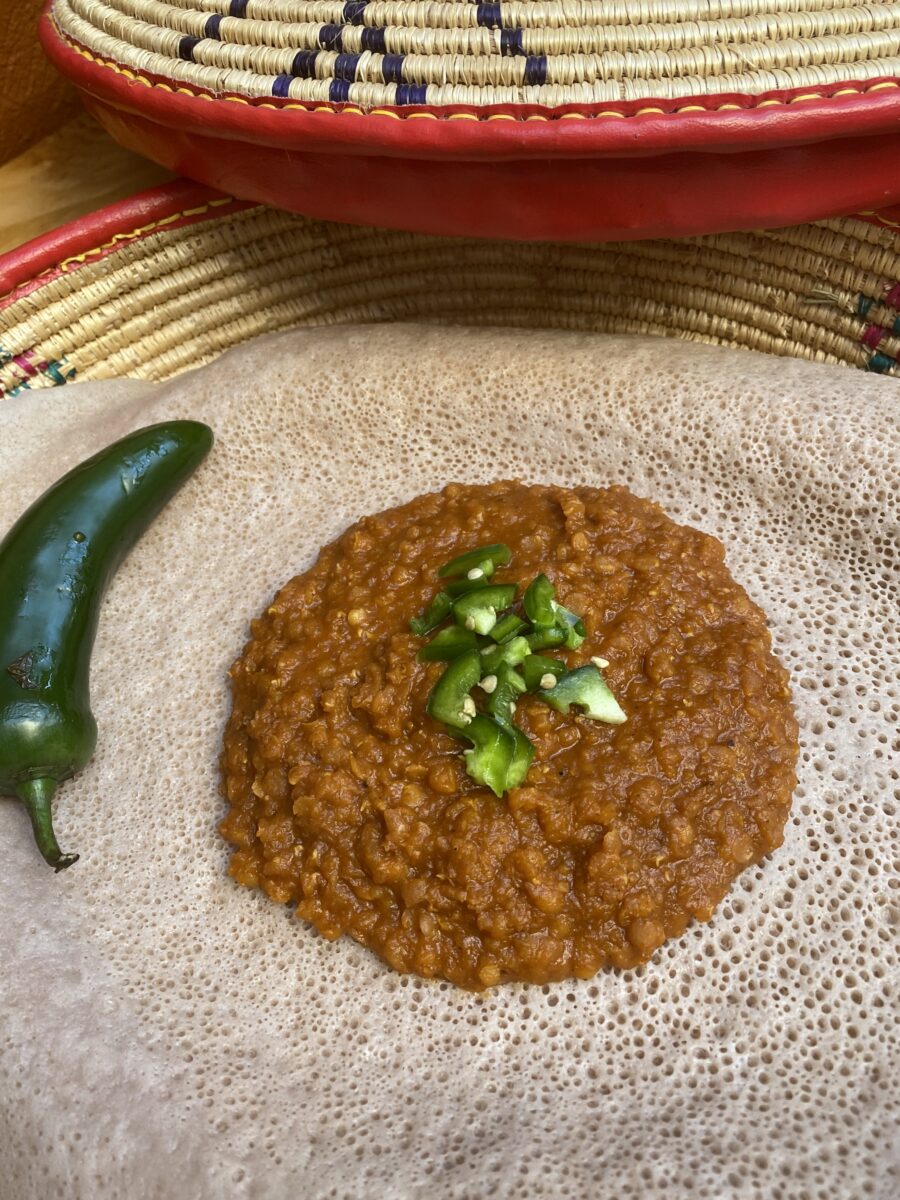 Credit: Tsion Cafe
Bright red lentils cooked down with onions, ginger, and berbere until tender and deeply flavorful. Like any good legume dish, Messer Wot actually improves when made a day ahead, making it a stress-free Friday prep win.
Vibrant Veggie Sides
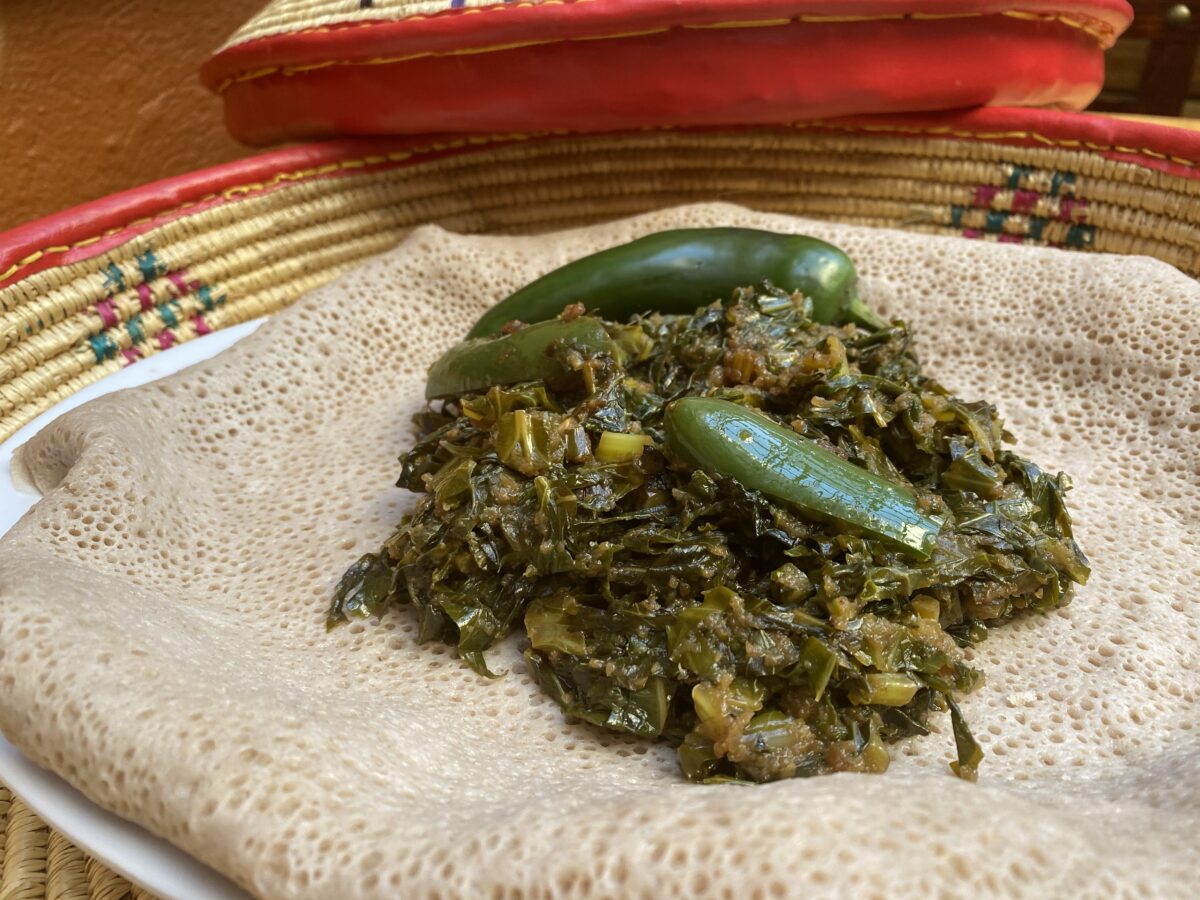
Ethiopian Collard Greens (Goman)
 Credit: Tsion Cafe
Balance out the richness of your wots with tender, braised greens. Sautéed with onions, garlic, and warm spices,Goman brings freshness and color to the platter. Unlike delicate salad leaves, collards are sturdy enough to sit warm without turning to mush.
My Mother’s Cabbage (Tikil Gomen Style)
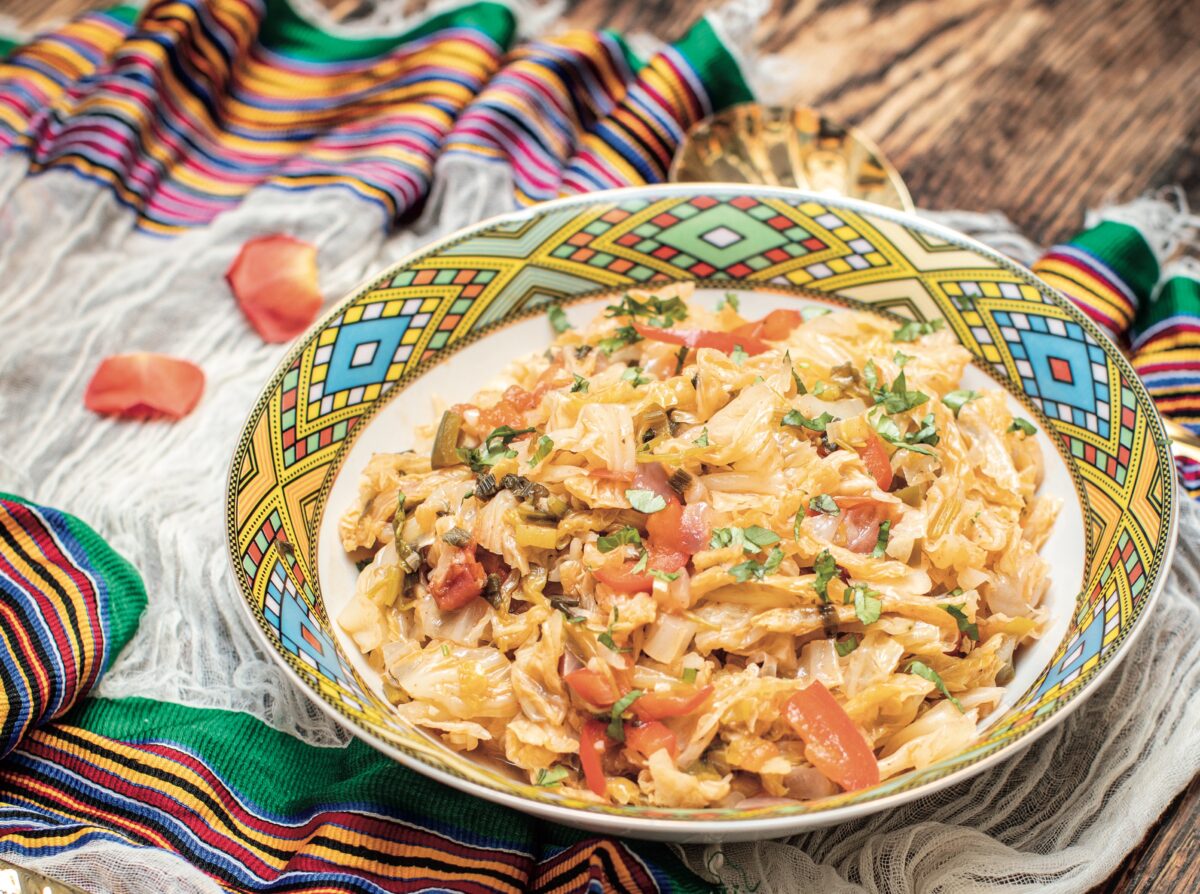
A golden, sweet, and savory braise of cabbage, carrots, and warm turmeric notes. The sweetness of the caramelized carrots and cabbage provides the perfect cooling contrast to the punchy heat of the Berbere-spiced chicken and lentils.
The Sweet Finale: Coffee Ceremony & Pareve Treats
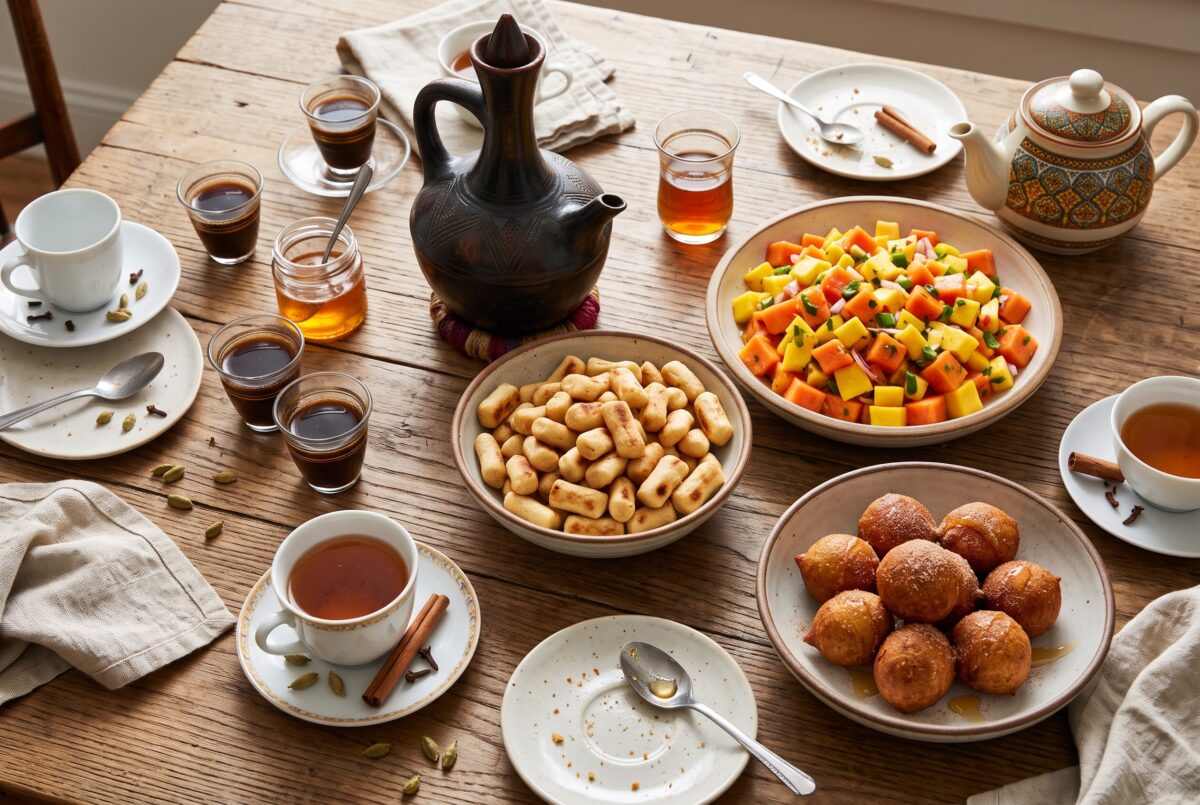
Traditional Ethiopian dining doesn’t revolve around heavy cakes or creamy puddings—dessert is typically light, spiced,and built around hospitality, fresh fruit, or sweet fried breads. Following a meat meal like Doro Wot, these pareve options wrap up the feast without competing with the bold flavors of dinner.
Ethiopian Coffee Ceremony (Buna) & Spiced Tea
In Ethiopia, the “dessert” is the experience of Buna. Freshly brewed dark roast coffee is infused with crushed green cardamom pods, cinnamon, and cloves. If you’re winding down on Friday night and avoiding late-night caffeine, swap the coffee for Ethiopian Spiced Tea (Shai): black tea brewed with whole cloves, cinnamon sticks, ginger slices, and fresh mint leaves, sweetened generously with honey or sugar.
Dabo Kolo (Sweet & Crunchy Little Bites)
These are Ethiopia’s favorite finger-food snack. Tiny, marble-sized dough bites spiced with cardamom and cinnamon, tossed with a touch of sugar, and baked or pan-toasted until crunchy. Think of them like sweet, miniature mandelbrodt nuggets that you can pass around the table with your tea or coffee.
Spiced Papaya & Mango Salad with Lime and Honey
Nothing cuts through rich Berbere spices quite like tropical fruit. Dice up fresh papaya, sweet mango, and pineapple,toss with fresh lime juice, a drizzle of silan (date syrup) or honey, and a dusting of ground ginger or cardamom. It acts as an instant, vibrant palate cleanser.
Fried Plantains or Honey Puffs (Sambusa / Bombolino Style)
For something warm and indulgent, pan-fry ripe plantains in coconut oil until deeply caramelized with crispy, golden edges, then finish with coarse sea salt and cinnamon. Alternatively, serve warm fried dough puffs tossed in warm spiced honey syrup for an authentic, crowd-pleasing finish.







Leave a Reply