


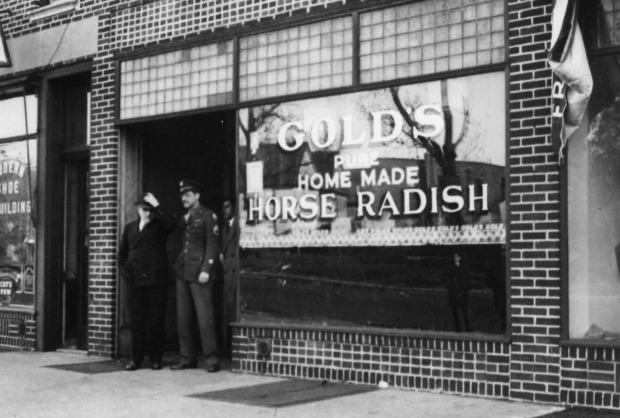
Pesach is synonymous with horseradish and horseradish in turn is synonymous with Gold’s. Gold’s is a one-of-a-kind family-run business which started off during the American Great Depression; a true Great Depression start-up. In 1932, hardworking couple Tillie and Hyman Gold started selling their fresh horseradish and did all the work by hand. Cleaning, cutting, and grating the horseradish roots; measuring and mixing the ingredients; filling the jars; pasting on the labels (with paste made at home with flour and water)…all by hand, one jar at a time with a dedicated focus on freshness and quality. The recipe and hard work ethic was transferred through the generations and is now run by the offspring of Tillie and Hyman.
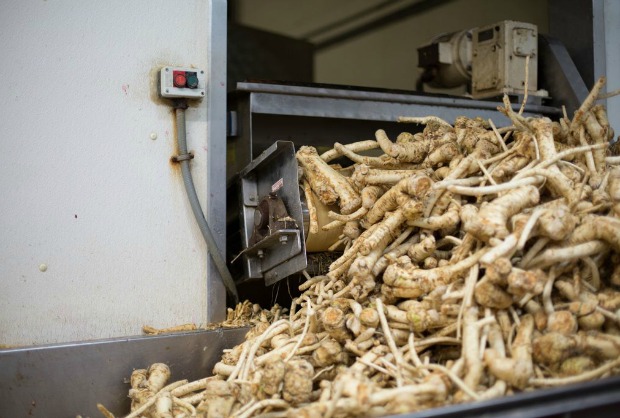
Make Horseradish – A Visit To Gold’s
Today, Gold’s is still a family-run operation and is famous for being meticulous in cleanliness and adhering to the highest standards of kashrut and quality of their products. Gold’s horseradish has no preservatives, and is a classic ingredient that is enjoying the spotlight, thanks to Gold’s. Gold’s also produces many other products such as borscht, barbecue sauce, and duck sauce, which are all kosher for Passover.
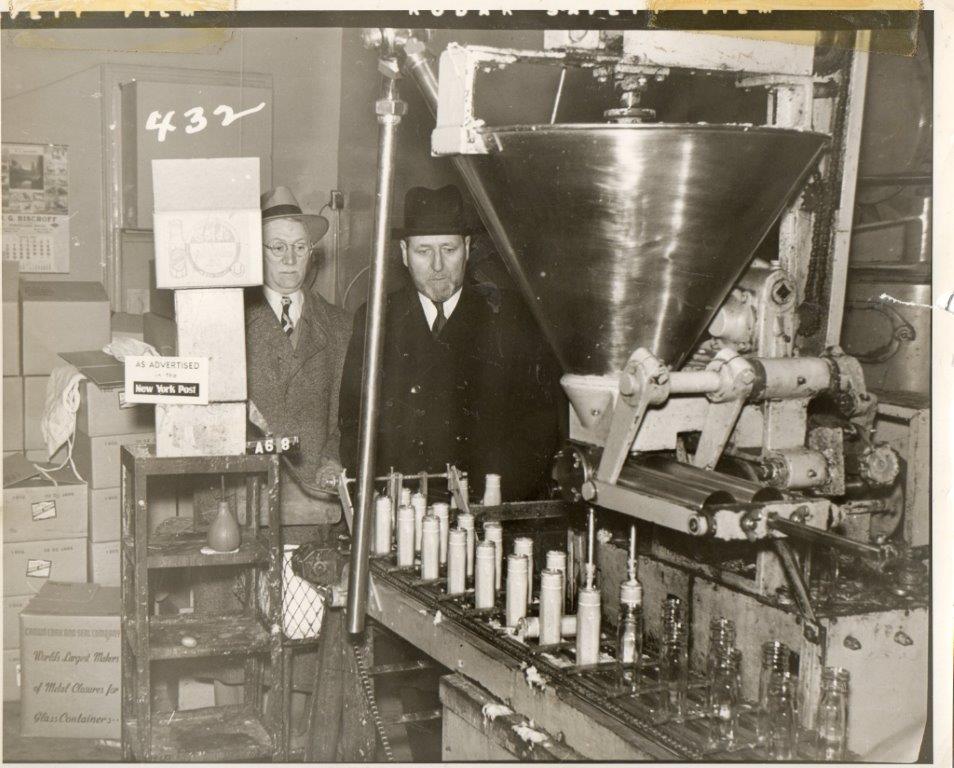
Rabbi Schay and Rabbi Hornstein on 4/3/52 at 18th ave Brooklyn NY (the original factory)
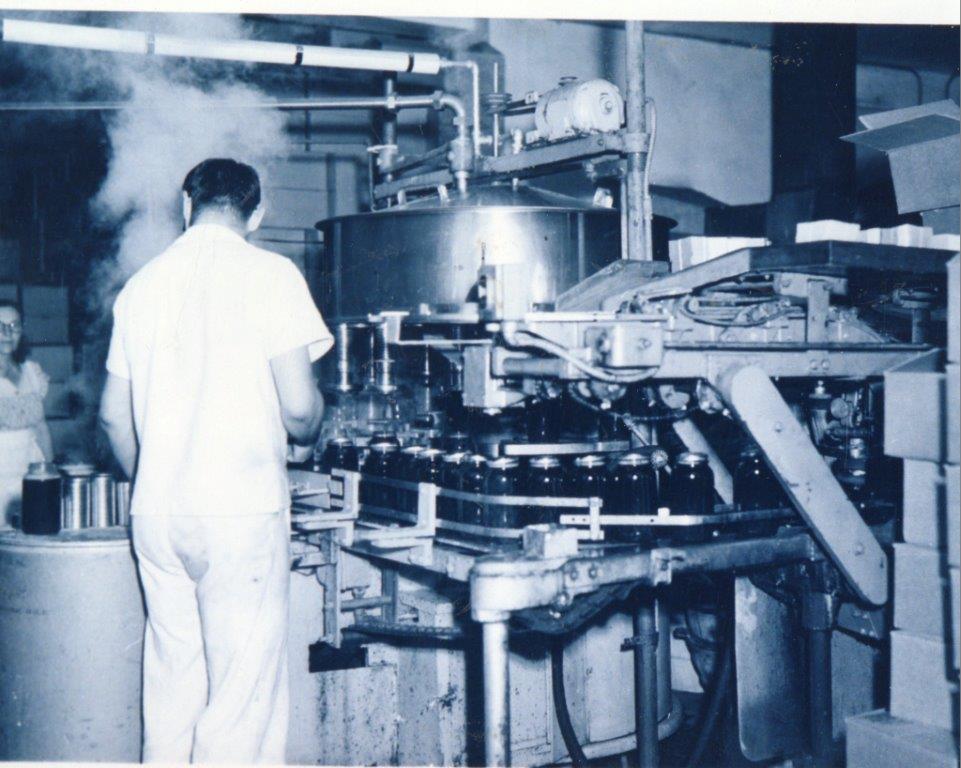
2 Generations (See Tilly on the far left and her son Morris here with his back to us making borscht in the early 50’s.
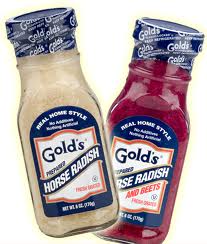
Gil Marks shares some history of horseradish and its’ use as maror at the Seder:
Horseradish, a perennial member of the mustard family (not actually a radish), is a native of temperate southern Russia or Eastern Europe, the area where it is still most appreciated. Its name in Slavic languages is the ancient word khren, the source of the Eastern Yiddish khreyn and Western Yiddish kreyn. Horseradish began arriving in Central Europe by the early 12th century. In southern Germany, Austria, and Czech, the name became kren. In northern Germany, horseradish was called meerrettich (“more radish”), meaning larger and more intense. A misinterpretation as “mare radish” gave rise in the 1500s to the English horseradish.
Scroll to continue
More Love
How To Cook Turkey London Broil
How to cook turkey london broil? 1. Marinate 2. Roast in a 375˚ F. oven for approximately …
73 Israeli Food Recipes You Need To Try
Yom Haatzamut is just around the corner (in 2021 it will be celebrated from the night of …
The first mention of horseradish in a Jewish source was in a list of ingredients used to make charoset by Eliezer ben Nathan of Mainz (c. 1160), who spent several years living in Slavic lands. Similarly, Rabbi Eleazar ben Judah of Worms in Sefer ha-Rokeach (c. 1200) included it in his charoset ingredients. Horseradish was not yet considered appropriate as maror (bitter herb). The requirement for maror is only leaves or stalks, but, for culinary purposes, horseradish is a rhizome. Although the top of the mature root may stick above the ground, that does not make it a stalk. In addition, it is pungent and fiery, not bitter. Horseradish also lacks the other Talmudic characteristic for maror — dull green foliage with latex sap; horseradish leaves are dark green and contain no white sap.
The first written record to permit using horseradish for maror, but only when the preferable lettuce was unavailable, was by Israel ben Joel Susslin of Erfurt (c. 1390). Subsequently, as Jews moved further north, and greens on Passover became impractical, horseradish root became a norm for maror. Among the first to identify horseradish as one the Talmudic vegetables for maror was Rabbi Yom Tov Lipman Ben Nathan Heller (1579-1654) of Moravia, in his commentary on the Mishnah, Tosfot Yom Tov, who considered it as the Talmudic tamchah. (Rashi identifies tamchah as horehound and Maimonides as a type of chicory.) To further complicate matters, in modern Hebrew, horseradish is chazeret, another in the Talmudic list of acceptable maror, not its ancient meaning of lettuce.
RECIPES WITH PREPARED WHITE HORSERADISH:
Crust rib roast or silver tip roast with horseradish and roast in oven.
Add horseradish to mayonnaise and serve as a dipping sauce for fish or steak.
Use horseradish mayonnaise to make deviled eggs. Slice boiled eggs in half. Mash egg yolks and add horseradish mayo. Pipe into egg whites. Garnish with chopped chives.
Mix horseradish into ketchup or barbecue sauce for an added kick. Add to braised chicken or meat dishes.
Add to chicken soup.
Mix into potato kugel batter.
Click here for more recipes using horseradish.
As seen in Joy of Kosher with Jamie Geller Magazine Spring 2014 – Subscribe Now.




Leave a Reply