


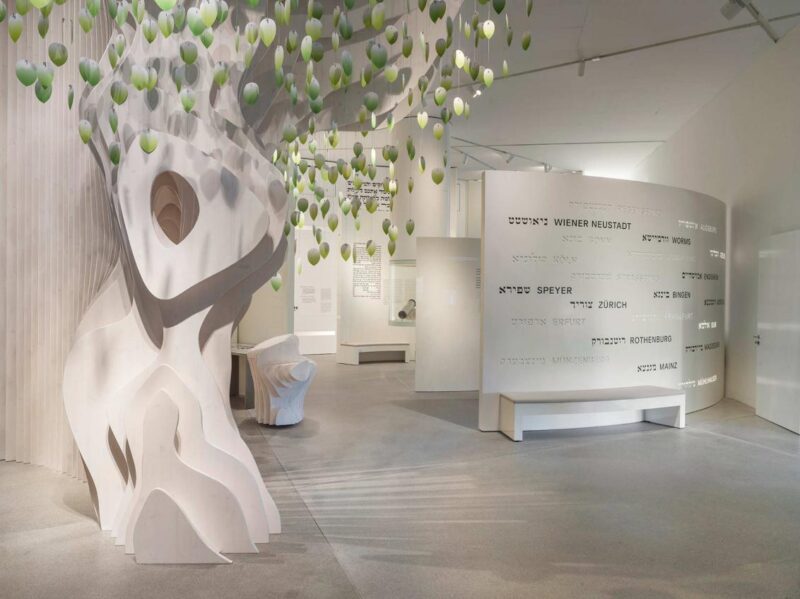
Berlin is a city that tells stories — some exhilarating, others sobering. For Jewish travelers, Berlin offers a deeply layered experience. Its vibrant cultural life today coexists with the shadows of a devastating past. A visit to the city can be a powerful journey through memory, resilience, and renewal. Whether you are exploring your heritage, honoring history, or simply eager to learn, Berlin’s Jewish sites and experiences offer profound meaning.
Here’s how to spend three nights and four days in Berlin, with a thoughtful itinerary that balances history, culture, reflection, and community.
Day 1: Arrival, Orientation, and Introduction to Jewish Berlin
Morning: Check-In and Welcome Walk
Upon arrival, settle into one of the centrally located hotels that are convenient for Jewish heritage tourism. Recommended options include Intercontinental Berlin and Hotel Indigo Ku’daam adjacent to the 16th-century Tiergarten park, Hotel Augustinenhof in Mitte, which is close to many historical Jewish sites, or the boutique Hotel Adlon Kempinski, which sits right by the Brandenburg Gate. Provocateur Hotel is also a great choice close to chabad and a few kosher restaurants.
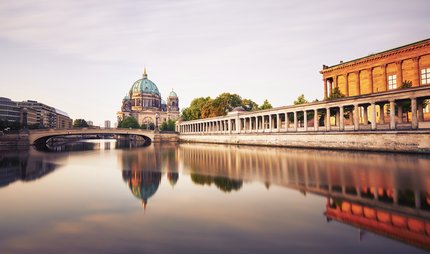
After checking in, take a walk around the Mitte district. This area holds many of Berlin’s central landmarks and gives you a feel for the city’s layered architecture, ranging from imperial grandeur to modern design. Grab a bite at Beth Cafe while in the area.
Afternoon: The Jewish Museum Berlin
Scroll to continue
More Love

Beyond Kasha Varnishkes: Why Buckwheat Deserves a Permanent Spot in Your Pantry
If you grew up in an Ashkenazi Jewish household, the word buckwheat probably …

Jamie Geller’s Shabbos Plan
Our entire week revolves around the holy Shabbos. It is the glue that holds the Jewish …
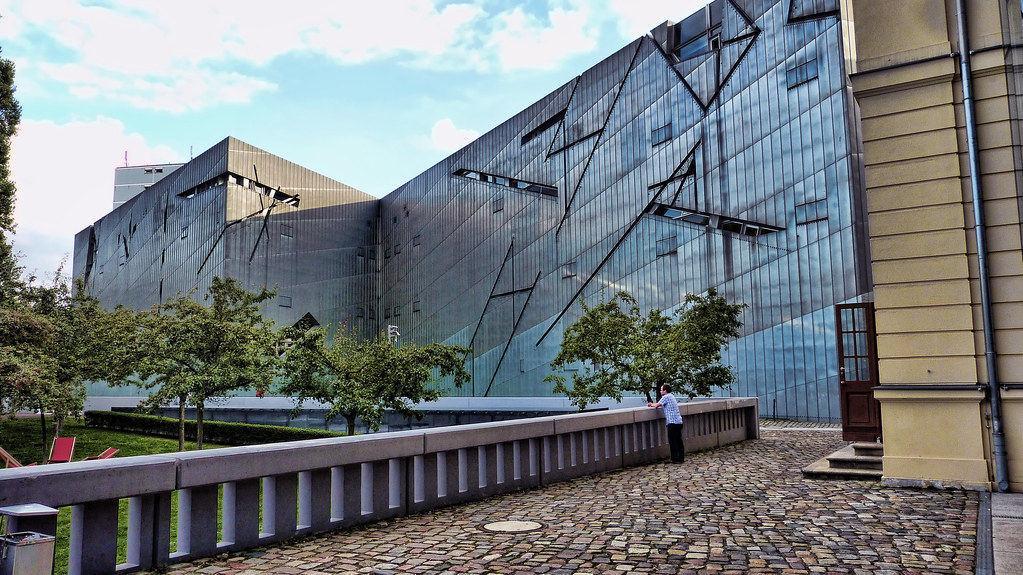
No better place to begin your journey than the Jewish Museum Berlin (Jüdisches Museum Berlin), designed by architect Daniel Libeskind. Its striking zigzag structure symbolizes the fractured history of the Jewish people in Germany. Inside, you’ll find a moving and extensive exhibit chronicling two millennia of Jewish life in German-speaking lands.
Highlights include:
- The Holocaust Tower, a chilling void that conveys isolation and loss.
- The Garden of Exile, which disorients and evokes the experience of displacement.
- Interactive exhibits, personal stories, and objects that bring history to life.
Take your time here — the museum is emotional and intellectually rich.
Dinner: Bobbe, a kosher Middle Eastern restaurant with a fun relaxing atmosphere.
Day 2: Memory and Remembrance
Morning: Memorial to the Murdered Jews of Europe
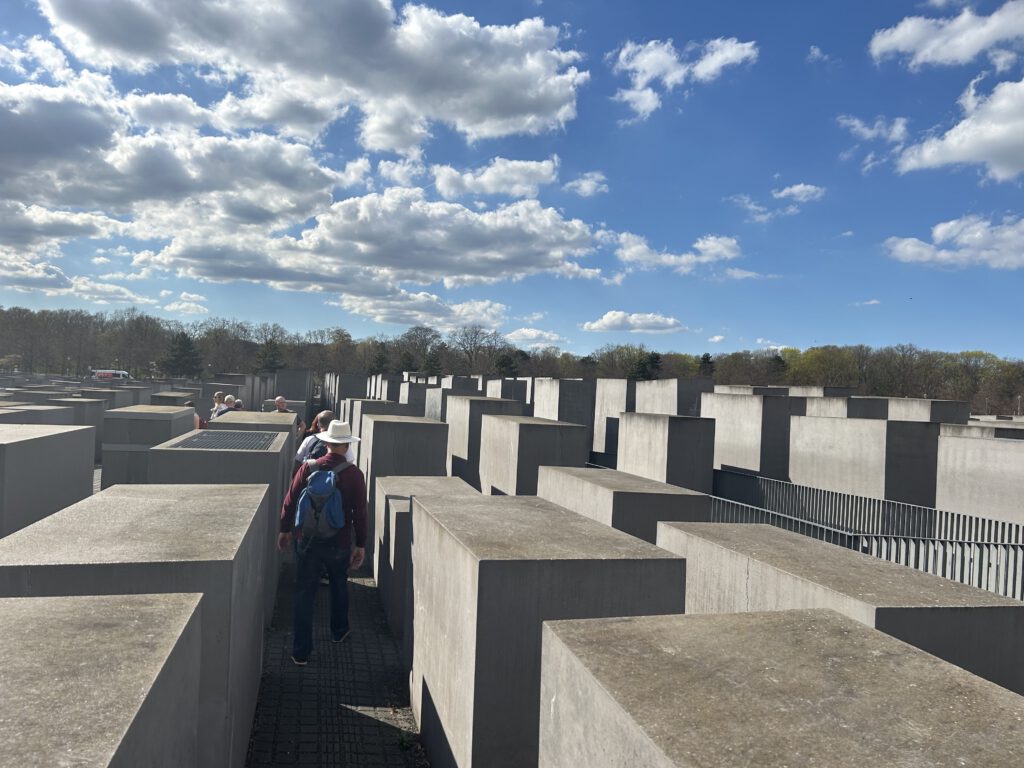
Start your day with quiet reflection at the Memorial to the Murdered Jews of Europe, also known as the Holocaust Memorial. Located near the Brandenburg Gate, this sprawling field of 2,711 concrete stelae is both a public space and a contemplative monument. Beneath it lies an information center with personal testimonies, historical timelines, and detailed exhibits.
Walking Tour: Berlin Tour
After the memorial, join a guided Jewish Berlin walking tour — several excellent organizations offer them, including Berlin Jewish Tours and Insight Berlin. Alternatively, walking tours are available that highlight World War II and Cold War history and offer a broader perspective, showing the impact of Nazism and Communism on this proud city.
Afternoon: Neue Synagoge and Topography of Terror
Visit the Neue Synagoge on Oranienburger Straße.
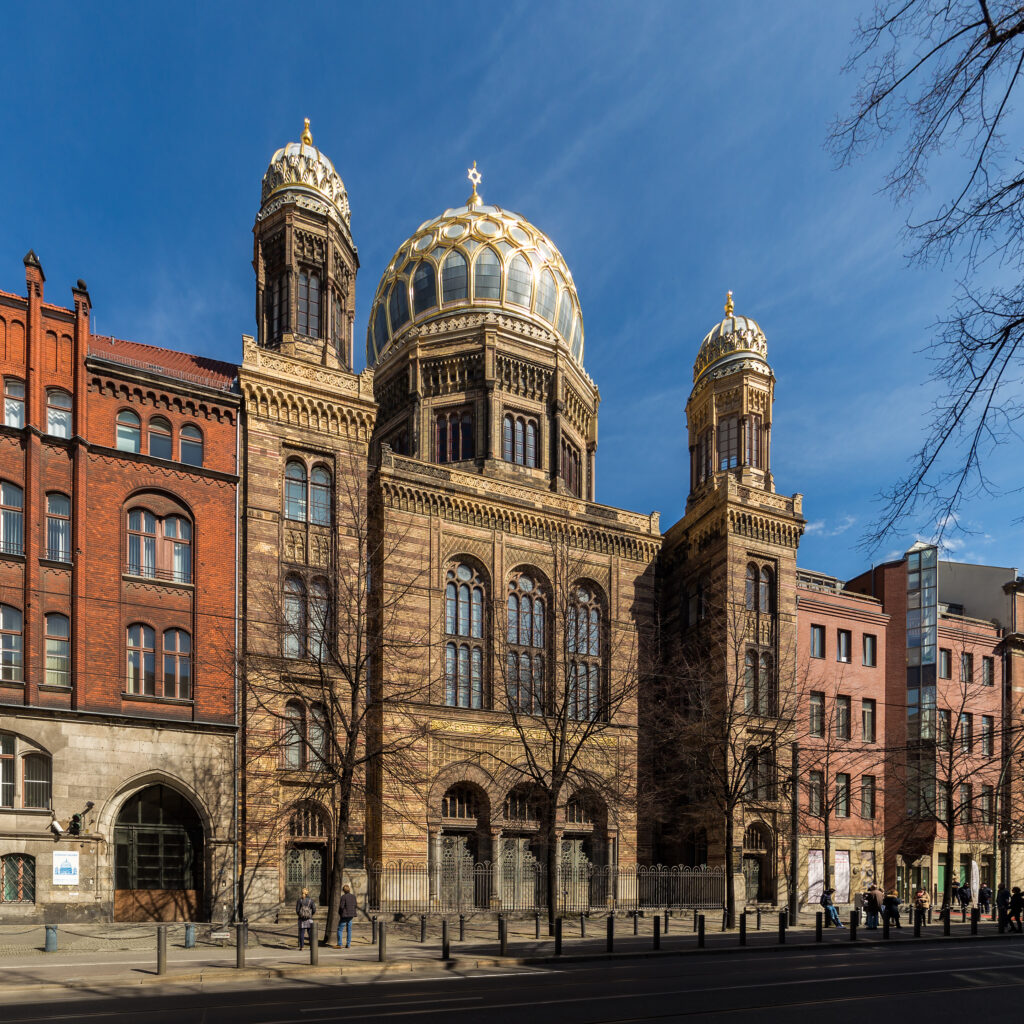
Once Berlin’s largest synagogue, the Neue Synagoge is a symbol of Jewish revival. Though heavily damaged during WWII and the Kristallnacht pogrom, parts of it have been restored. The golden dome gleams once again, and inside you’ll find a small but poignant exhibition on Berlin’s Jewish history, along with remnants of the original sanctuary.
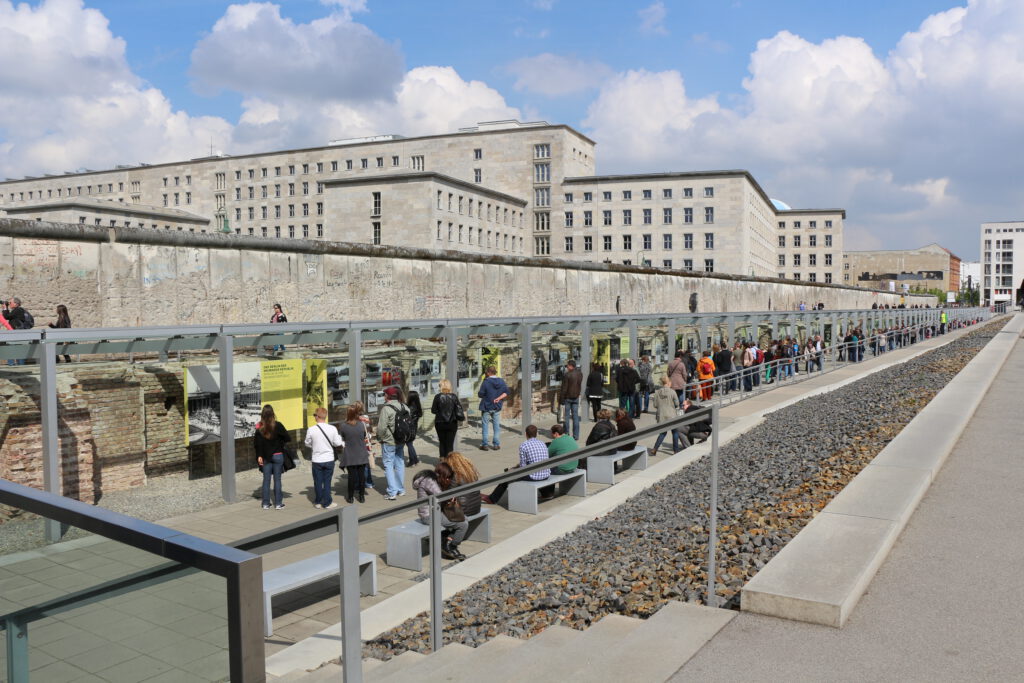
Located on the former grounds of the Gestapo and SS headquarters, the Topography of Terror Museum offers a stark yet immersive experience through its open-air exhibits and detailed documentation center. Visitors can walk along preserved sections of the Berlin Wall while learning about the mechanisms of Nazi terror. The minimalist architecture and somber atmosphere serve as a respectful backdrop to a deeply moving exploration of Germany’s dark history.
Late Afternoon: Stolpersteine Walk
As you wander back through the city, keep an eye on the sidewalks for Stolpersteine — “stumbling stones.” These brass plaques, embedded in front of buildings, commemorate victims of the Holocaust with names, dates, and fates. They’re everywhere, a decentralized, grassroots memorial project that humanizes the loss one name at a time.
Dinner: L’chaim
Enjoy Israeli-German cuisine at L’chaim Restaurant at Chabad, a meat restaurant in the Wilmersdorf neighborhood.
Day 3: Cultural Exploration and Renewal
Morning: The House of the Wannsee Conference
Take a short train ride (S-Bahn S1 to Wannsee) to the Haus der Wannsee-Konferenz, the lakeside villa where Nazi officials planned the “Final Solution” in 1942. The serene surroundings contrast jarringly with the horror discussed here. The museum inside is powerful and educational, with exhibits on how bureaucracy facilitated genocide.
Afternoon: Grunewald Station Memorial and Lunch
Nearby is Track 17 at Grunewald Station, a memorial at the railway platform from which thousands of Berlin Jews were deported to ghettos and camps. Metal plaques on the platform list the dates and destinations of each deportation.
Explore Berlin’s Contemporary Jewish Life
In the afternoon, explore the revitalized community in Berlin today. You can visit the Jewish Community Center on Fasanenstraße or check out the Fraenkelufer Synagogue, one of the few active Orthodox synagogues in Berlin.
Grab a bit at Feinberg’s nearby.
Consider visiting the Centrum Judaicum, which is both a research institution and a memorial. It provides a broader context of Jewish intellectual and cultural life in pre-war Germany.
Evening: Cultural Performance or Night Walk
Check for cultural events at venues like:
The Berlin Jewish Theater (Jüdisches Theater Berlin Bimah)
The Maxim Gorki Theater, often hosts Jewish-themed or multilingual plays
Enjoy a late-night walk by the Spree River or through the Hackescher Markt area, known for its cafés, nightlife, and historic courtyards.
Day 4: Art, Legacy, and Departure
Morning: Visit Jewish Cemeteries and Art Spaces
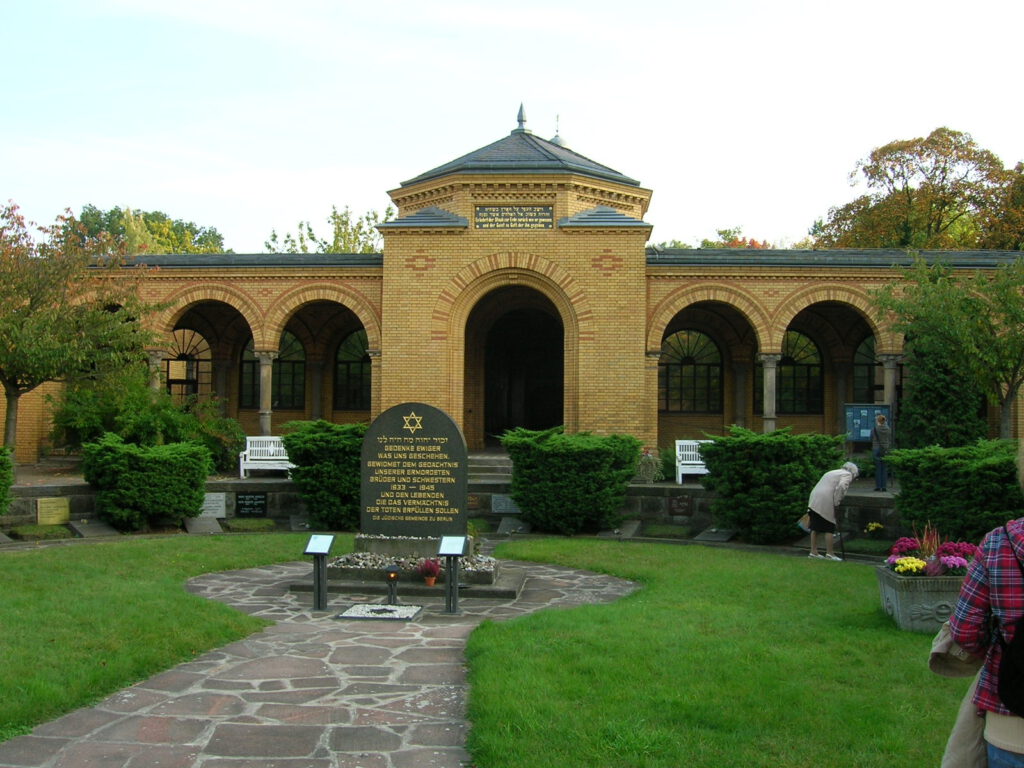
If you have a late departure, start your final day with a visit to Weißensee Jewish Cemetery — one of Europe’s largest and most beautiful Jewish cemeteries. Alternatively, the smaller Schönhauser Allee Jewish Cemetery in Prenzlauer Berg is closer to the center and rich in history.
Stop by Galerie Crone or Kunsthaus Dahlem for modern art exhibitions, often showcasing work by Jewish artists. Berlin’s contemporary art scene is thriving, and many Jewish artists—both German-born and immigrants—are shaping the discourse.
If you still have time, browse Dussmann das KulturKaufhaus, a huge bookstore with a good selection of Jewish literature, German-Jewish history, and English-language titles.
Additional Tips and Resources
Kosher Dining: Berlin has several kosher restaurants and groceries, for a full list check here, and always double check if places on google are open and still certified kosher.
Shabbat: Several synagogues welcome visitors, but be sure to register in advance and bring your passport for security checks.
Public Transit: Berlin’s U-Bahn and S-Bahn are efficient. Buy a 72-hour Berlin WelcomeCard for unlimited travel and discounts at museums.
Language: English is widely spoken, but learning a few basic German phrases is appreciated.
A City of Contrasts and Continuity
To spend three nights in Berlin as a Jewish traveler is to engage with a city that remembers — and continues to evolve. It is a place where absence is palpable, yet where community and culture endure. Through its memorials, museums, synagogues, and culinary offerings, Berlin invites reflection, honors resilience, and sparks hope.
Whether you walk in the footsteps of those who came before, attend a modern cultural festival, or share a meal with locals, you become part of a living, breathing dialogue between past and present.
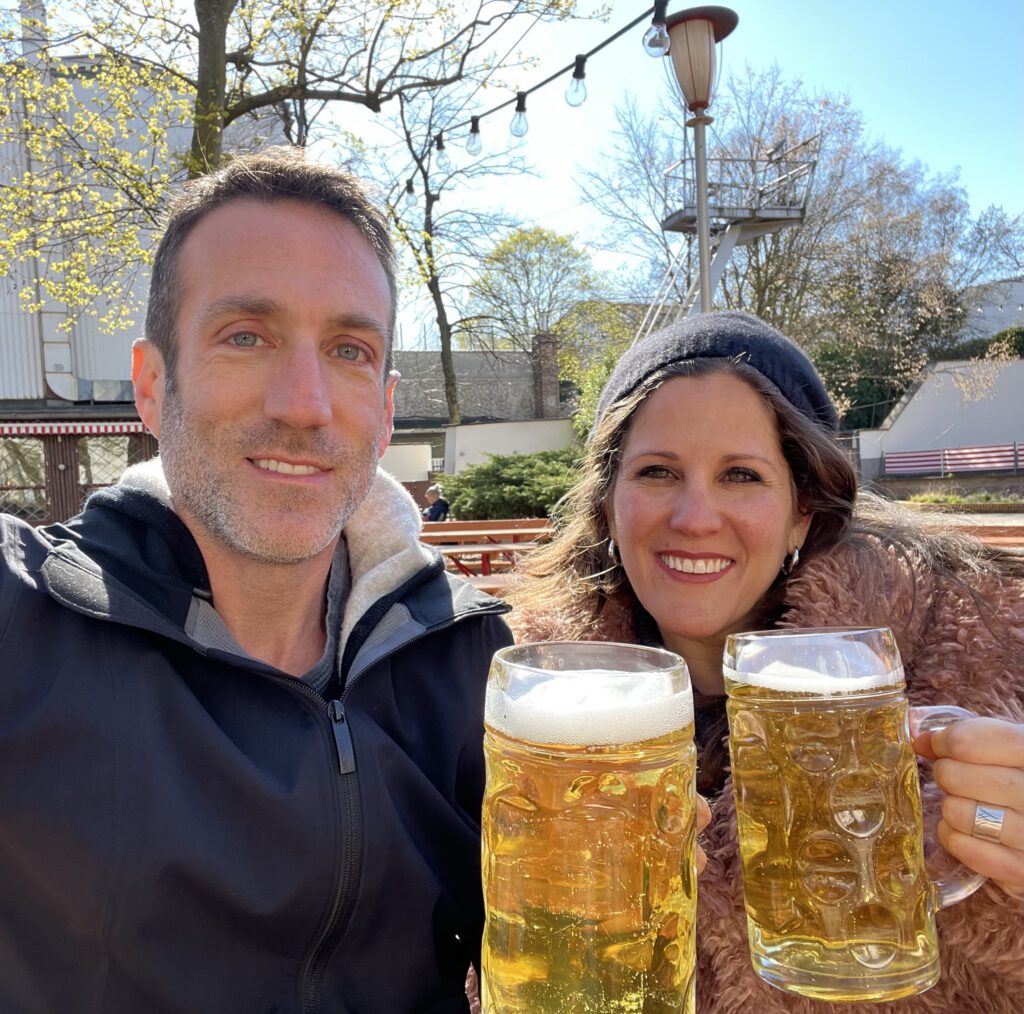
Don’t forget to have a beer and say L’chaim at one of the famous beer gardens.





Leave a Reply