


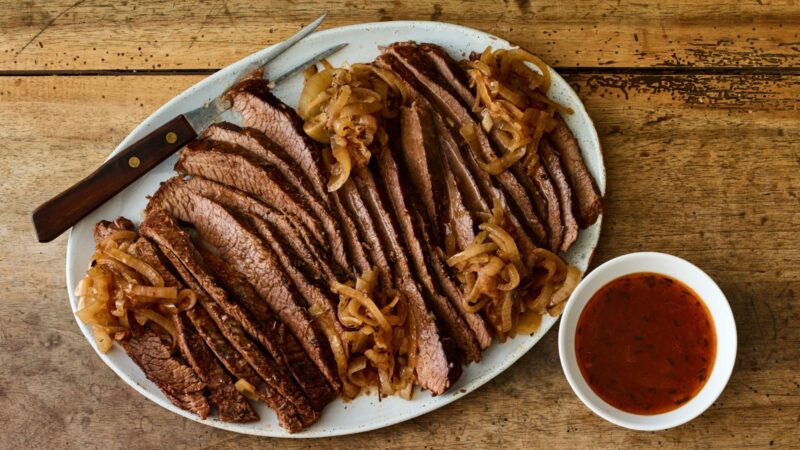
…overcooked.
Really!
If you want that tender, soft, melt-in-your-mouth, fork tender, cuts like “butter” beef then brisket is your best friend, your baby, your #1. Although in Israel it’s designated by the number #3 but that’s neither here nor there.
I have a little love affair with brisket. It’s been so good to me over the years. Save for one terrible, terrible (I mean tears kinda terrible) incident which to this day I can’t quite figure out exactly what went wrong (I wrote about all the sordid details in third book). That one bad episode aside (hey, even Seinfeld can have a bad episode or two and still be one of the greatest sitcoms to have ever graced the airwaves), brisket is most probably my best friend, my meat soul-mate, if you will. It’s so forgiving, it’s so tender (when sliced against the grain), it’s so easy to work with and lends itself to any and every possible preparation under the great big bright sun (sweet or savory, Asian or Argentinian inspired, with coffee or beer or wine and more).
How did it become classic Jewish food?
If I had to venture a guess (since I am too busy (read lazy) to look this up right now it’s most probably because it can be prepped ahead and lends itself perfectly to reheating (in fact is better when prepped ahead and reheated) which all coincide nicely with the prohibitions associated with cooking and rewarming foods on Shabbat and prepping in advance for a ton of company for 2 and 3-day holidays. If you are a bulk cooker and freezer, brisket is your friend too!
Most often we cookbook authors will end a brisket recipe with instructions to let it rest for at least 15 minutes before slicing against the grain and serving. But really, there is a better way to do that and so much more. Listen very closely to what I am writing and you are reading here:
Rubbed and Seared.
Scroll to continue
More Love

Classic Cholent
The Best Classic Cholent Recipe: Shabbat Morning Comfort, Just Like Bubby Made Growing up, …
Soft and Chewy Nougat
Are you searching for a truly soft and chewy Italian nougat recipe? I can tell you …
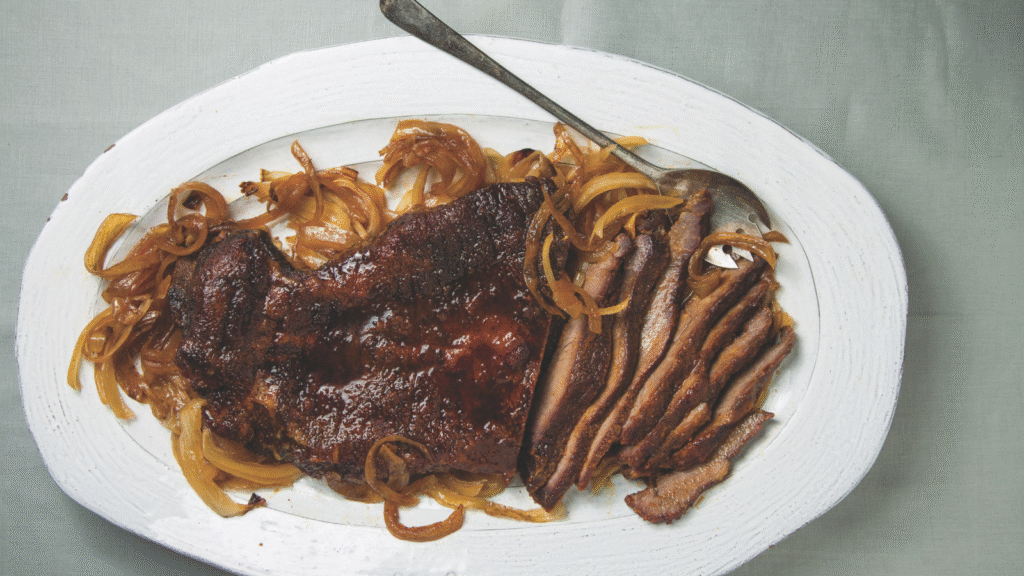
If the recipe doesn’t call for a spice rub then do this with a little kosher salt and fresh cracked black pepper or follow my instructions on how to make a spice rub. Sear a few minutes per side in a hot oiled pan or Dutch oven set over high heat. Contrary to the oft-repeated food myth that searing will lock in moisture it’s still an extra step worth the extra effort. The caramelized surface of the meat will add an incredible depth of flavor to your brisket enhancing both the meat and braising liquid with layers of complex flavor. The contrast in taste and texture to meat with a seared crust and soft interior makes the food more pleasing to the palate. Brisket and meat dishes in general that have not been seared can taste flat and boring.
Braised Low and Slow.
This hands-off method is a G-dsend for (busy) home cooks. Heat + time + moisture breaks down the tough connective tissue making it an ideal way to cook tougher cuts like brisket.
Ideally, between 250-350℉is where you want to braise your brisket, about 45 minutes per pound when under 4 pounds and 40 minutes per pound when over 4 pounds. I like to braise my brisket at 325–350℉. Best braised in a Dutch oven or tightly covered pan/roasting dish, liquid (usually something acidic – tomatoes, beer, wine, vinegar + water or stock) should not cover the meat entirely (that’s called boiling) but rather reach no further than 2/3rds of the way up the side of your brisket. Tightly covered and cooked at a low temperature will yield fork-tender brisket. The braising liquid will become your sauce or gravy.
Made the Night Before at the very least.
You can even make it several days or weeks or even months in advance. Refrigerating or freezing sliced brisket in sauce and rewarming it will only further soften the meat.
Sliced Cold against the grain.
Far better than letting your brisket sit for a minimum of 15 minutes is refrigerating it overnight and slicing it cold. This will produce beautiful thin slices in a way that slicing the ever-so-slightly-rested, semi-warm, soft brisket never can – if not sliced cold brisket often shreds. Further, its little sleepover in the fridge makes removing the fat (that has congealed at the top) super easy – resulting in a far richer, more pleasant, full bodied sauce or gravy. Watch how to slice against the grain.
Submerged and Rewarmed.
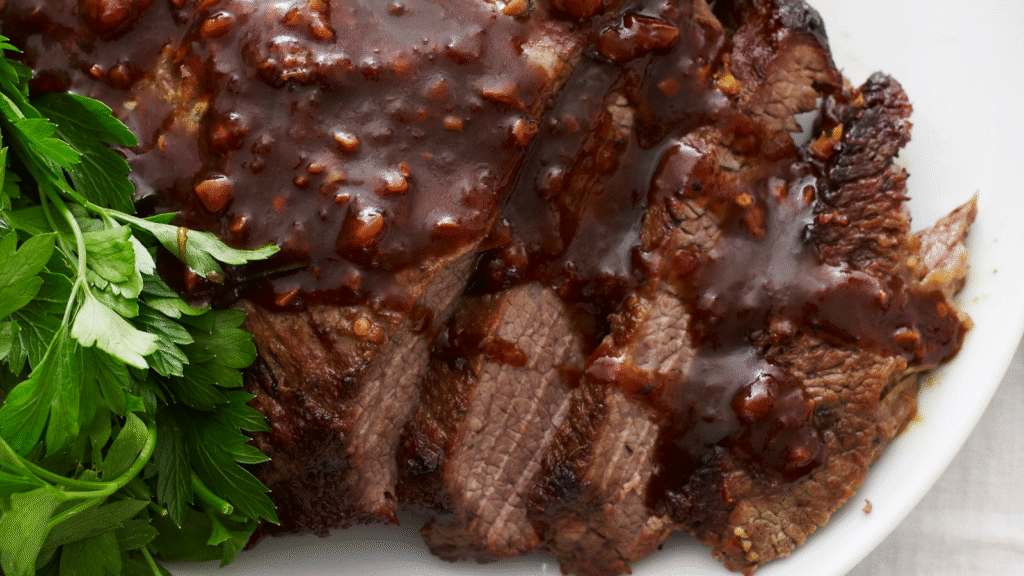
Once sliced submerge into the pan sauce and cover. Refrigerate overnight or for a few days or freeze for up to a few months. Rewarm covered in a 250-300℉ oven. No need to thaw completely before rewarming if you don’t have time. (Brisket can take a lot! It’s a resilient, tough eventually tender cut that can handle the oven to fridge to oven to table business well.)
For more tips, tricks, and recipes to make the best brisket ever, get my Brisket 101 Book.
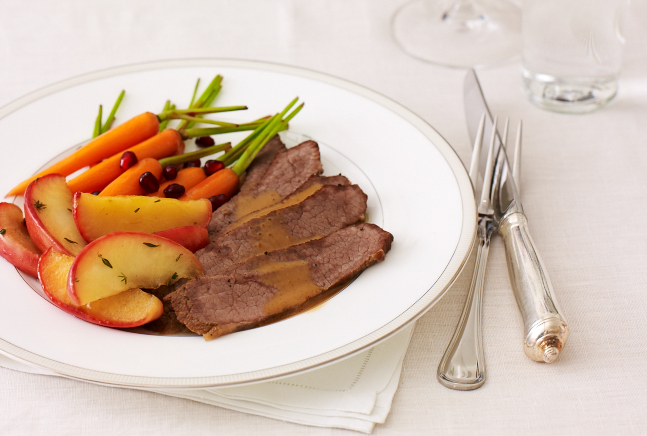
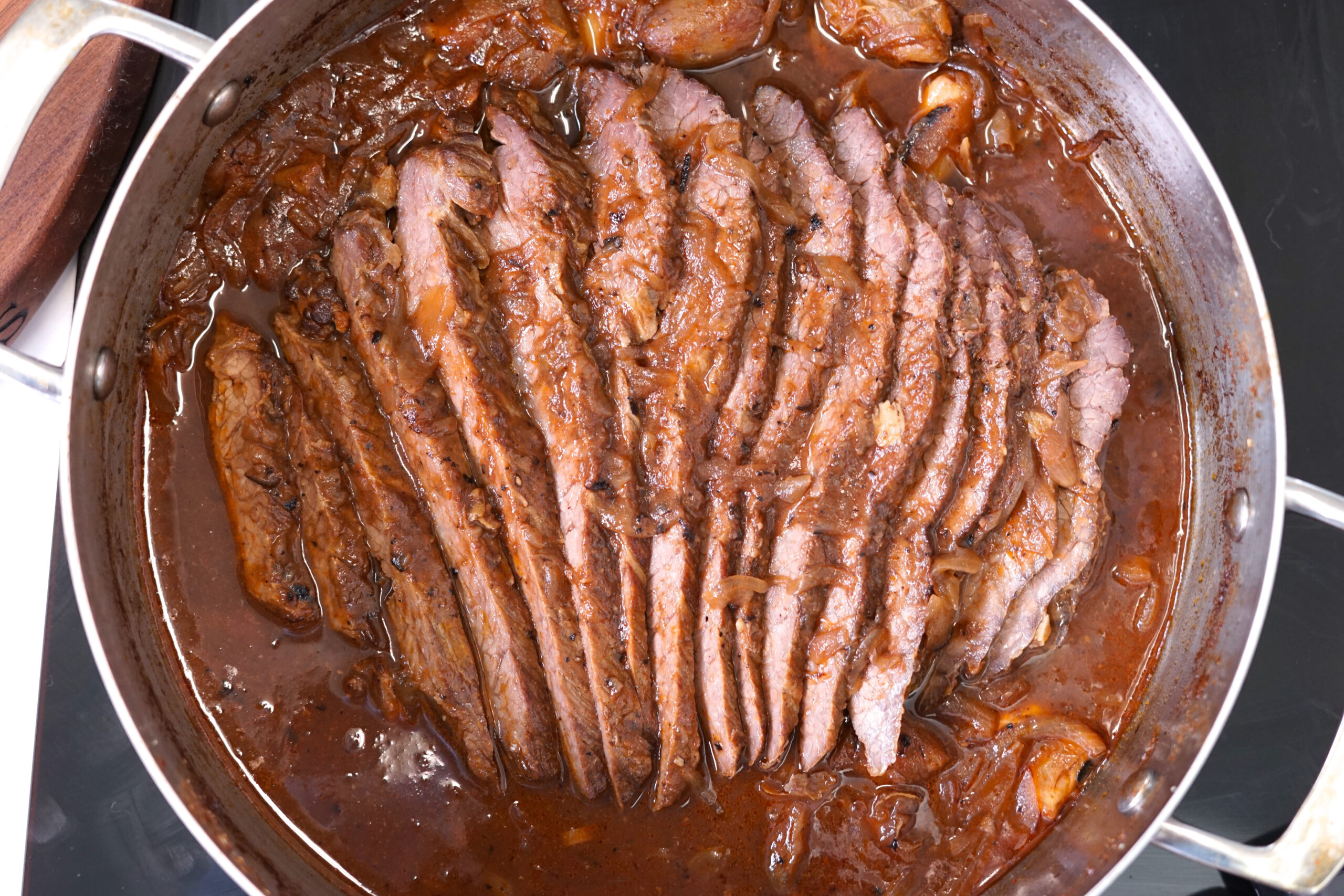
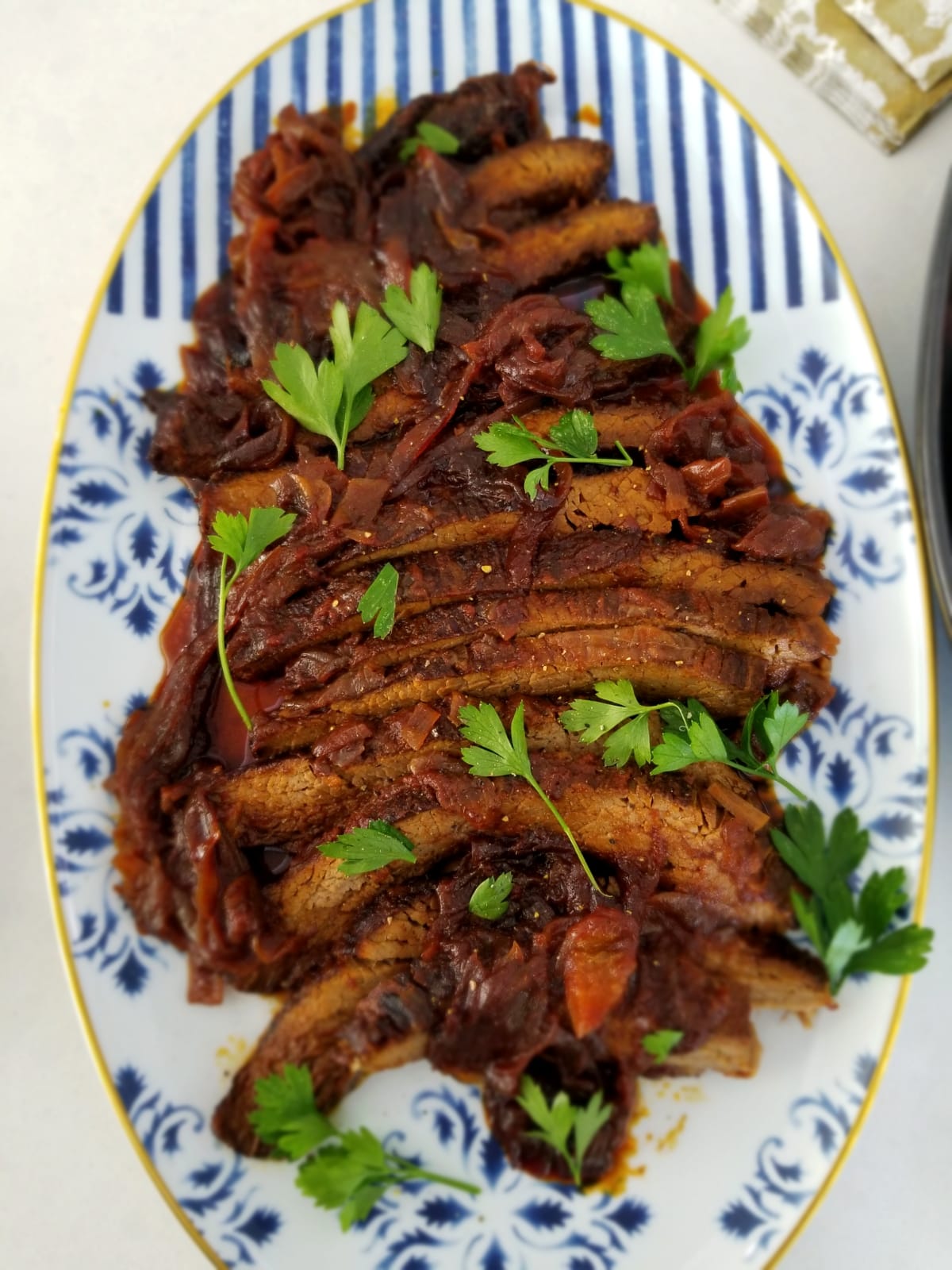
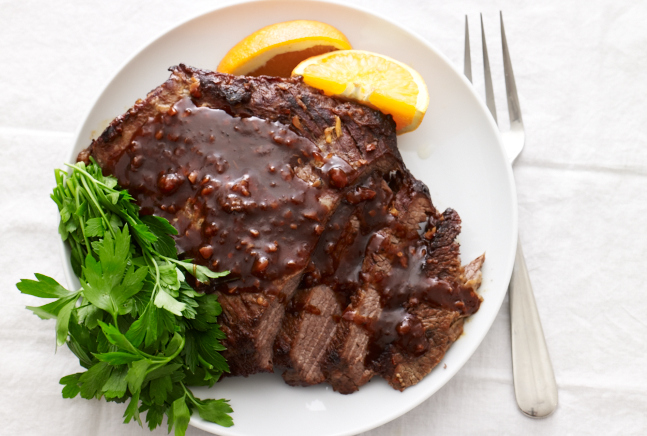
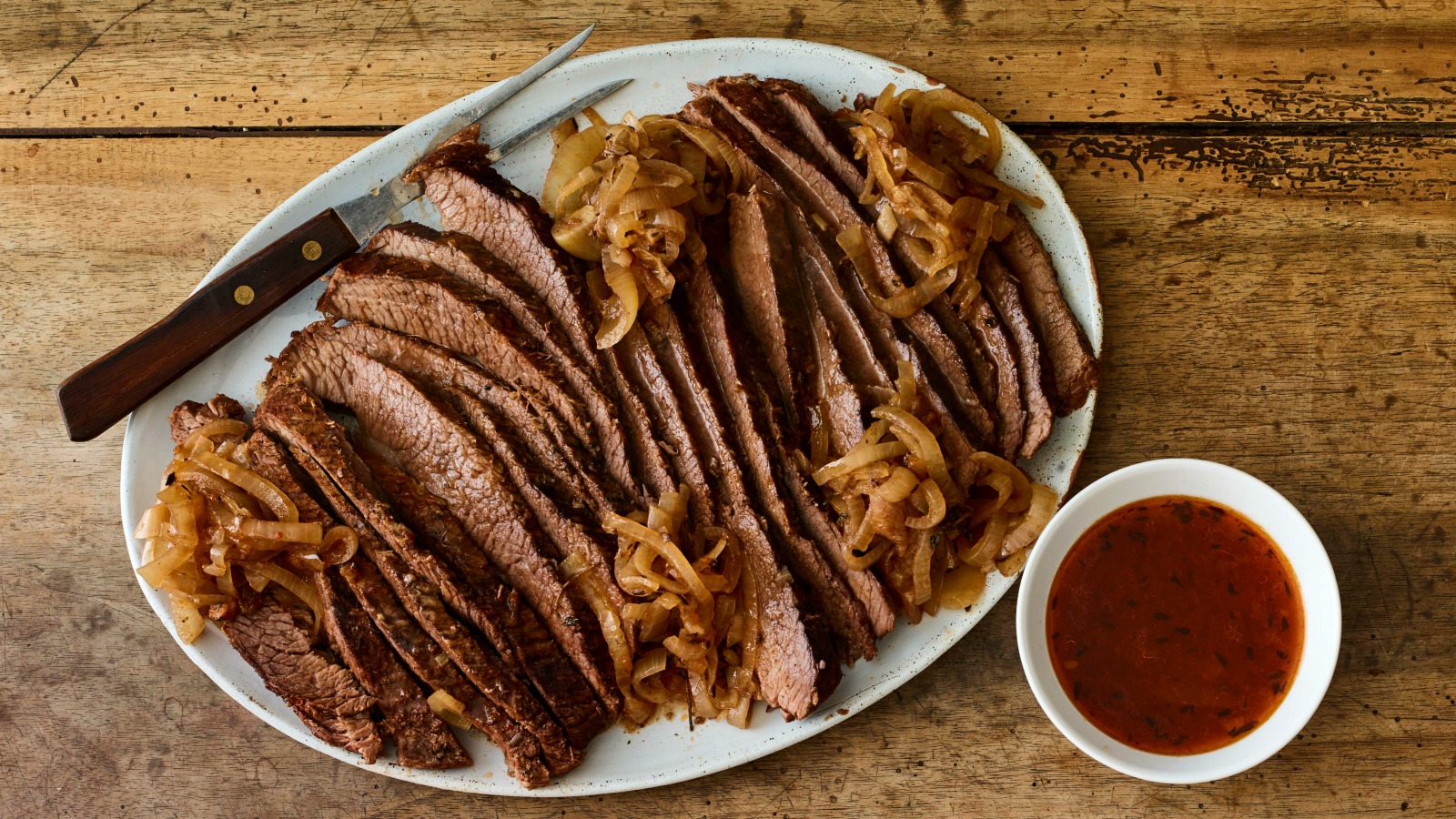
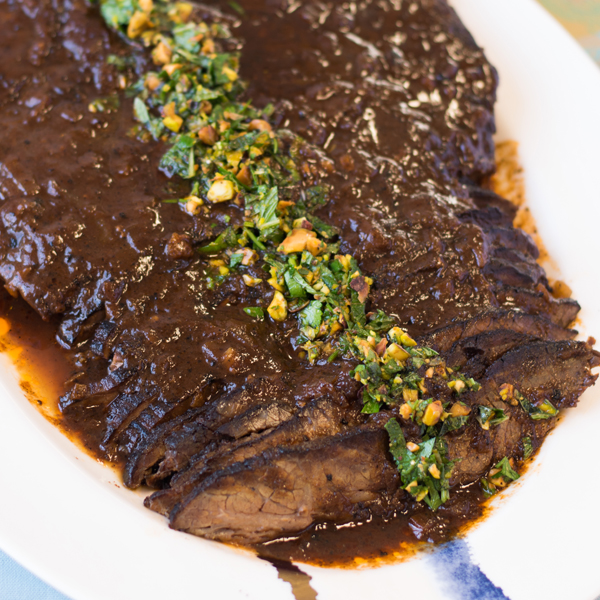

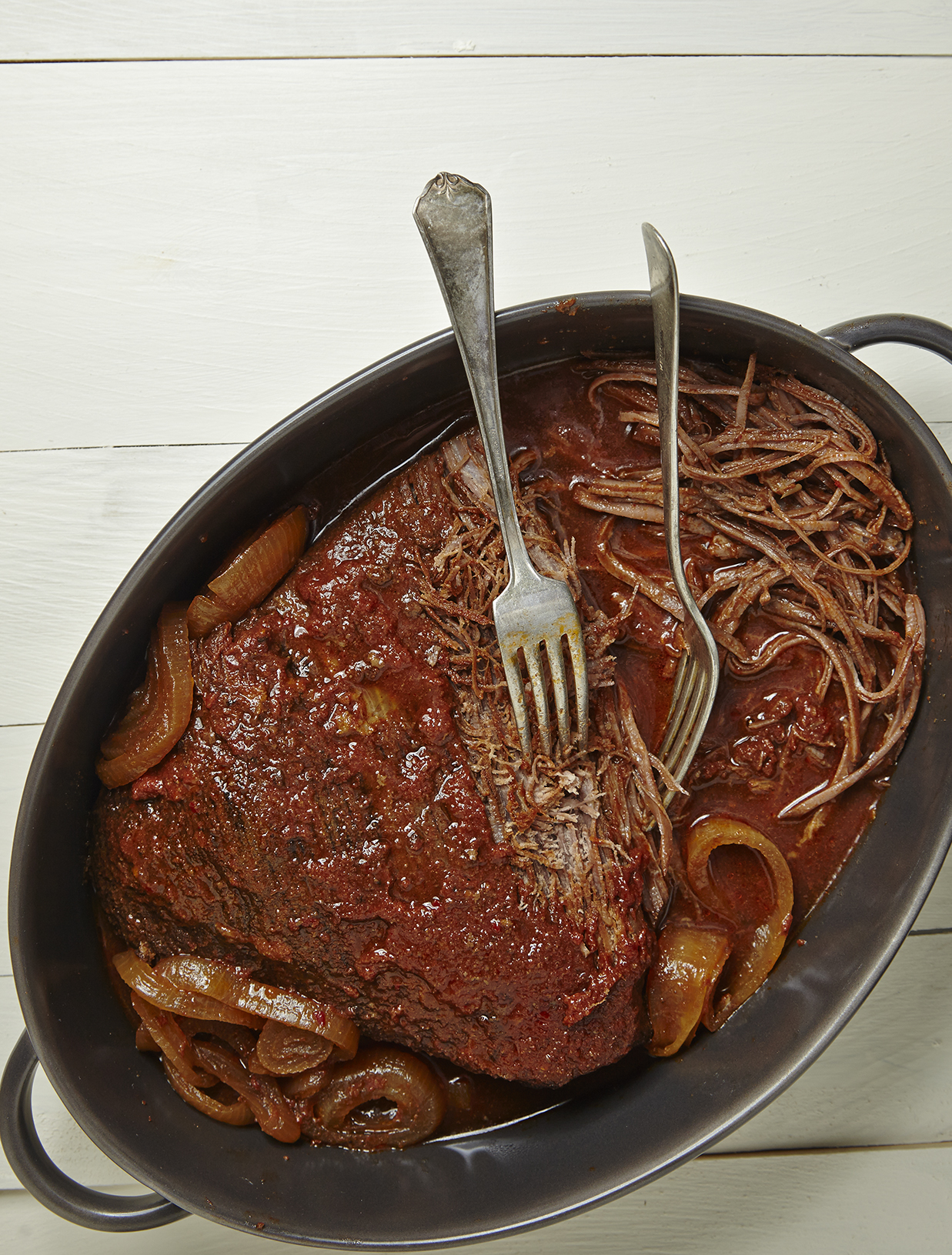
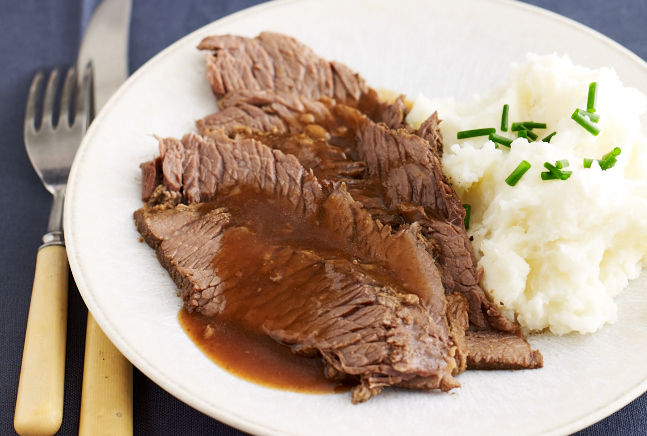
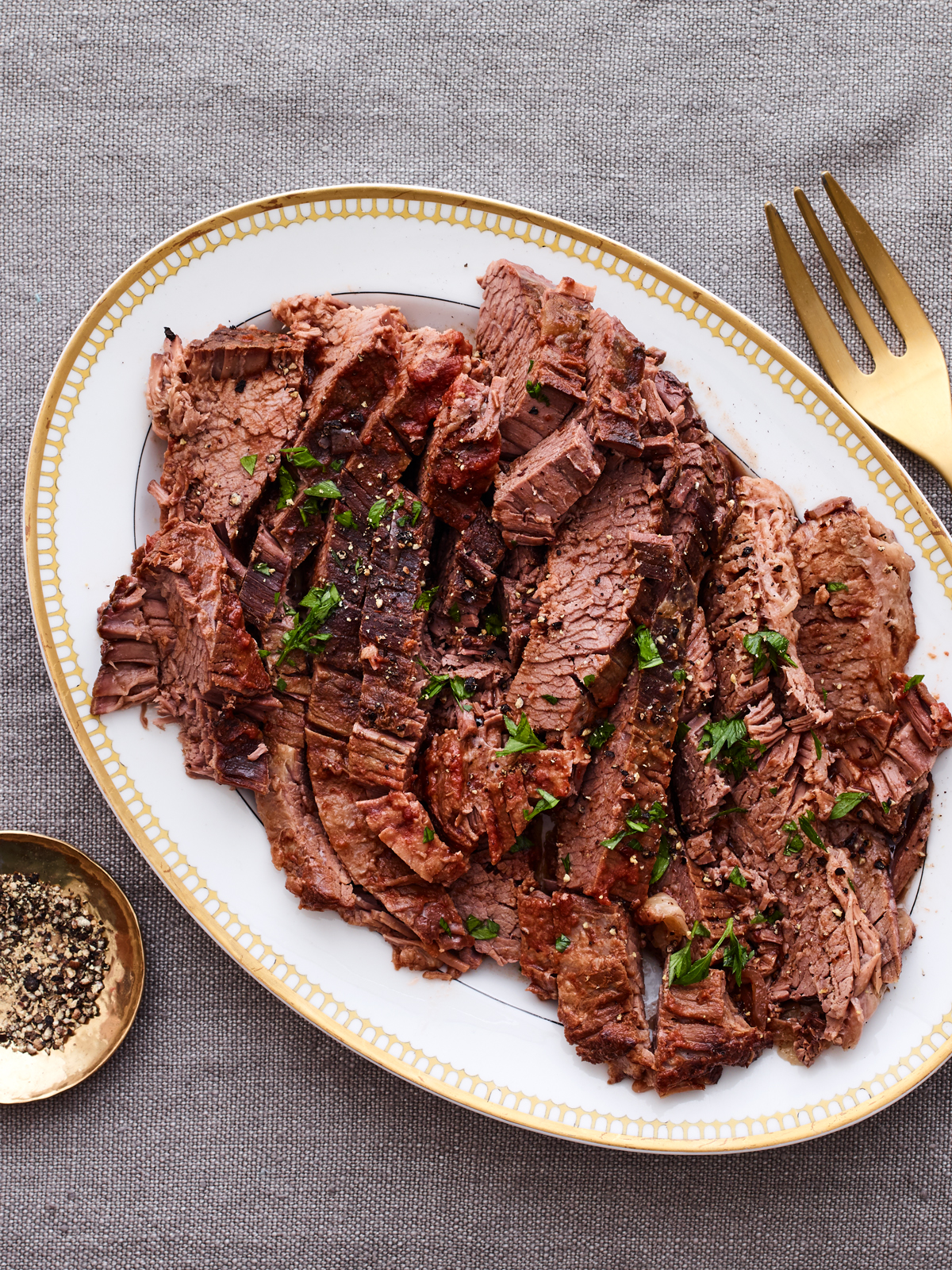
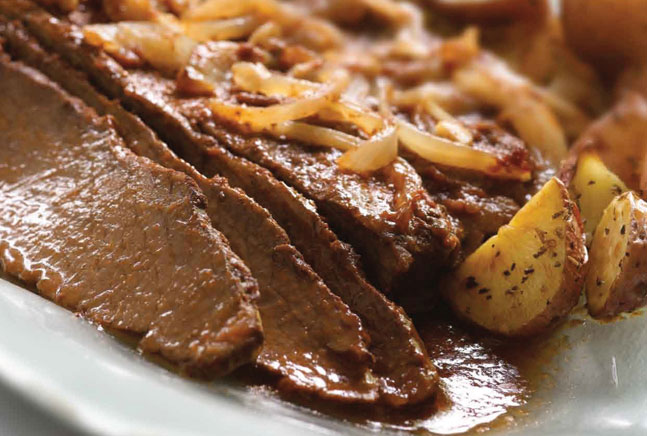
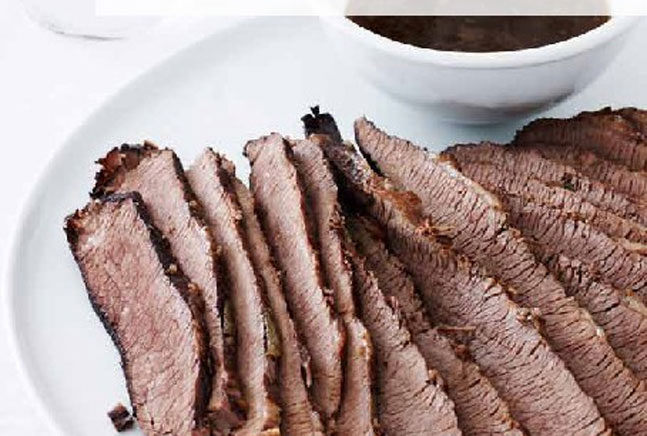
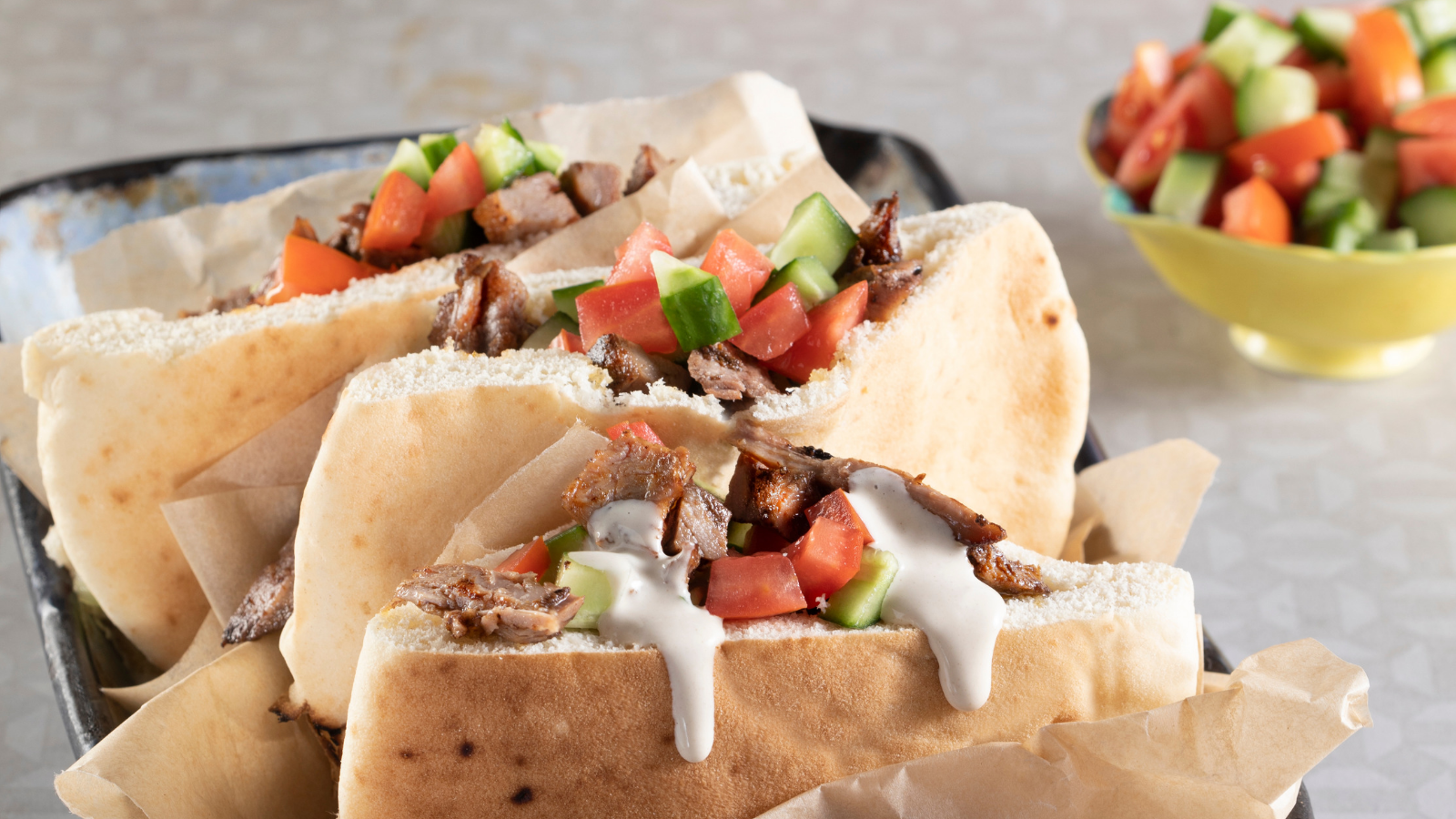
Every flavor, every cooking technique, all the best brisket recipes are here





Just made your brisket following the Today show recipe. When I first sliced it and tasted it with my hubby, he was like “dry, not so flavorful”. I reduced the sauce as you indicated, then put it all back together with the meat and continued the cooking for another 1.5 hours and OMG. Tender, flavorful, falling apart. Just AMAZING. I live in Israel and always use a number 5 for brisket, not sure how it differs from number 3. Thank you!!!!
Thanks so much for the great comment
Smoke brisket and roasted are very different. Jewish, Polish, and Germans tend to roast it in the oven for hours in a sweet and sour sauce that includes onion and/or other root veggies, vinegar, brown sugar or molasses, and other ingredients. Two very different preparations.
Hi Ann! That should work beautifully! Enjoy your neighbors. XO Jamie
Dear Jamie —
Generally, our pork shoulder or brisket is smoked for a couple of hours, and then goes in the oven low and slow. We are having the neighbors over for brisket TOMORROW. I’m going to go ahead with “low and slow” and then, as you described refrigerate overnight, slice in the morning and the warm before serving as you described.
I am wondering… if I took the brisket off the smoker, cooled, refrigerated, and then the next day “low and slow”… would the brisket end up being tough?
Thank you for your website.
Hi Sharon – so happy you love the site, thanks for letting us know! OK so I mainly use my slow cooker for chulent and stew type dishes simply cause that’s my habit. I do want to get into using it more for brisket, chicken and weeknight dinners in general simply bc I always have time and energy in the morning to throw something in but not so much at night when dinner time just creeps up on you and everyone is starving for something NOW, know what I mean? So yes you can use the slow cooker for brisket (especially bc it’s a cut served well done so would benefit from a low slow cook time and is not delicate and does not require exact timing the way a standing rib roast does, for example), you just have to be sure there is enough liquid so that it doesn’t dry out before it’s cooked through.
LOU!!!!!!!!!!! Love these tips thank you SO much for sharing!
Brisket is readily available in Israel.Piles in the Shuk. unlike US,where brisket is an expensive cut,here it is one of the cheapest.forget the numbers.Ask for Chazeh, the shpitz for first cut.
Hi, love your site. I like to use the slow cooker for dishes like this. It lets you cook on a low temperature for long periods without heating up the kitchen so much with the oven. Do you err do this?
When you have eaten the entire brisket there is usually juice left over. I reduce it to about one-half to one-third of its original volume and freeze it. Then use it as a starting liquid for your next brisket. The flavor is amazing!
If by some chance you have a few pieces left or some scraps from cutting, save them in a freezer bag with some of the liquid. Makes a marvelous base for knishes!
Enjoy. Lou
Hey Tamar – I have actually never seen brisket on the bone — I use Hackers #3 comes frozen — can you find that?
Hi Jamie
in Israel it’s very hard to find brisket. Last week I found it with the bone. Can i use all brisket recipes with this piece of meat?
Hey Betsy from Boca – YAY YAY YAY!!!! Thanks for all (buying the book, and the comment, and the compliments 🙂
we are twins 🙂
Len thanks so much for sharing I didn’t know that was the origin of serving the two together – I love to learn, thanks again!
Thank you for your useful tips. Always learn something new from you, Jamie. Just ordered your cookbook yesterday. Keep writing as clearly and on-point as you do. Love to get your emails.
Betsy Dobrick, Boca Raton
just the way I make brisket…. really the bestest and with the horseradish too! Enjoy this recipe….
Jamie:
Horseradish sauce was very commonly served in Germany and other parts of Europe.
The reason was that kosher meat was not that common, and it was expensive, so it usually served double duty: to make a stock/soup/broth first, then sliced and served (boiled beef) with a horseradish sauce, since the meat was not overly flavorful on its own.
le