


Most people think they know what “Indian food” is and how it’s different from “Chinese food.”
But anyone who grew up in or around Calcutta knows there is a third category — something neither Indian nor Chinese, and yet unmistakably both.
I didn’t grow up in Calcutta, though my father was born there. But I did grow up with Jewish Indian food — Baghdadi Jewish food — cooked in Israel, Canada, and later in Europe. And this, I thought, gave me the right to think I knew the broad strokes of Indian flavours. I thought I understood the map.
Then one day, I stumbled onto a cuisine I had never heard of, and it changed the way I understood Indian food entirely.
It’s called Tangra. After a Kolkata neighborhood. And it began with a simple question:
“Why would an Indian order Chinese takeaway — and what exactly would that taste like?“
Not Fusion — Migration
Before I tell you what Tangra is, I need to take you back a few years.
In Basel, Switzerland, I ran a little kosher restaurant. Little, but in fact the only one within a 400km radius. It served everyone, from hotels, to passing tourists, and Alpine skiers.
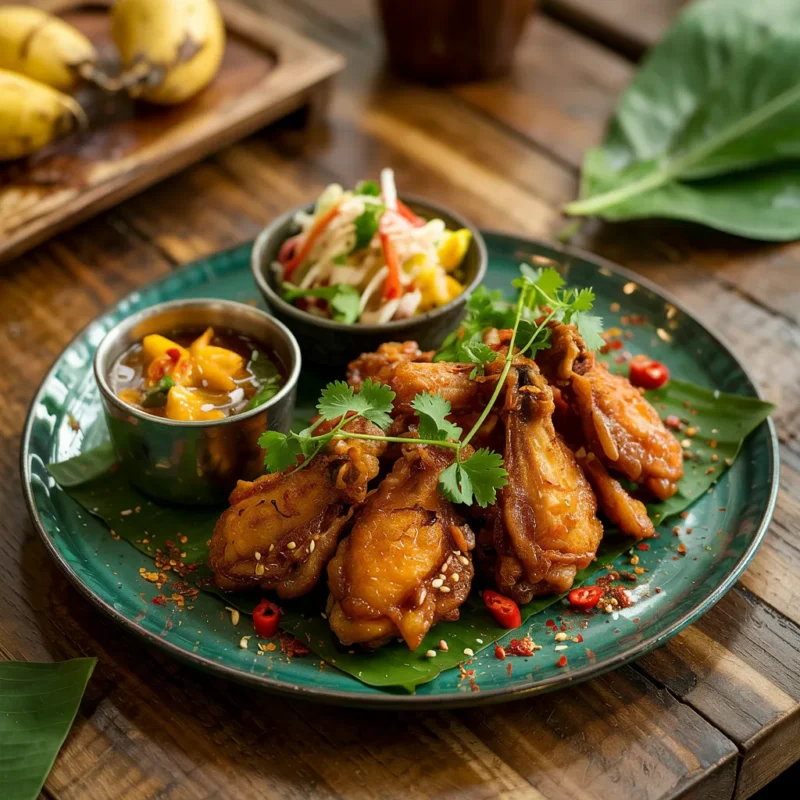
One day, inspired by an episode of MasterChef Australia, I made a glaze of mango, chili, soy, tamarind, garlic, and ginger. I tossed freshly fried chicken wings in it.

Scroll to continue
More Love
How To Cook Turkey London Broil
How to cook turkey london broil? 1. Marinate 2. Roast in a 375˚ F. oven for approximately …
73 Israeli Food Recipes You Need To Try
Yom Haatzamut is just around the corner (in 2021 it will be celebrated from the night of …
The wings were an instant hit — hot, sweet, sour, sticky, unapologetic. And kosher. Customers came back just for that.
At the time, I thought I had invented something “modern Asian.”
And I thought it super funny. Because in law school I had non Jewish friends who would swear that eating Chinese food to break the yom kippur fast was a Jewish tradition.
Later I learned something humbling. It wasn’t modern at all. It was history. Indian history. Actually Calcutta history my dad never mentioned.
Because India had already met China — and left us a cuisine to prove it.
A Lost Page From My Father’s City
When Chinese immigrants — mostly Cantonese and Hakka — settled in Calcutta in the eighteenth and nineteenth centuries, they arrived with two skills: leather tanning and wok cooking.
The British needed the first.
Calcutta needed the second.
They lived in East Calcutta, in an area later known as Tangra, working in tanneries by day and cooking Chinese meals by night. Over time, as families opened eateries, something new began to simmer in the city’s pots.
Not “Indianised Chinese food.”
Not “fusion.”
But a true migrant cuisine — Chinese method, Indian soil.
Soy sauce met green chili.
Noodles met cabbage and carrot.
Garlic found a new accent.
And the wok — that instrument of heat, speed, and smoke — learned to speak Bengali.
This was the cuisine I didn’t know existed.
The Grammar Stayed Chinese, the Accent Became Indian
The key to understanding Tangra is this:
The cooking stayed Chinese. The flavour profile turned Indian.
Chinese cooking is method-driven — wok-hei, blistering heat, fast movement, minimal moisture. Hakka cooks brought that rhythm with them. They adapted ingredients, not technique.
Tangra dishes kept their structure — vegetables cut fine for speed, noodles parboiled but never soft, dumplings steamed or pan-fried, seasoning added only at the very end for brightness.
But the flavors spoke the language of Calcutta: green chilies, sharp white vinegar, onions, tamarind, and coriander.
It’s why a plate of Indian “chili chicken” doesn’t taste Chinese — but doesn’t taste Indian either. It tastes like something in between — a culinary handshake.
A Jewish Parallel
As I learned more about Tangra, I realised why it resonated so deeply.
It mirrored the Baghdadi Jewish experience in India.
Our community also kept its methods — kosher laws, Shabbat rules, festival rhythms — but adapted flavours: coconut milk, turmeric, pandan, rice, tamarind.
Jewish food remained Jewish even when it became Indian.
Tangra did the same: Chinese food remained Chinese even as it became Calcutta.
Migration teaches flavour how to travel without losing its soul.
Two Dishes That Changed My Kitchen
Once I understood this, I began cooking differently.
Not to imitate China or India — but to understand the logic of Tangra.
Here are two recipes that now sit side-by-side on my own kosher table — one inspired by MasterChef, the other rooted in Tangra’s history.
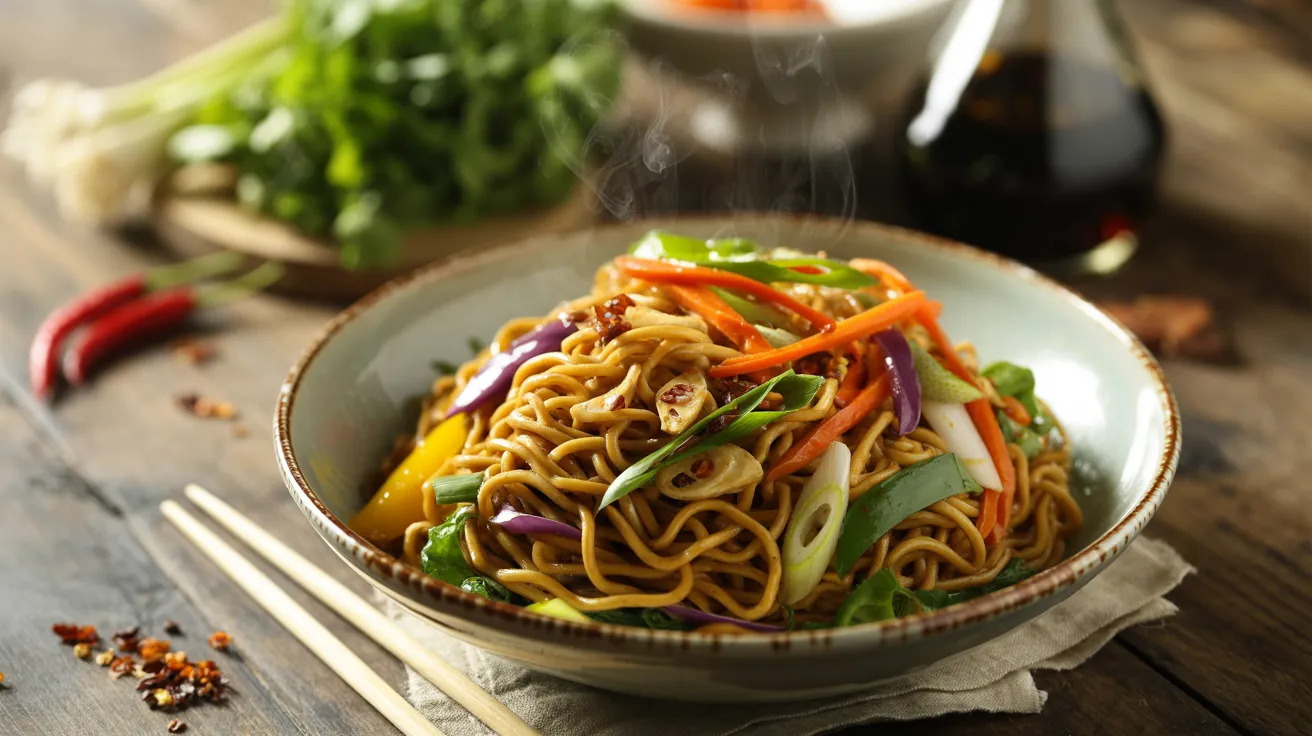
Chinese technique, Indian temperament.
A Missing Chapter — Found
Learning about Tangra felt like discovering a missing chapter of my father’s Calcutta (now Kolkata, but my dad insisted it was Cal – Calcutta)
He left India as a young man. I grew up between Israel and Canada. Later I cooked in Switzerland and Germany.I thought I knew the foods that shaped him.
Then Tangra arrived like a whisper from the past — a cuisine that had been there all along, waiting for me to notice.
It taught me something simple and profound:
Flavour is a migrant. It never stops learning. And neither should we.
Tangra isn’t fusion.
It’s migration, survival, memory, adaptation.
It’s Chinese cooks learning Indian markets.
It’s Indian diners learning Chinese heat.
It’s the same story Jewish cooks carried from Baghdad to Bombay, Rangoon, and Singapore.
And now, through my little kosher kitchen — to yours.
For more recipes like this including full Jewish food stories check out my Substack, Beyond Babylon.





Leave a Reply