


A Rosh Hashanah guide to simanim.
I don’t know why Rosh Hashanah always takes me by surprise. Here we are, just coming off those long, lazy summer days – and we suddenly have to snap to attention. The shofar sounds, we head for shul – and we try to think “sweet.”
Listen, I don’t claim to know exactly what the Sages had in mind when they said that during this season we should avoid tart or bitter foods and slop honey on everything; but my guess is that we’re supposed to look for the sweetness in life and try to make ourselves a little sweeter too. You are what you eat. (And if that’s true, my husband is a candied apple and I’m… well, never mind…)
In any case, a few weeks before Rosh Hashanah, my head starts to twirl with holiday recipes comprised of the sweetest ingredients – to give my family a yummy new lease on life. Now, you know I love and respect tradition – but when it comes to recipes, I like to put a novel twist on things and keep up with the simanim!
Simanim themed menus for Rosh Hashanah never get old. In fact they seem to get more popular each year. So, I am sharing 7 super simanim recipes with you that each only require 7-minutes to prep! So if the holiday sneaks up on you like it does me, you can still do this menu!
But first a bit on how to plan a simanim menu.
Step 1: List Simanim
I create a list of all the simanim. (I have added the blessings here for your convenience).
APPLE DIPPED IN HONEY “May it be your will, Hashem our G-d and the G-d of our forefathers, that you renew for us a good and sweet year.”
BEETS or SPINACH “May it be your will, Hashem our G-d and the G-d of our forefathers, that our adversaries and persecutors be removed.”
CARROTS “May it be your will, Hashem, our G-d and the G-d of our forefathers, that you decree good decrees upon us.”
DATES “May it be your will, Hashem our G-d and the G-d of our forefathers, that our enemies be consumed.”
FENUGREEK or BLACK-EYED-PEAS “May it be your will, Hashem our G-d and the G-d of our forefathers, that our merits increase.”
FISH “May it be your will, Hashem our G-d and the G-d of our forefathers, that we be fruitful and multiply like fish.”
GOURDS “May it be your will, Hashem our G-d and the G-d of our forefathers, that the decree of our sentence be torn asunder; and may our merits be proclaimed before you.”
HEAD OF A SHEEP or FISH “May it be your will, Hashem our G-d and the G-d of our forefathers, that we be as the head and not as the tail.”
LEEKS or CABBAGE or CHARD “May it be your will, Hashem our G-d and the G-d of our forefathers that our enemies be decimated.”
POMEGRANATES “May it be your will, Hashem our G-d and the G-d of our forefathers, that our merits increase as (the seeds of) a pomegranate.”
Step 2: List Courses
I decide how many courses I want to serve. I don’t feel strongly about both a fish course and a soup course on Rosh Hashanah. I will usually select one or the other.
Step 3: Mix and Match
This is where the fun starts. I challenge myself and make it a point to work each and every one of the simanim (with the exception of that sheep’s head!!!) into my menu. I actually find working with simanim easier than general menu planning because you have a basic outline and very specific source of inspiration from which to work vs. the world-is-your-oyster feeling of year-round menu planning.
Scroll to continue
More Love
5 Menus for Shemini Atzeres, Simchas Torah, & Shabbos
Ok, I admit it, I am guilty of calling every holiday “my favorite holiday”. …
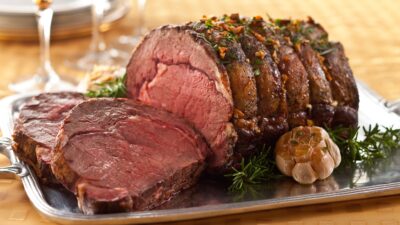
Shoulder Roast with Garlic and Herbs
This kosher beef Shoulder Roast recipe can also be used for Delmonico Roast, French Roast …
Step 4: Simanim Seder
Be sure to have extra simanim on hand for your Simanim Seder held at the start of the Rosh Hashanah meal. Click here for a step-by-step explanation of how-to host a Simanim Seder.
Now, the menu…keep scrolling for an alternate menu where you can mix and match your favorites
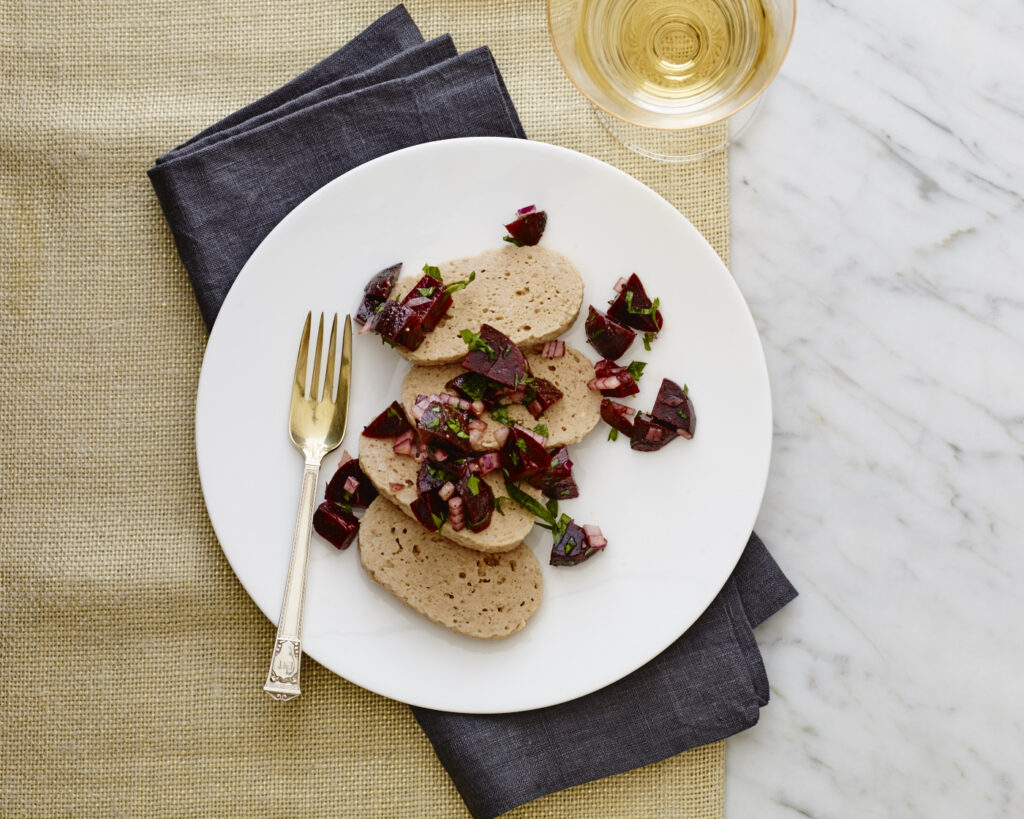
This Beet Relish is a shabbos salad staple at my sister-in-law Chanie’s table – lucky she’s one of those types that loves to share her recipes.
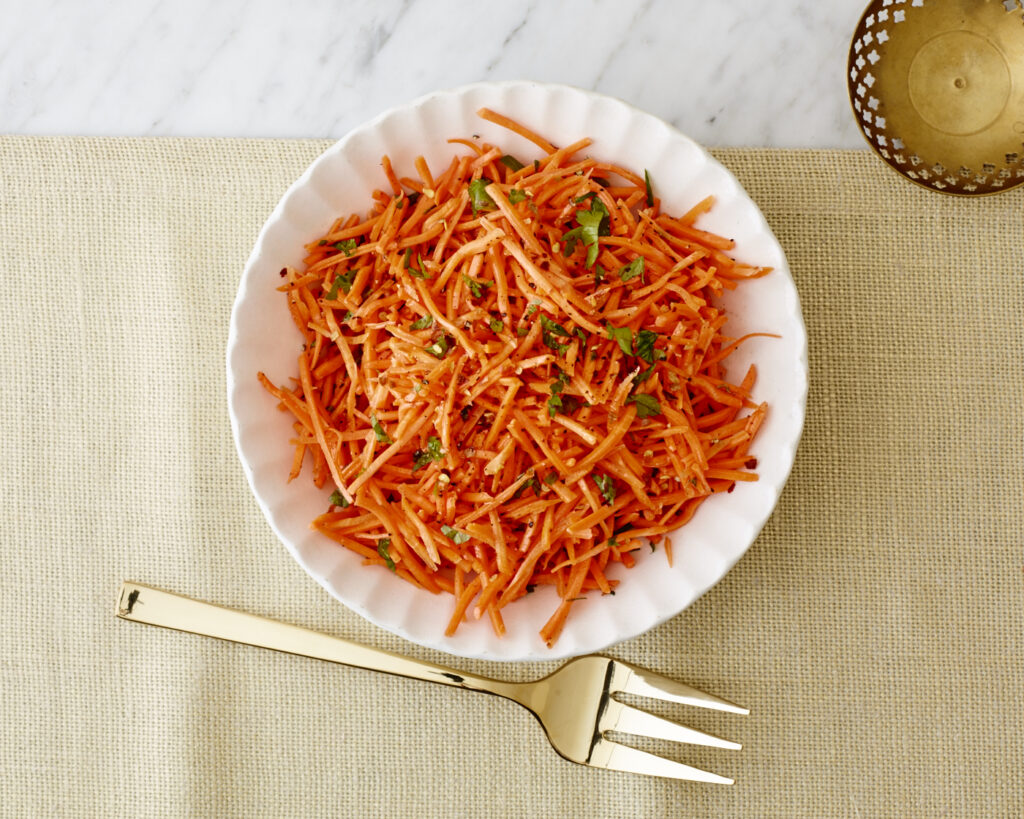
Like I always say, thank G-d for Chanie. This classic Israeli salad hails from her table too. Serve this with your fish starter to amp up the first course.
APPLE, CELERY ROOT, AND KOHLRABI SLAW
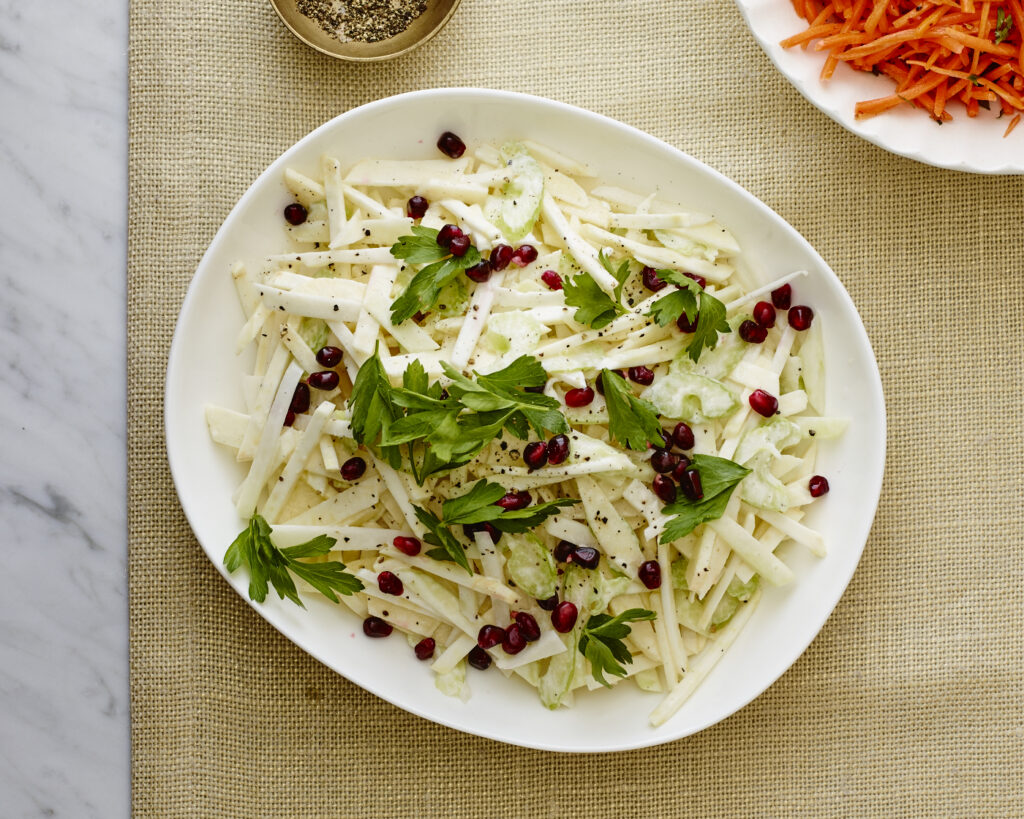
Loosely inspired by the hotel and salad that I love, this reinterpretation of a Waldorf Salad is a crisp, fall, slaw incorporating apples, honey, and pomegranates.
Vinegar as well as citric acid (even vitamin C tablets) work as well.
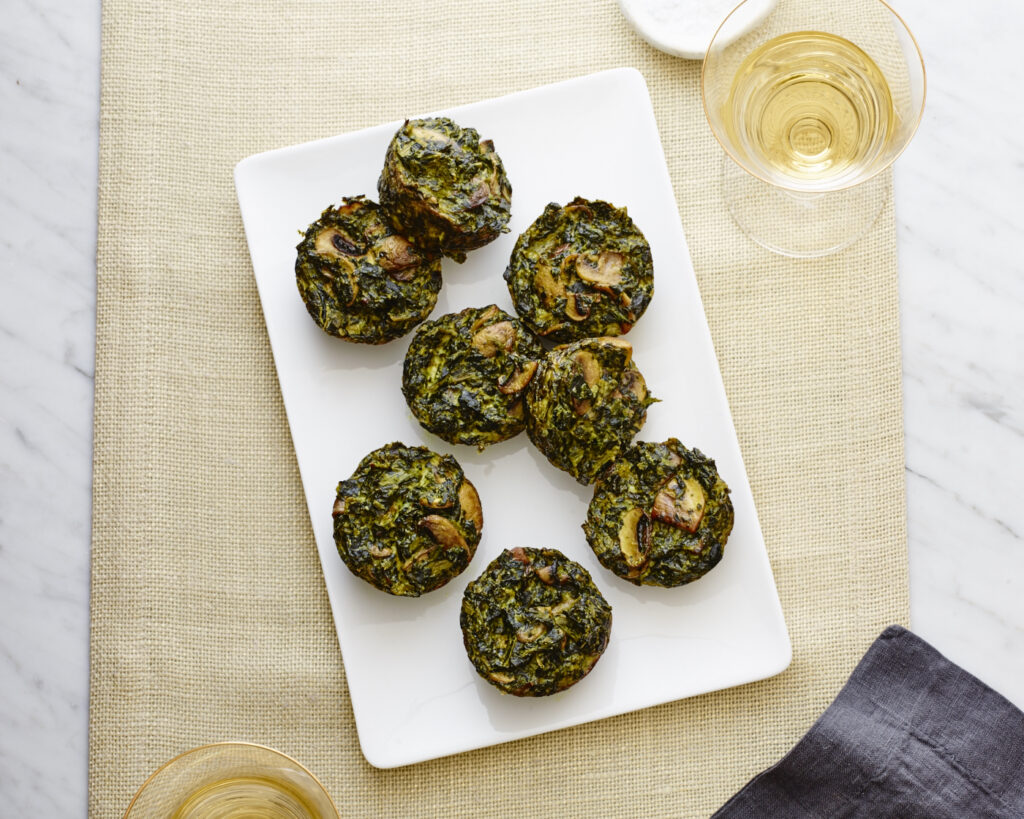
Cause they are too cute, (practically) carb-less, yet loaded with iron!
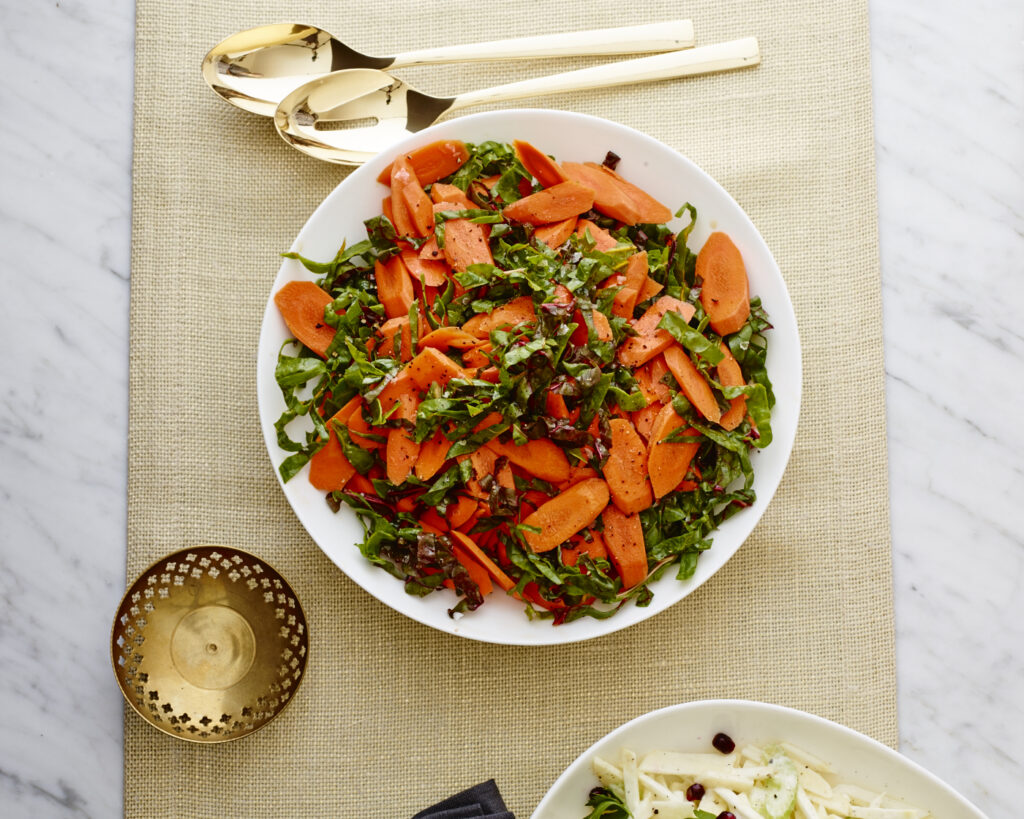
Sweet carrots and savory Swiss chard ribbons – my new favorite simanim side.
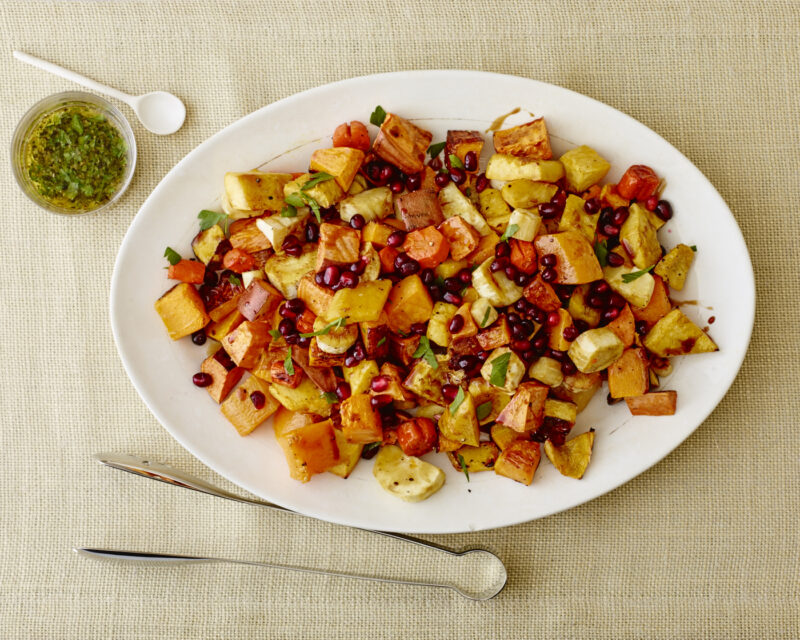
ROASTED FALL VEGETABLES WITH POMEGRANATE
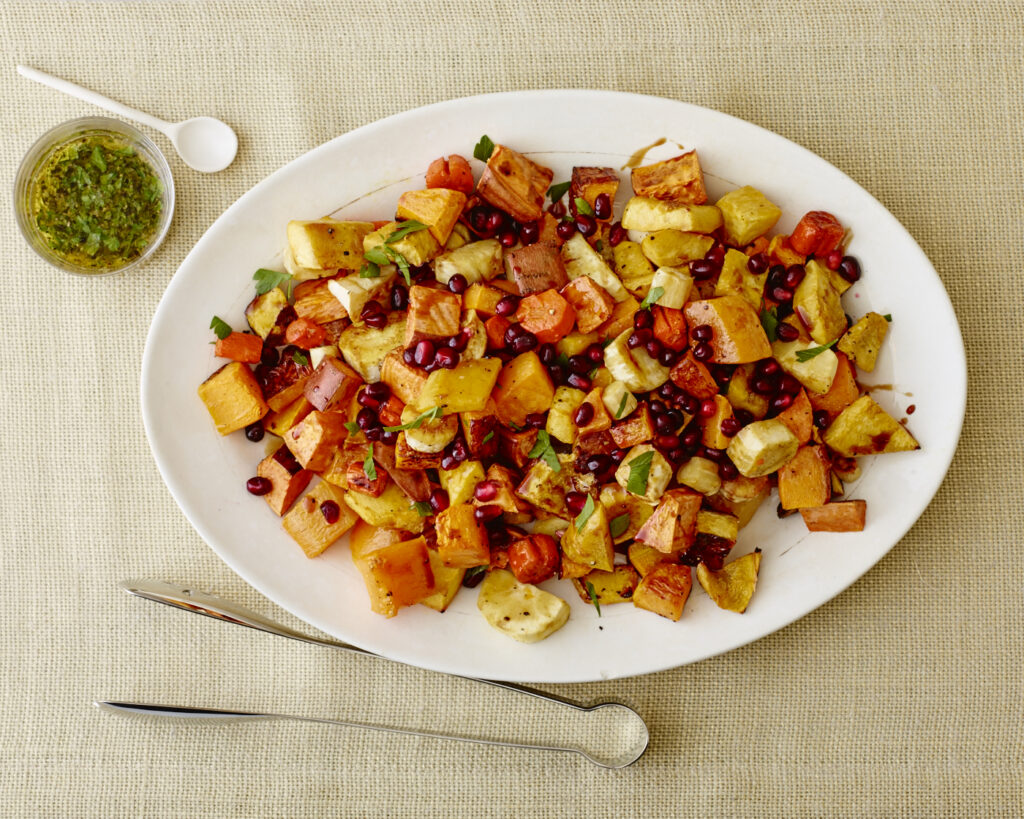
Roasting a medley of squash plus carrots, sweet potatoes, parsnips and onions will enhance the naturally sweet and earthy flavors of these fall veggies. Top with fresh pomegranate arils just before serving for a bright burst of sweet and tart flavors.
SPINACH LAMB AND LEEK SLOW COOKER STEW
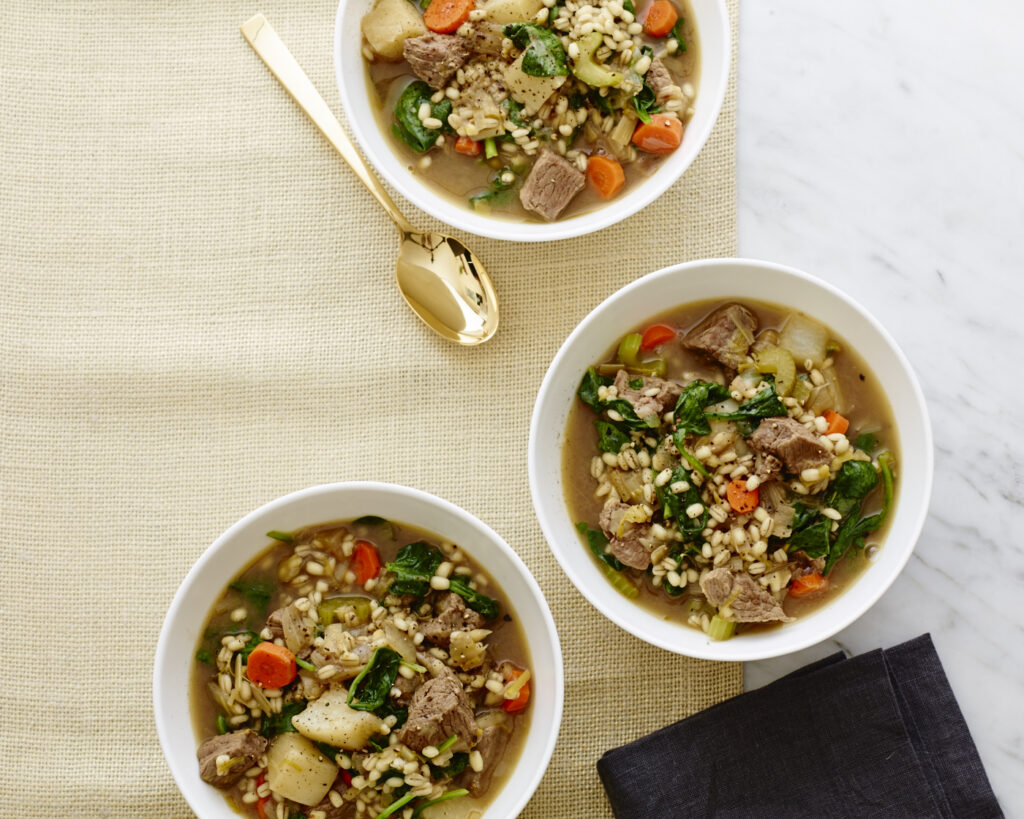
Ripped from the pages of our outrageously popular 28 Day JOY of KOSHER Challenge, it’s the perfect opportunity to get a jump on those healthy eating, Rosh Hashanah resolutions. (Lamb is a particularly good source of B vitamins and barley is rich in many less common minerals essential to your body and is high in fiber.)
DATE AND BITTERSWEET CHOCOLATE TRUFFLES
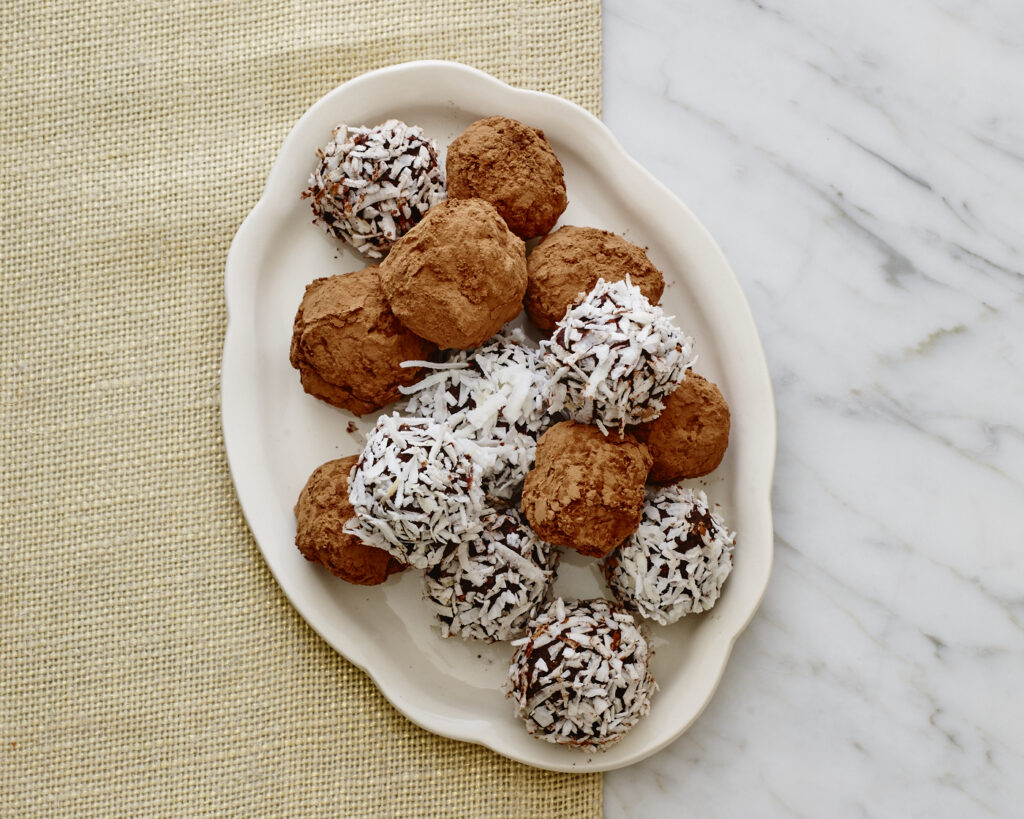
Chewy dates are the perfect foil for rich, bittersweet chocolate. This Rosh Hashanah I’m combining 2 of my favorite foods to create a singular bite of heartfelt wishes for a happy, healthy and delicious New Year.
More 7 minute prep recipes for your Rosh Hashanah Menus
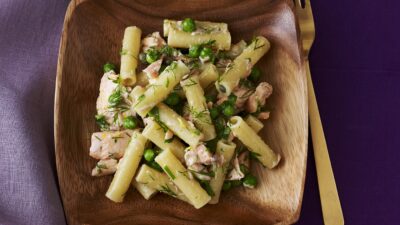
So super simple, but oh so delish, you won’t believe it.
This dish is one of those Shabbos/Yom Tov Kodak moments. (OMG, how much did I just date myself with that photo reference?) When you present your side of salmon with pomegranates, seared lemons, mint leaves and all, the entire table will ooh and aah. The best part: it tastes as gooood as it looks.
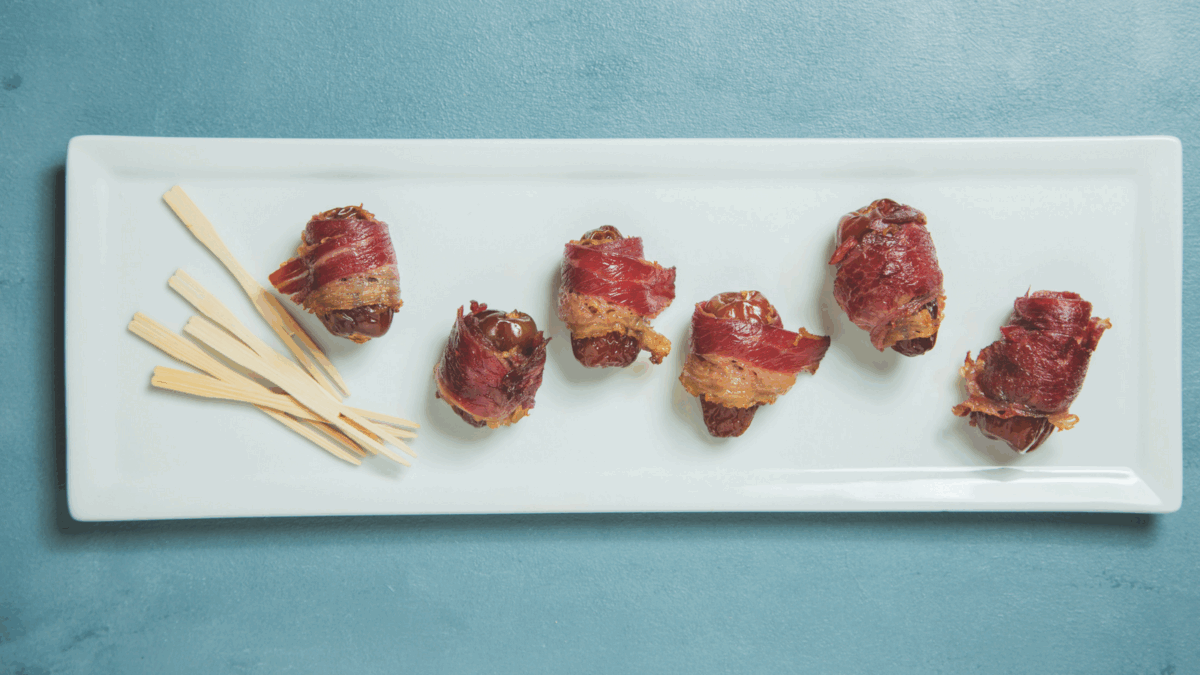
Now that we have Facon we can join the “bacon”-wrapped-date craze. Traditionally, this dish calls for dates stu ed with cheese and/or nuts, but this two-ingredient kosher, Rosh Hashanah-friendly version is simply perfect as is.
DATE, CRANBERRY AND COUSCOUS SQUASH BOWLS
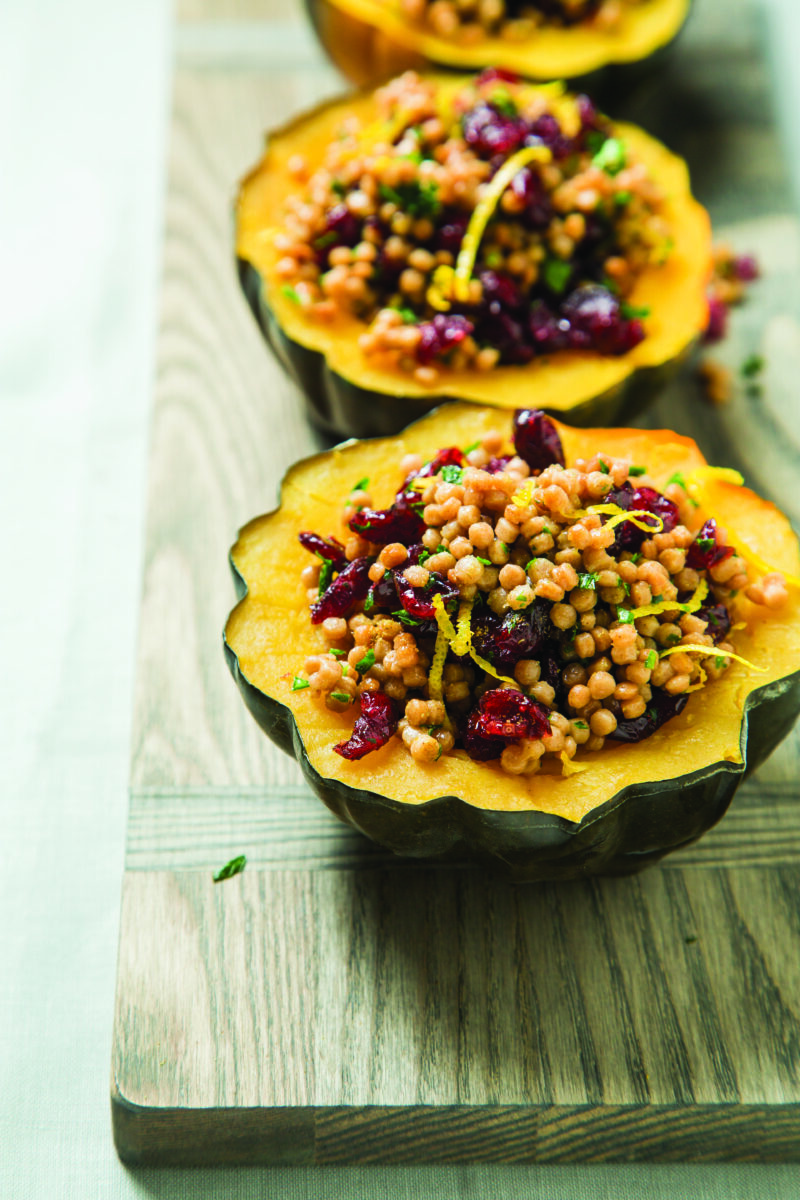
When nature presents you with an edible bowl
(that also happens to be a holiday simanim), I say it’s a sign.
APPLE, SAUSAGE, AND SPINACH SALAD WITH ORANGE BLOSSOM HONEY
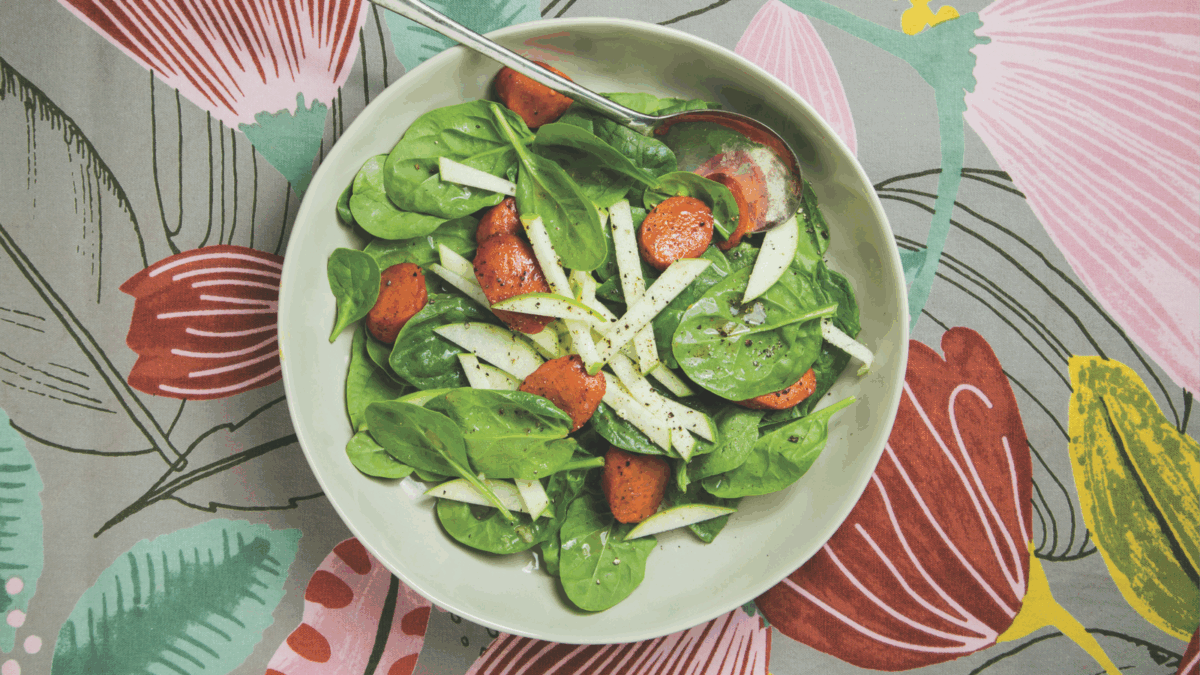
Highly prized for its unique and delicate orange avor, orange blossom honey also boasts a wide variety of natural antioxidants as well. (And, yes, if I haven’t convinced you to add another item to your shopping list, you can always swap good ‘ol plain honey in this recipe.) Bonus: Transfer remaining dressing to a container and store in the refrigerator for up to one week.
GREMOLATA PARGIOT WITH BEETS AND BEET GREENS
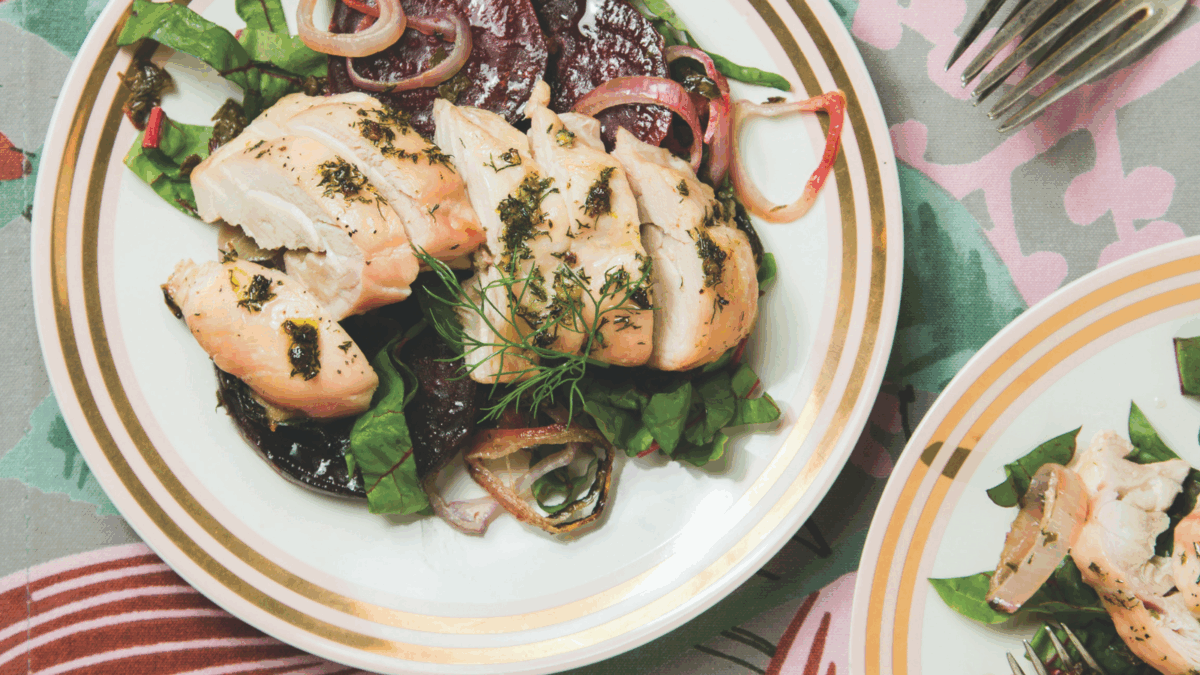
Classic Italian gremolata is a chopped herb condiment made from parsley, lemon zest, and garlic and traditionally accompanies ossobuco. I’ve swapped the parsley for fresh dill and generously seasoned pargiot, beets, and beet greens with this bright, earthy garnish. Swap: Beet greens for Swiss chard to incorporate another simanim.
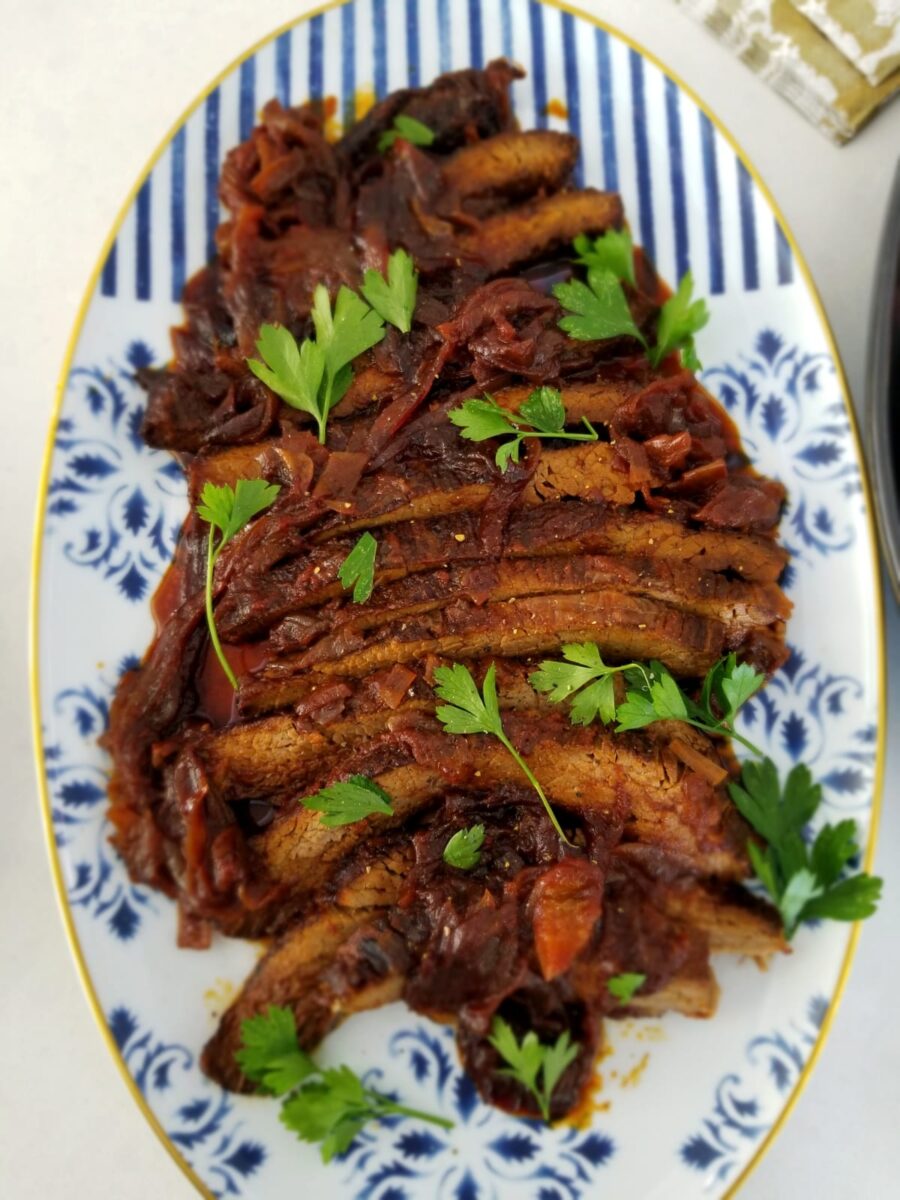
This technique for 36-hour, spice-rubbed, oven-seared, soft, buttery brisket is pretty much hands on. Once you follow my #1 Brisket Golden Rule: Rest After You Rub, you will never make brisket any other way again. The 24- to 36-hour chill- lax time in the fridge (whether with a spice rub or just S+P) tenderizes the meat to a toothsome, luscious, succulent, buttery consistency like you’ve never known before.

Make a quick apple pie, buy presliced apples to make the hands on time even less.
I hope you love these recipes as much as I do.
In the coming year, may all of your meals be cooked to perfection — nothing burns, nothing sogs, nothing falls apart. May it be a year of culinary delights and taste-bud adventures!
And may you and your loved ones eat in good health, happiness, sweetness and peace.




Sad Jamie that in every prayer you chose to omit the letter “O” when referring to GOD.
A trendy American PC practice gaining in popularity. The law does not apply to English, Spanish, French, Polish, Russian, German, Japanese, or any language, seperate from that of our forefathers.
There is no law that prohibits the writing of God’s name in Hebrew or in English. However, there is a law that prohibits the erasure of God’s name in the Hebrew. Deut. 12:3 reads, “Tear down their altars, smash their pillars, put their sacred posts to the fire, and cut down the images of their gods, obliterating their name from that site.” Rashi comments on the obliteration of their names and says that from this text we learn that blotting out God’s name is prohibited (even though the text refers to the non-Israelite gods).
There actually is a law that says we should not write out the name. It’s in the Kitzur, Also, blotting out Gd’s name means erasing it, not writing it without actually writing it. Like the erasure for sotah is technically blotting out the name. Leaving the name in a place where the light can fade it is also not okay. Not writing the “O” to begin with isn’t what that means.